



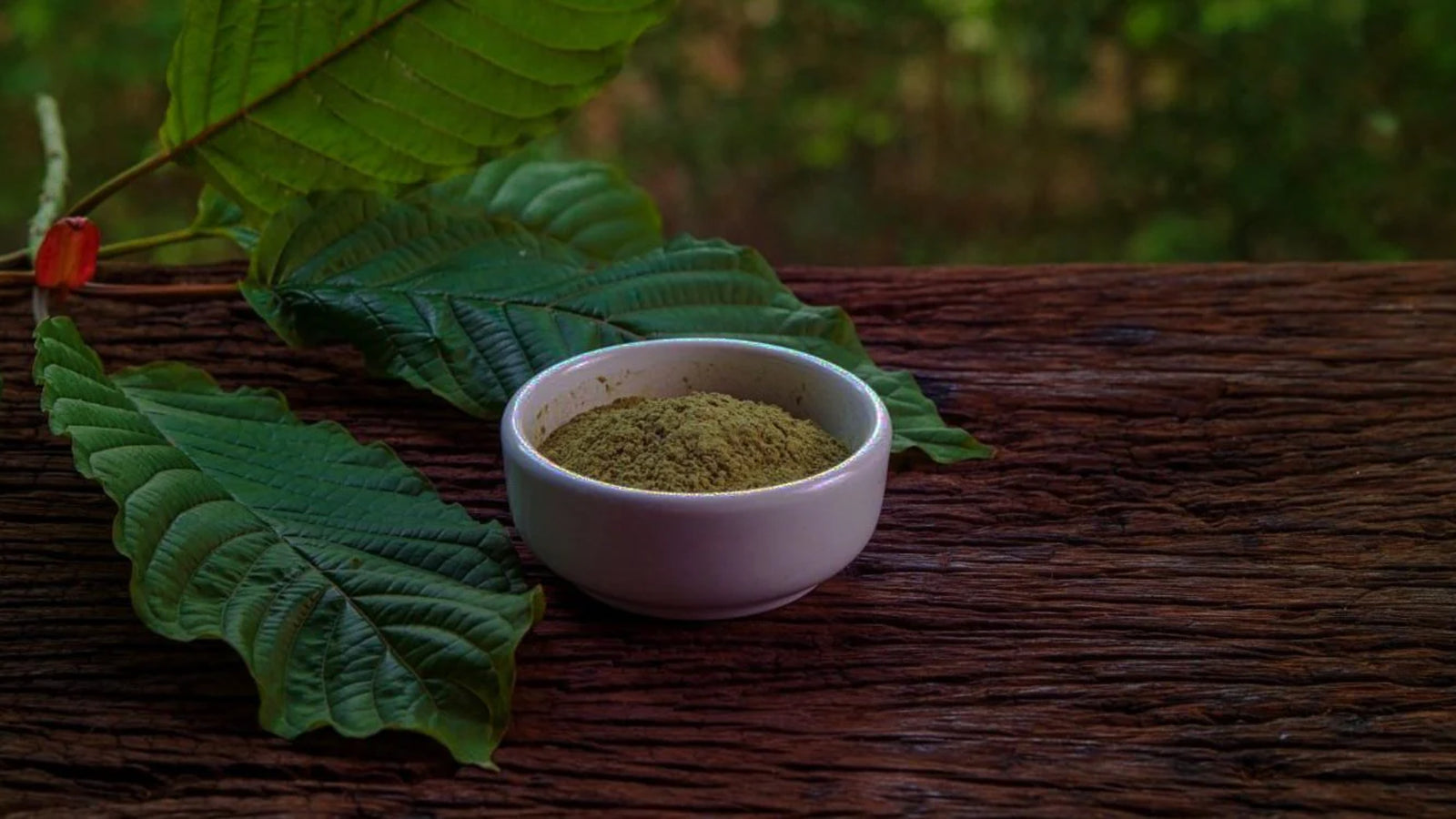
If you have ever wondered what is kratom and how does kratom work, you are not alone. Kratom (Mitragyna speciosa) is a tropical tree native to Southeast Asia, and its leaves contain a family of plant compounds called kratom alkaloids that have drawn growing scientific and consumer interest. According to the U.S. Food and Drug Administration, millions of Americans have reportedly used kratom products, which is one reason researchers and regulators continue to study the plant closely (FDA).
This guide is purely educational. It explains the botany, the origin, the main alkaloids such as mitragynine, the vein-color naming system, traditional use, how kratom is consumed, and what the published research says about how it interacts with the body at a general biological level. It does not provide medical advice, efficacy or treatment claims, or dosing instructions. For decisions about your health, talk with a qualified healthcare professional.

Table of Contents
- TL;DR: Quick Answers
- What Kratom Actually Is
- Where Kratom Comes From
- The Alkaloids: Mitragynine and 7-Hydroxymitragynine
- Vein Colors and Strain Types
- How Kratom Is Used and Consumed
- How Kratom Works in the Body
- Safety, Quality, and Legal Status
- Frequently Asked Questions
- Final Thoughts
TL;DR: Quick Answers
- Kratom is a plant. It comes from Mitragyna speciosa, an evergreen tree in the coffee family (Rubiaceae).
- Origin: It is native to Southeast Asia, including Thailand, Malaysia, Indonesia, and Myanmar.
- The active compounds are alkaloids. The two most studied kratom alkaloids are mitragynine and 7-hydroxymitragynine.
- Vein colors (red, green, white) describe the color of the leaf vein at harvest, not different species.
- Common forms include dried powder, capsules, and liquid extracts.
- How does kratom work? Research indicates its alkaloids interact with receptors in the nervous system; the science is still developing.
- Regulatory status: The FDA has not approved kratom for any use, and legality varies by location.
- Bottom line: This is general education only, with no health, efficacy, or dosing claims.
What Kratom Actually Is
So, what is kratom in plain terms? Kratom is the common name for Mitragyna speciosa, a large evergreen tree that can grow more than 80 feet tall in the wild. It belongs to the Rubiaceae family, the same botanical family as the coffee plant. The part people use is the leaf, which naturally contains the kratom alkaloids that make the plant a subject of research and a popular botanical product.
The National Center for Biotechnology Information (NCBI) describes kratom as a plant whose leaves contain numerous naturally occurring compounds, with mitragynine being the most abundant (NCBI Bookshelf). Understanding the plant first makes it far easier to understand how does kratom work later in this guide.

Because kratom is a botanical and not a single isolated chemical, every leaf contains a mix of compounds. That natural complexity is a big reason scientists are still mapping out the plant's full profile, and it is also why product quality and sourcing matter so much to consumers.
Where Kratom Comes From
Kratom is native to the warm, humid forests of Southeast Asia. It has grown for generations in countries including Thailand, Malaysia, Indonesia, Myanmar, and parts of Borneo. The tropical climate of this region, with its rich soil and heavy rainfall, supports the tree's growth and influences the leaf's natural chemistry.

Historically, the leaves were part of regional folk traditions. People in farming and laboring communities are documented to have chewed fresh leaves or brewed them into a tea. Today, much of the kratom sold worldwide is still harvested in Indonesia, where the climate is well suited to the tree. If you want to compare kratom with another traditional Southeast Asian and Pacific botanical, our guide to what kava is offers a helpful companion read.
The Alkaloids: Mitragynine and 7-Hydroxymitragynine
The heart of any discussion about kratom effects is its alkaloids. Alkaloids are naturally occurring, nitrogen-containing plant compounds; caffeine and quinine are other familiar examples. Researchers have identified more than 40 alkaloids in the kratom leaf, but two dominate the scientific conversation.

Mitragynine is the most abundant alkaloid in Mitragyna speciosa and is the compound most often referenced when describing the leaf's chemistry. 7-hydroxymitragynine is present in much smaller amounts and is another major focus of ongoing pharmacology research. Peer-reviewed work hosted on PubMed Central reviews the chemistry and pharmacology of these alkaloids in detail (PMC).
It is worth emphasizing that the relative amounts of these alkaloids vary from leaf to leaf and from harvest to harvest. That natural variability is one reason consistent sourcing and testing are central to reputable kratom products.

Vein Colors and Strain Types
If you have shopped for kratom, you have seen the words red, green, and white. These describe the color of the central vein and stem of the leaf at the time of harvest. The vein color is a traditional way to categorize the leaf; it does not indicate a different plant species, since all of it comes from the same Mitragyna speciosa tree.
| Vein Color | General Description | Typical Harvest Stage |
|---|---|---|
| Red Vein | The most common and traditionally most widely harvested category. | More mature leaves. |
| Green Vein | A middle category, often described as a balance between red and white. | Mid-maturity leaves. |
| White Vein | Named for its pale vein color. | Earlier-harvest leaves. |
| Blends | Mixtures of more than one vein color combined by the producer. | Varies. |
Producers sometimes combine vein colors into blends. The vein-color framework is a useful organizing idea, but remember that the underlying chemistry still comes from the same plant. For readers who like to combine strains, our guide to kratom stacking walks through the basics.

A widely recognized example of a vein-color category is Maeng Da, a term used across red, green, and white versions. You can see how this naming plays out across a catalog of products such as the GRH Kratom Green Maeng Da Kratom Powder.
How Kratom Is Used and Consumed
Traditionally, fresh or dried kratom leaves were chewed directly or brewed into a tea. Modern processing has standardized the leaf into a handful of convenient formats. Here is how the leaf typically moves from tree to product:
- Harvest: Leaves are picked from the Mitragyna speciosa tree and sorted, often by vein color.
- Drying: The leaves are dried, a step that influences the final character of the product.
- Grinding: Dried leaves are milled into a fine powder.
- Formulation: The powder is sold as loose powder, packed into capsules, or processed into liquid extracts.
- Testing: Reputable producers test for purity and contaminants before sale.

Powder is the most traditional modern format, prized for its versatility. Capsules offer pre-measured convenience, while liquid extracts are concentrated formats. You can browse representative examples like the GRH Kratom White Maeng Da Kratom Powder to see how powders are packaged and sold. One thing to avoid is heating or aerosolizing the leaf in unintended ways; our article on the risks of vaping kratom explains why.
As a concrete example of a finished powder product, the image below shows GRH Kratom Green Maeng Da Kratom Powder in its packaged form.

How Kratom Works in the Body
Now to the central question: how does kratom work? At a general biological level, the answer lies with the alkaloids. Published research indicates that mitragynine and 7-hydroxymitragynine interact with receptors in the nervous system. Reviews on PubMed Central describe these alkaloids binding to opioid-type receptors as well as other receptor systems in the body (PMC).

It is important to be precise here. Saying that an alkaloid binds to a receptor is a description of pharmacology, not a claim about benefits, treatment, or outcomes. The scientific literature characterizes kratom's pharmacology as complex and still under active study, and researchers continue to investigate how the plant's many compounds behave together. Because individual products vary in their alkaloid content, the way any given product interacts with the body can differ as well.
In short, the mechanism behind kratom effects is rooted in plant chemistry meeting human receptor biology, a subject that science has only partially mapped. This guide intentionally stops at that general, factual description and does not extend it into any health or efficacy claim.
Safety, Quality, and Legal Status
A balanced education about kratom has to include its safety and regulatory picture. The U.S. Food and Drug Administration has not approved kratom for any medical use and has issued public communications about it (FDA). At the same time, the American Kratom Association (AKA), a consumer advocacy group, advocates for sensible regulation and product-quality standards rather than prohibition (American Kratom Association).

Legality varies. Kratom is legal in many U.S. states but restricted or banned in others, and rules differ internationally as well. The AKA has promoted the Kratom Consumer Protection Act in various states, which focuses on labeling, age restrictions, and testing standards. Because the legal and regulatory landscape can change, always check the current rules in your own location before purchasing or using kratom.
From a quality standpoint, the practical takeaways are straightforward: buy from sellers who test their products, read labels carefully, and treat any source that makes dramatic health promises with skepticism. Reputable vendors, including GRH Kratom, emphasize lab testing and transparent sourcing rather than medical claims.
Frequently Asked Questions
What is kratom in simple terms?
Kratom is a botanical product made from the leaves of Mitragyna speciosa, a tropical tree in the coffee family that is native to Southeast Asia.
What are the main kratom alkaloids?
The two most studied kratom alkaloids are mitragynine, the most abundant compound in the leaf, and 7-hydroxymitragynine, which is present in much smaller amounts.
How does kratom work in the body?
Research indicates its alkaloids interact with receptors in the nervous system, including opioid-type and other receptors. This is a general description of pharmacology, and the science is still developing. It is not a health or treatment claim.
Do red, green, and white kratom come from different plants?
No. The vein colors all come from the same Mitragyna speciosa tree and refer to the color of the leaf vein at harvest, not separate species.
What forms does kratom come in?
The most common formats are dried powder, capsules, and liquid extracts. Traditionally, leaves were chewed or brewed as a tea.
Is kratom approved by the FDA?
No. The U.S. Food and Drug Administration has not approved kratom for any use. Always review current guidance and local laws.
Is kratom legal?
It depends on where you live. Kratom is legal in many places and restricted or banned in others, so check your local regulations before buying.
Does this guide give dosing advice?
No. This article is educational only and intentionally provides no dosing instructions, medical advice, or efficacy claims. Speak with a qualified healthcare professional for personal guidance.
Final Thoughts
Understanding what is kratom and how does kratom work comes down to a few clear ideas: it is a leaf from the Mitragyna speciosa tree, native to Southeast Asia, rich in kratom alkaloids like mitragynine, sold in several forms, and the subject of ongoing scientific study. Just as important, the FDA has not approved it, legality varies, and responsible education means sticking to facts rather than promises.
If you choose to explore kratom products, prioritize transparency, lab testing, and clear labeling. Browse the lab-tested GRH Kratom catalog to see how a reputable vendor presents sourcing and product information, and keep learning before you make any decision. When in doubt, consult a qualified healthcare professional and verify the current laws where you live.


