



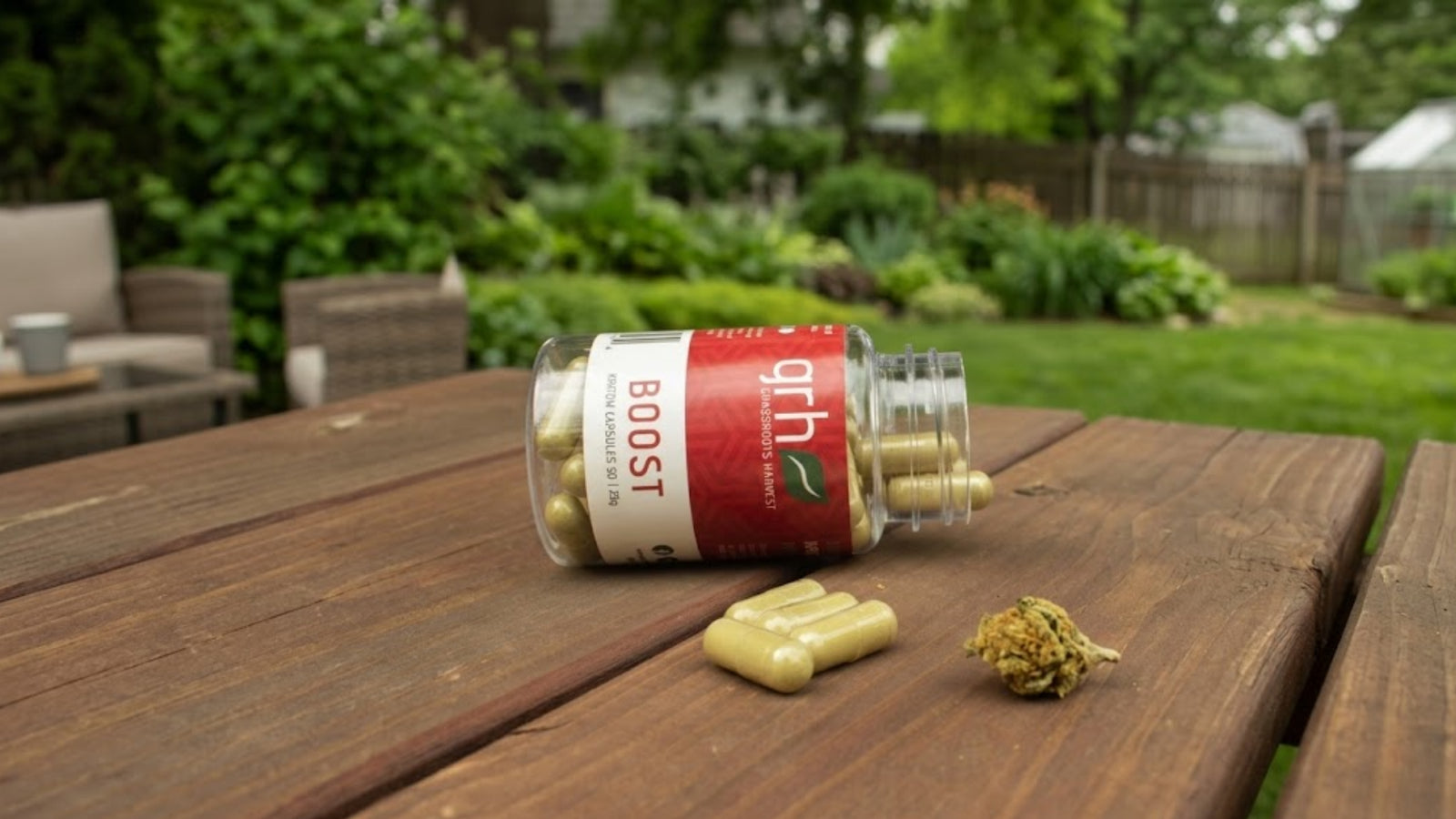
Mitragyna speciosa is the scientific name for the tree most American buyers know as kratom. The plant has a 3,000-year history of folk use in Southeast Asia and a much shorter Western retail history that's now grown into a multi-hundred-million-dollar category. We'll walk through what mitragyna speciosa actually is at the botanical level, where it grows, the alkaloids responsible for its reported effects, how vein color and harvest stage shape the experience, and what to look for when buying. The U.S. market for mainstream kratom hit $441.4 million in retail sales for the 52-week period ending October 2024, per industry roundup. That growth is real, and so is the responsibility to understand what you're actually buying.

Table of Contents
- Mitragyna Speciosa as a Plant: Botany Without the Jargon
- Where the Tree Grows and What Climate It Needs
- The Active Compounds (Alkaloids You'll See on a COA)
- How Alkaloid Profile Shifts by Vein and Harvest Stage
- Traditional Use vs Modern Western Use
- Forms You'll See on the Shelf Today
- Safety, Side Effects, and Honest Limits
- Legal Status (United States, 2026 Snapshot)
- Final Thoughts
TL;DR
- Mitragyna speciosa is a tropical evergreen tree in the coffee family, native to Indonesia, Thailand, Malaysia, and Papua New Guinea.
- The plant produces over 40 alkaloids; mitragynine and 7-hydroxymitragynine are the two with the most documented effects.
- Vein color (white, green, red, yellow) reflects harvest stage and correlates with the alkaloid ratio users feel.
- Traditional users chewed fresh leaves or brewed tea; Western consumers buy powder, capsules, extracts, and shots.
- Quality comes down to single-source leaf, current Certificate of Analysis, and honest labeling. No COA, no trust.
- Mitragyna speciosa is federally legal in the U.S. as of 2026 with state-level variation; concentrated synthetic 7-hydroxymitragynine is a separate regulatory category.
Mitragyna Speciosa as a Plant: Botany Without the Jargon
Mitragyna speciosa belongs to the same plant family as coffee and gardenia. The tree grows tall, the leaves carry the alkaloids responsible for kratom's reported effects, and the species reproduces through both seeds and cuttings. Knowing the basics helps separate marketing claims from the actual plant.
A Coffee-Family Tree Native to Southeast Asia
The full taxonomic name is Mitragyna speciosa Korth., a flowering tropical tree in the family Rubiaceae. Coffee, gardenia, and cinchona (the source of quinine) all sit in the same family. The closest plant cousins share certain alkaloid pathways, which is part of why kratom produces real physiological effects rather than just placebo. Mature trees reach 50 feet in their native range, with broad oval leaves up to 7 inches long and clusters of small yellow flowers.

How the Tree Looks, Grows, and Reproduces
Mitragyna speciosa is evergreen in its native range, holding leaves year-round and producing new growth continuously when conditions stay warm and humid. Mature trees flower and seed, but commercial cultivation usually relies on cuttings because clones preserve the alkaloid profile of the parent plant. That's why "single-source" leaf claims matter on a Certificate of Analysis: the genetic line stays consistent batch to batch.
Where the Tree Grows and What Climate It Needs
Mitragyna speciosa thrives in equatorial humidity, well-drained but moisture-rich soil, and consistent warm temperatures year-round. The native range stretches across Southeast Asia and into the Pacific. Most kratom on the U.S. market is sourced from Indonesian growers because the climate, infrastructure, and regulatory framework all line up better there than in neighboring countries.
Native Range Across Southeast Asia
The tree grows wild in Indonesia (especially Borneo and Sumatra), Thailand, Malaysia, Papua New Guinea, and the southern Philippines. Each region produces leaf with slightly different alkaloid expressions because soil, altitude, and rainfall all shape the chemical profile. "Bali," "Borneo," "Maeng Da" and similar strain names started as references to growing region or harvest practice rather than separate plant subspecies.
Why Indonesian Leaf Dominates the Market
Thailand banned mitragyna speciosa in 1943 (a ban that was finally lifted in 2021), Malaysia regulates it heavily, and Papua New Guinea isn't structured for export at scale. Indonesia, particularly West Kalimantan and Sumatra, became the global supply hub by default. Most quality U.S. brands source single-origin Indonesian leaf and publish the region on their COA. We do.
The Active Compounds (Alkaloids You'll See on a COA)
Researchers have identified more than 40 alkaloids in mitragyna speciosa leaf. Two of them, mitragynine and 7-hydroxymitragynine, do most of the work users feel. The rest are minor alkaloids that round out the experience and contribute to the differences between strains. Reading a COA is mostly a question of knowing which compounds matter and at what levels.

Mitragynine: The Workhorse Alkaloid
Mitragynine is the dominant compound in raw mitragyna speciosa leaf, typically 1.0% to 1.6% by weight in quality material. It interacts with the body's opioid receptors at lower potency than pharmaceutical opioids, producing the everyday effects most users describe: mood lift at low doses, relaxation at moderate doses, sedation at high doses. Most of what people associate with kratom is mitragynine acting at receptor sites that also respond to endogenous compounds the body produces on its own.
7-Hydroxymitragynine: The Minor Alkaloid That Punches Above Its Weight
7-hydroxymitragynine sits at much lower concentrations in fresh leaf, typically under 0.05% in quality kratom, but binds opioid receptors more strongly than mitragynine does. Concentrated extracts and synthetic 7-OH products amplify this compound far past anything the leaf produces naturally. That's the regulatory and safety distinction the FDA has been making: leaf-level 7-OH is part of the plant; isolated and concentrated 7-OH is a different category entirely.
A nationally representative U.S. survey by Schimmel et al. found pain management was the most common reason participants reported using kratom, with mood and stress relief close behind. The reasons users give line up with what the alkaloid science would predict from mitragynine's receptor activity.
The Other Alkaloids (Speciogynine, Speciociliatine, Paynantheine)
Beyond the headline two, mitragyna speciosa leaf contains speciogynine, speciociliatine, paynantheine, mitraphylline, isomitraphylline, and several dozen others at trace levels. Researchers don't fully understand each compound's individual contribution, but the combined profile is part of why traditional water-prepared leaf and modern lab-extracted isolates can feel meaningfully different at similar mitragynine doses. The minor alkaloids are why "full-spectrum" matters as a product category.
How Alkaloid Profile Shifts by Vein and Harvest Stage
Vein color refers to the color of the central vein on the kratom leaf at harvest, which correlates loosely with alkaloid ratios. White is harvested earliest, green in the middle of maturation, red latest. Yellow is usually a post-harvest fermentation step. The differences are real but smaller than marketing copy often suggests; soil and growing conditions matter at least as much as harvest timing.

White, Green, Red, Yellow: What the Color Actually Means
White vein leaf comes from earlier harvests when the alkaloid balance leans more toward energetic and stimulating compounds. Green vein is the daily-driver category, balanced between energy and relaxation. Red vein comes from mature leaf and tends toward relaxation, sedation, and discomfort relief. Yellow is usually green or white leaf processed through a fermentation step that shifts the alkaloid ratio toward something smoother and longer-lasting. The plant is the same species; the timing and processing produce the variation.
Maeng Da and Other Grades
Maeng Da translates roughly as "pimp grade" in Thai slang. It refers to higher-potency leaf typically harvested from larger, more mature trees with denser alkaloid content. Maeng Da isn't a separate strain or subspecies; it's a quality designation. White Maeng Da, Green Maeng Da, and Red Maeng Da exist for the same reason a single coffee bean variety can be roasted three ways.
| Vein | Harvest Stage | Typical Alkaloid Lean | Reported Effect Profile |
|---|---|---|---|
| White | Earliest | Higher mitragynine | Energy, focus, alertness |
| Green | Mid-maturation | Balanced | Mood lift, mild focus, daily use |
| Red | Latest | Higher 7-OH and other alkaloids | Relaxation, sleep support, discomfort relief |
| Yellow | Post-harvest fermentation | Modified ratio | Smoother, longer-lasting, balanced |
Traditional Use vs Modern Western Use
Mitragyna speciosa has been used in Southeast Asia for centuries, primarily by manual laborers, farmers, and rural communities. The way the plant gets used in those contexts looks different from how Western consumers buy and use it today. Both use patterns are valid, and understanding both helps frame what kratom is and isn't.
Centuries of Tropical Folk Use
In Thailand, Malaysia, and Indonesia, workers have chewed fresh mitragyna speciosa leaves or brewed them into tea for energy on long fishing days, focus during repetitive labor, and mild discomfort relief from the kind of joint and muscle wear that comes with manual work. The traditional use was mostly daytime, mostly low-dose, and integrated into a daily rhythm rather than treated as a supplement or drug.

How the Plant Reached the West
Mitragyna speciosa entered Western awareness slowly through the 2000s and accelerated in the 2010s as users began discussing the plant openly online. Powder shipped easier than fresh leaf, capsules followed, and extracts came later as the category commercialized. The Western context is mostly recreational, focus support, sleep support, or pain management rather than the workday integration the traditional use pattern shows.
A March 2026 CDC MMWR report on kratom-related calls to U.S. poison centers from 2015 to 2025 showed adverse reports correlate strongly with concentrated extract products and synthetic 7-OH rather than traditional leaf. The takeaway maps cleanly onto the traditional vs Western use pattern: the further a product gets from leaf, the higher the risk envelope.
Forms You'll See on the Shelf Today
American consumers buy mitragyna speciosa in five main formats. Each one has different onset speeds, dose precision, and quality risks. Knowing which format suits which goal saves a lot of trial-and-error money.

Powder, Capsules, Extracts, Shots
Powder is the format with the most dose flexibility: weigh out grams on a scale, mix with water or juice, drink the bitter result. Capsules pre-dose the same powder for users who want convenience over flexibility. Liquid extracts concentrate the alkaloids per serving so a 1 ml shot can replace 5 grams of powder. Tablet extracts bring shelf-stable potency. Tinctures sit between capsule and shot in onset speed. Pick the format by how much prep time you're willing to invest and whether dose precision matters more than convenience for your routine.
| Form | Onset | Duration | Dose Flexibility | Best For |
|---|---|---|---|---|
| Powder | 30-60 min | 4-6 hr | High | Custom dosing, larger sessions |
| Capsules | 45-75 min | 4-6 hr | Medium | Travel, no-prep routines |
| Liquid extract | 15-30 min | 3-5 hr | Medium | Fast onset, experienced users |
| Extract tablet | 30-60 min | 4-6 hr | High | Travel, shelf-stable potency |
| Tincture | 15-45 min | 3-5 hr | High (per drop) | Sublingual, measured dose |
Safety, Side Effects, and Honest Limits
Mitragyna speciosa is a botanical with real pharmacology, which means real side effects, real interactions, and real situations where it doesn't belong. The honest version of "is kratom safe" is "depends on the product, the user, and the dose." Worth getting specific.
Side Effect Profile
Common short-term side effects include nausea (especially at higher doses or on an empty stomach), constipation with regular daily use, dry mouth, mild headache, and dehydration. Heavy daily use can produce dependence and a withdrawal pattern resembling a strong caffeine withdrawal. Most users who keep doses moderate and rotate strains rarely hit those issues. Users who climb the dose ladder chasing tolerance hit them often.

Drug Interactions and Skip Profiles
Skip mitragyna speciosa entirely if any of these apply: pregnancy or nursing, prescription medications that interact with opioid receptors or serotonin (SSRIs, MAOIs, certain pain medications), liver disease, history of substance dependency, drug-tested employment or athletics, or under 21. Combining kratom with alcohol, benzodiazepines, or sedating prescription drugs raises real risk. The plant's mild reputation doesn't override pharmacology.
A solid mitragyna speciosa Certificate of Analysis should report on:
- Mitragynine percentage: typically 1.0% to 1.6% in quality leaf.
- 7-hydroxymitragynine percentage: typically under 0.05% in unadulterated leaf.
- Heavy metals: lead, arsenic, cadmium, mercury, all at or below detection limits.
- Microbial screen: salmonella, E. coli, yeast, mold, all under regulatory thresholds.
- Pesticide screen: confirms no banned ag chemicals.
If a vendor can't show a current COA from an independent lab on the exact batch you're buying, walk.
A new user picks up a 28g bag from a gas station, takes 5 grams (a "scoop"), feels nausea and dizziness within an hour, and decides kratom doesn't work for them. The actual issue: no scale, unknown alkaloid potency from an unverified source, and a starting dose that was probably twice what it should have been. Lesson: source from a vendor with a current COA, weigh doses, start at 2 to 3 grams.
Why Quality and Sourcing Matter
SAMHSA's National Survey on Drug Use and Health reported lifetime kratom use among Americans rose from roughly 4 million to 5 million people between 2019 and 2023. The growth has brought new users to a category where quality varies enormously across vendors. Buying from a vendor with single-source Indonesian leaf and current third-party COAs solves most of the documented problems.
Before your first mitragyna speciosa purchase, run this short check:
- The vendor publishes a current third-party COA on the exact batch.
- The COA shows mitragynine in the 1.0-1.6% range and 7-hydroxymitragynine under 0.05%.
- Heavy metal, microbial, and pesticide screens all show passing results.
- The leaf source is a single farm or region, not a generic blend.
- The brand is willing to answer sourcing questions in writing.
An experienced user we hear from regularly takes 3 grams of green Maeng Da on workday mornings, swaps to 3 grams of red Maeng Da two evenings a week, and skips kratom entirely on Wednesday and the weekend. Same dose has worked for him for two years because the rotation prevents tolerance from climbing. He buys from one vendor and reads every batch's COA.
A reader emailed asking whether mitragyna speciosa would interact with her SSRI. We told her to talk to her prescribing doctor before adding kratom because the literature on serotonin interactions isn't fully settled and the risk profile changes by individual. She did. Her doctor said no for now. That's the right answer for anyone in the same situation.
Legal Status (United States, 2026 Snapshot)
Mitragyna speciosa is legal under U.S. federal law as of 2026, with state-level variation. Concentrated synthetic 7-hydroxymitragynine is on a different track and may face Schedule I scheduling. Knowing the distinction helps when reading news headlines.
In July 2025, the FDA publicly recommended that the DEA schedule concentrated, synthetic 7-hydroxymitragynine as a Schedule I controlled substance, while leaving natural mitragyna speciosa leaf untouched. Rhode Island reversed its kratom ban in July 2025 via a Kratom Consumer Protection Act, signaling the regulatory direction at the state level: regulate, label, and age-restrict rather than blanket-ban. Several states have passed similar KCPA-style laws as of early 2026.

If you've worked through this guide and want a clean source for mitragyna speciosa products, our shelf at GRH Kratom carries single-source Indonesian leaf in powder, capsule, and extract form. Every batch ships with a current Certificate of Analysis, and our Effects shelves sort the catalog by what people actually want: Energy, Focus, Mood, Relaxation, Sleep, and Euphoria. Browse the catalog at grhkratom.com and pick by goal rather than by marketing.

Final Thoughts
Mitragyna speciosa is a real plant with real chemistry and a real cultural history. The Western retail category around it is younger and noisier than it deserves to be. What you actually want from any kratom product is single-source leaf, a current Certificate of Analysis, alkaloid percentages in the documented quality range, and a brand willing to answer sourcing questions. Treat the plant with respect, rotate strains, take rest days, and let the alkaloids do their job at the doses they were meant to work at.
The customers we hear from after years of use are almost always the ones who matched the plant's traditional pace rather than chasing tolerance up the ladder.

For a daily-driver kratom with the alkaloid profile this guide describes, our Joy Blend Kratom Powder is a green plus white Maeng Da blend with current COAs on every batch. It is the format we recommend most often to readers who finish this guide and want a clean place to start.


