



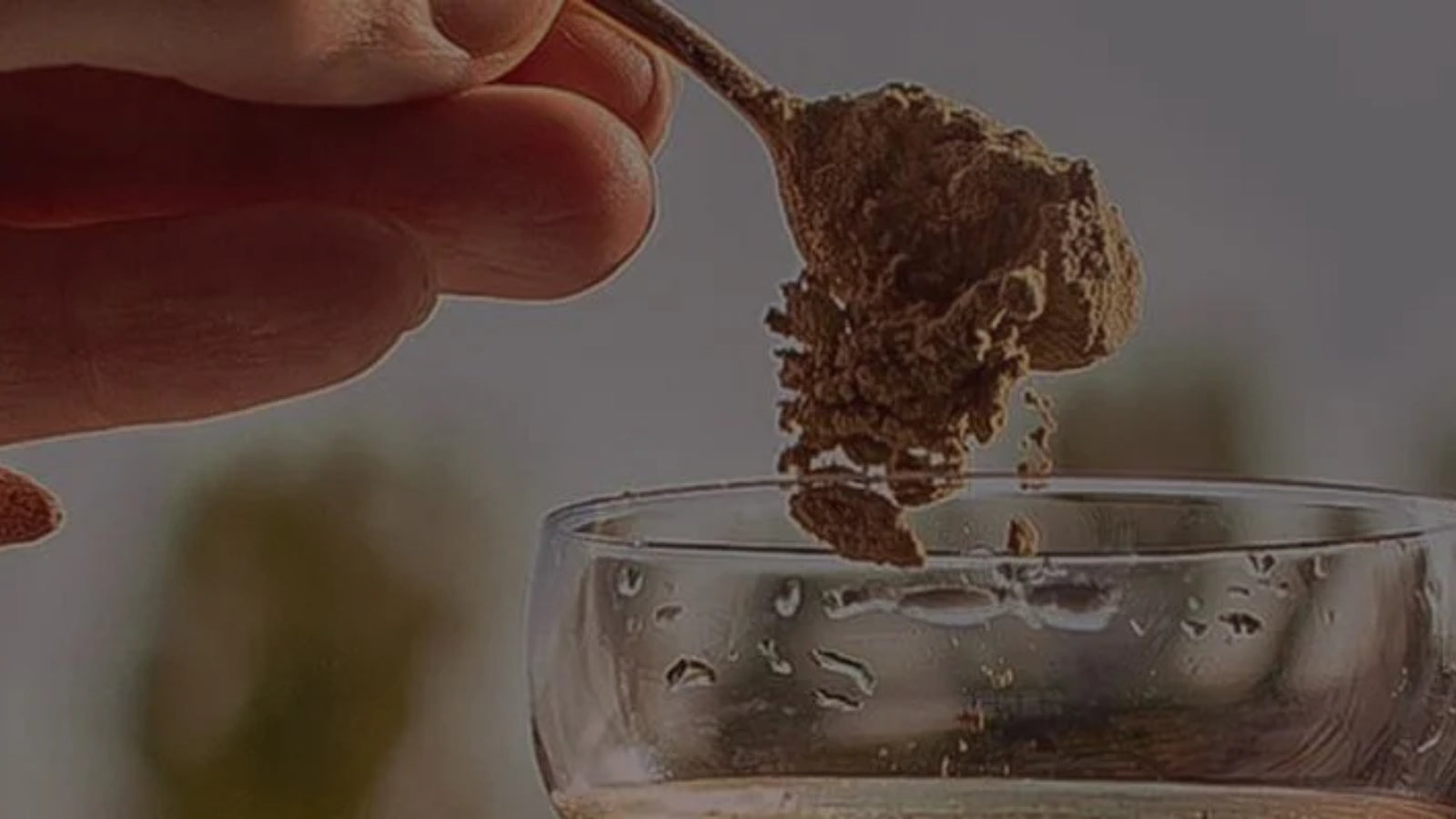
Kratom and alcohol show up in the same conversations a lot in 2026: kava bars selling kratom drinks next to non-alcoholic beer, customers walking in to skip alcohol for the night, friends asking whether they can have a glass of wine on the way home from a kratom session. The honest answer to most of those questions is no, and the data on why is getting harder to ignore. The CDC reported in March 2026 that hospitalizations and poisonings involving kratom rose more than 1,200% over the past decade, with the bulk of severe cases tied to polysubstance use, and 79% of kratom-associated deaths involving more than one substance. We'll walk through what mixing kratom and alcohol actually does in the body, how long to wait between them if you must, why the sober-curious wave is reshaping the alcohol-alternative shelf, and where kratom honestly fits when alcohol is in the picture.
Table of Contents
- The Quick Answer: Don't Mix Them
- Why Mixing Kratom and Alcohol Raises Real Risk
- What Happens in the Body When You Combine Them
- Timing: How Long to Wait Between Kratom and Alcohol
- The Sober-Curious Wave: Why Kratom Is on the Alcohol-Alternative Shelf
- Replacing Alcohol with Kratom: What Actually Works
- Withdrawal: Kratom's Mixed Role When Someone's Quitting Alcohol
- Picking a Strain to Replace Alcohol
- Quality Markers and COA Before You Switch
- Honest Limits and Skip Profile
- Where GRH Kratom Fits
- Final Thoughts
TL;DR
- Mixing kratom and alcohol is meaningfully riskier than either alone. Both depress the central nervous system, and the additive effect is what shows up in poison-center reports.
- 79% of kratom-associated deaths involve multiple substances. Alcohol is one of the most common combinations.
- If you've already had alcohol, skip kratom for the night. If you've taken kratom, wait at least 6 hours before any alcohol.
- The sober-curious shift is real: U.S. adult drinking is at a 90-year low, and kratom is increasingly used as an alcohol alternative rather than a companion.
- Kratom for alcohol withdrawal is a mixed picture. Some users report it helps; clinicians warn against self-treating dependence without supervision.
- Single-source Indonesian leaf with a current Certificate of Analysis is the cleanest way to test kratom as an alcohol alternative.

The Quick Answer: Don't Mix Them
The short answer to "can you mix kratom and alcohol" is no, you shouldn't. Both substances are central nervous system depressants, both affect breathing and motor control, and both interact with the liver. Combining them increases sedation, raises the risk of respiratory depression, impairs coordination further than either does alone, and adds liver stress on top of liver stress. The interaction isn't theoretical. It shows up in poison-center reports, hospital admissions, and the polysubstance death statistics the CDC has been tracking.
What "Don't Mix Them" Actually Means in Practice
It means you don't take kratom and follow it with a glass of wine an hour later. It means you don't take kratom while you still feel even a faint buzz from earlier alcohol. It means kratom and alcohol shouldn't share a workday or an evening. The kratom and alcohol conversation in user forums is full of people who tested the combination, felt fine the first few times, and then ran into a session that landed them in the ER. The pharmacology is consistent enough that "I felt fine before" isn't a useful argument against the risk.
Why Mixing Kratom and Alcohol Raises Real Risk
The risk profile of combining kratom and alcohol comes down to three things: additive central-nervous-system depression, shared metabolic load on the liver, and cumulative effects on breathing and motor coordination. Each of those is manageable with one substance at moderate dose. Combined, the safety margin shrinks fast.
The CDC reported in March 2026 that hospitalizations and poisonings involving kratom rose more than 1,200% over the past decade, with severe outcomes overwhelmingly clustered in polysubstance cases. Among reported kratom-associated deaths, 79% involved more than one substance. Alcohol shows up consistently in those combinations alongside benzodiazepines, opioids, and sleep medications.

Why "I Only Had Two Drinks" Doesn't Reset the Math
The kratom and alcohol risk doesn't follow a linear safe-zone rule. Two drinks plus 4 grams of kratom isn't safer than four drinks plus 4 grams; it's safer in degree but still in the same risk category. The biggest hospital-bound case reports we've seen don't come from heavy users binging both. They come from moderate users who assumed the small dose of each would be fine because they weren't drunk and weren't sedated. Pharmacology doesn't grade on subjective feel.
What Happens in the Body When You Combine Them
Kratom's main alkaloids, mitragynine and 7-hydroxymitragynine, are partial agonists at mu-opioid receptors. Alcohol affects GABA receptors, glutamate signaling, and a range of CNS pathways. The two substances don't bind the same receptors, which is part of why people assume mixing them is fine. The risk isn't receptor competition; it's the broad CNS depression both produce, which adds up quickly.

Slowed Breathing Is the Outcome to Watch
Respiratory depression is the dangerous endpoint. Either substance alone can mildly slow breathing at high doses; the combination accelerates that effect at much lower doses. Kratom alone has a relatively mild respiratory profile compared to pharmaceutical opioids. Adding alcohol changes the equation. The cases where kratom and alcohol go badly almost always involve breathing slowing further than either substance would have produced alone.
Liver Load Adds Up
Both alcohol and kratom are processed through the liver. Alcohol metabolism is well-studied and predictable. Kratom alkaloids interact with several cytochrome P450 enzymes, including ones that process alcohol and many prescription medications. The interactions aren't fully mapped, but the consistent finding is that combining kratom with alcohol or hepatotoxic medications stresses the liver more than either alone. People with existing liver conditions should avoid the combination entirely.
Timing: How Long to Wait Between Kratom and Alcohol
If you've decided to use both kratom and alcohol on the same day (which we don't recommend), the wait window matters. Kratom's effects peak around 1 to 2 hours after a powder dose and last 4 to 6 hours total. Trace alkaloids stay in the system longer. Alcohol clears at roughly one standard drink per hour, with sedating effects lingering after the buzz fades.

A Practical Wait Rule
The cleanest rule we've seen from long-term users: if kratom and alcohol both have to happen the same day, separate them by at least 6 hours, and lean on whichever you took first to be the only depressant in the system. If you've already had alcohol, the safer move is to skip kratom for the rest of the evening. The kratom and alcohol interaction risk drops sharply once one substance has fully cleared and the body has had time to rebalance.
The Sober-Curious Wave: Why Kratom Is on the Alcohol-Alternative Shelf
The bigger picture around kratom and alcohol in 2026 is that fewer Americans are drinking. Per a Gallup survey in July 2025, the percentage of U.S. adults who say they consume alcohol has fallen to 54%, the lowest reading in Gallup's 90-year history of the question. Younger consumers drive most of that shift. Kratom, kava, non-alcoholic beer, mocktails, and zero-proof spirits all moved from niche to mainstream in the same window because the underlying behavior shift is real.

Why Kratom Specifically Got Pulled Into the Conversation
People moving away from alcohol generally want one of three things: relaxation, social ease, or a less harsh way to wind down. Kratom delivers on all three depending on strain. Red-vein leaf at 2 to 3 grams produces relaxation similar in shape to what evening alcohol provides for many users, without the dehydration, the sleep disruption, or the morning cost. Green-vein leaf at lower doses gives the social-ease angle. The alcohol-alternative use case isn't theoretical; it's most of why kratom shelves grew next to kava bar shelves in the past three years.
Replacing Alcohol with Kratom: What Actually Works
Replacing alcohol with kratom isn't a one-to-one swap, and the people we hear from who've made the switch successfully follow a few habits. They start conservative on dose, they pick a strain matched to the goal alcohol was filling, they buy from a vendor with a current COA, and they treat kratom as a tool with limits rather than a daily replacement for the wine glass.
A workable approach to testing kratom as an alcohol alternative looks like this:
- Pick the goal alcohol was filling: relaxation, social ease, sleep onset, or rough-day decompression
- Match strain to that goal: red for relaxation and sleep, green for social, lower doses overall
- Start at 2 to 2.5 grams of weighed powder, not capsules at first
- Use water alongside; kratom is mildly dehydrating
- Skip kratom on the same day you have alcohol planned
- Track your routine for the first month; what works at week one may shift by week three

A Real Example of the Switch
A reader emailed us about her wine routine. She'd been having two glasses most weeknights to take the edge off a high-pressure job, then started waking tired and anxious. She tried 2.5 grams of Red Bali in warm water in the evening, kept the dose conservative, and after a month said her sleep was sharper, her morning anxiety had dropped, and she didn't miss the wine. Different routine, similar wind-down outcome, no alcohol cost the next morning. She also said the most important habit was not having any wine on kratom evenings, which kept the kratom and alcohol overlap out of her week entirely.
Withdrawal: Kratom's Mixed Role When Someone's Quitting Alcohol
The kratom and alcohol withdrawal question is more sensitive than the recreational mixing question. Some heavy drinkers report using kratom to soften the rough edges of cutting alcohol back. Some clinicians push back hard, pointing out that swapping one dependence for another isn't recovery, and that severe alcohol withdrawal can be medically dangerous and shouldn't be self-managed.

When Kratom Might Help and When It Probably Doesn't
The honest version of the kratom and alcohol withdrawal conversation is that kratom may help moderate drinkers reduce intake by giving them a different evening tool. It probably doesn't help heavy drinkers safely manage withdrawal, and it absolutely shouldn't replace medical supervision for anyone with a history of severe withdrawal symptoms. People considering kratom in the context of cutting back on alcohol should talk to their doctor first. The risk of seizures during alcohol withdrawal isn't something to handle with a botanical and a forum post.
Picking a Strain to Replace Alcohol
If you've decided to test kratom as an alcohol alternative, strain selection matters. Different strains lean different directions, and matching strain to the goal alcohol was filling produces better results than picking by name recognition.

| Strain | Best Alcohol-Replacement Use Case | Starting Dose | Time of Day |
|---|---|---|---|
| White vein | Morning anxiety drinkers | 2 g | Morning |
| Green vein | Social wine-with-dinner | 2-3 g | Late afternoon, evening |
| Red vein | Evening wind-down, sleep onset | 2-3 g | Evening |
| Yellow vein | All-day moderate drinkers | 2 g | Distributed |
The most-replaced alcohol pattern in the kratom and alcohol switch stories we hear is the evening wind-down glass of wine, and red-vein leaf is the most common landing spot. Green vein covers the wine-with-dinner social use case. White vein occasionally helps morning drinkers, though that pattern usually points to bigger issues that botanicals can't address alone.
Quality Markers and COA Before You Switch
Switching from alcohol to kratom only works if the kratom is clean. The kratom market in 2026 has cleaned up considerably, but the gap between best-in-class vendors and gas-station-tier extracts is still wide enough that the alcohol replacement experiment fails for some users because the leaf is bad rather than the plant being wrong for the goal.
A solid kratom COA should report on:
- Mitragynine percentage: typically 1.0% to 1.6% in quality leaf
- 7-hydroxymitragynine percentage: typically under 0.05% in unadulterated leaf
- Heavy metals: lead, arsenic, cadmium, mercury, all at or below detection limits
- Microbial screen: salmonella, E. coli, yeast, mold, all under regulatory thresholds
- Pesticide screen: confirms no banned ag chemicals
- Batch and date: dated within the last 12 months on the exact lot you're buying

If a vendor can't show a current COA from an independent lab on the exact batch you're buying, walk. The kratom and alcohol switch fails twice as often when the kratom is from an unverified source.
Honest Limits and Skip Profile
Kratom isn't right for everyone, and the kratom and alcohol context narrows the suitable group further. Skip kratom entirely if any of these apply, especially if alcohol is in the picture:

- Active or recent alcohol use, including a glass of wine the same evening
- Pregnancy or nursing
- Liver disease or hepatotoxic medications
- History of substance dependency
- Drug-tested employment or athletics
- Under 21
- Prescription opioids, benzodiazepines, or other sedating medications
Combining kratom with alcohol, benzodiazepines, or sedating prescription drugs raises real risk. The plant's mild reputation doesn't override pharmacology, and the kratom and alcohol combination specifically has enough adverse-event data behind it to take seriously rather than treat as conservative caution.
Where GRH Kratom Fits
If you've worked through the kratom and alcohol question and want a clean source for testing kratom as an alcohol alternative, our shelf at GRH Kratom carries single-source Indonesian leaf in powder, capsule, and extract form, with Effects shelves sorted by goal: Energy, Focus, Mood, Relaxation, Sleep, and Euphoria. Every batch ships with a current Certificate of Analysis. We also sell GÜD Tonics, our ready-to-drink kava line in two flavors (Pink Sunset for evenings and Baja Bliss for lighter daytime moments), for people who want a non-alcoholic relaxation option that isn't kratom. Browse the catalog at grhkratom.com and pick by what you're trying to replace.
Final Thoughts
Kratom and alcohol shouldn't share an evening. The pharmacology of combining two CNS depressants produces additive risk that shows up in poison-center reports and the polysubstance death statistics the CDC tracks. The kratom and alcohol question gets cleaner once the question shifts from "can I have both?" to "can kratom replace what alcohol was doing for me?" The sober-curious wave is real, the alcohol-alternative use case for kratom is one of the most consistent reasons people pick up the leaf today, and the switch usually works for people who source clean material, match strain to goal, start conservative, and treat kratom as a tool with limits. Mixing the two is the wrong move. Replacing one with the other, with care and a current COA, is a different conversation entirely.


