



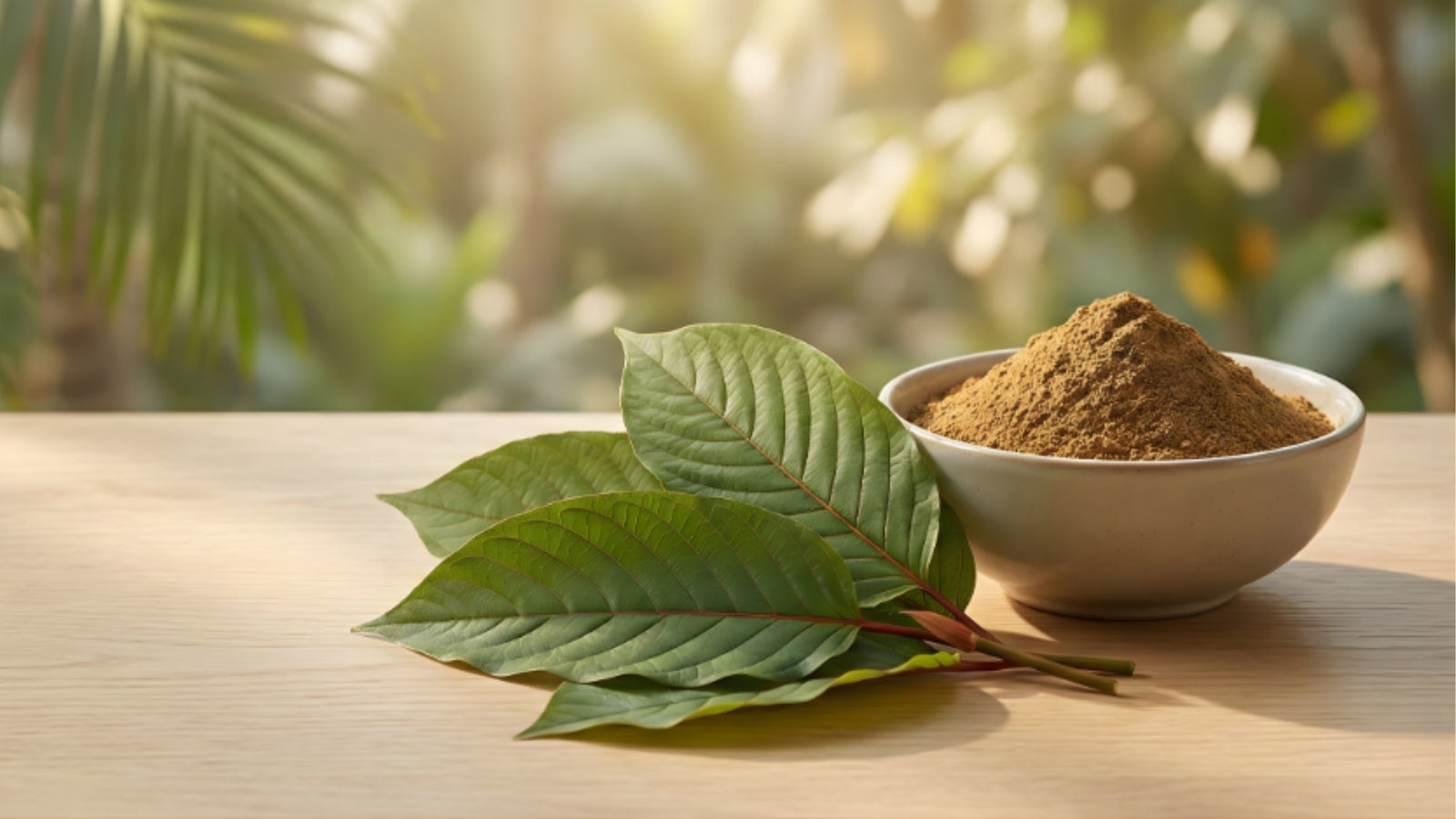
Red Maeng Da is one of the most asked-about strains in the entire red-vein category, and most of the questions reach for the same thing: what does it actually feel like when it hits. Not the marketing copy. Not the secondhand forum claims. The real, hour-by-hour effect profile that determines whether this strain belongs in your evening routine, your recovery toolkit, or somewhere else entirely. This guide goes deep on every effect category Red Maeng Da is known for, in the order you tend to notice them.
The short version is that Red Maeng Da behaves like a "settled adult" version of red kratom. It carries the body comfort and evening calm you expect from a red vein, but it pairs that with a clarity and mild lift that most pure reds lack. According to the American Kratom Association, roughly 23 million Americans use kratom products, and red veins are consistently the most-used category, which is why the felt-experience nuance of a strain like this one is worth getting right.
What follows is organized by effect category, with notes on onset, peak, duration, dose-dependence, and the lived experience at each step. If you have used Red Maeng Da before and want to understand why your sessions land the way they do, the body and pain sections will answer that. If you are deciding whether to try it at all, the dose-curve and side-effect sections will tell you what to expect and what to avoid.

Table of Contents
- The Red Maeng Da Effect Profile at a Glance
- Cognitive Effects: Quiet Focus Without a Wired Edge
- Mood Effects: A Softer, Settled Kind of Lift
- Body and Physical Effects: Heaviness, Warmth, and Muscle Release
- Pain-Modulation Effects: How Red Maeng Da Tackles Discomfort
- Evening-Relaxation Effects: The Unwind Window
- Onset, Peak, and Duration: How Long Each Effect Lasts
- Dose-Dependent Effect Curves: Low vs Moderate vs High
- Red Maeng Da vs Red Bali vs White Maeng Da Effects
- Side Effects to Watch and How to Stay Ahead of Them
- Who Benefits Most From Red Maeng Da's Effect Profile
- Frequently Asked Questions
- Final Thoughts
TL;DR
- Red Maeng Da's effect profile sits in the "calm and clear" lane rather than the heavy-sedation lane most other reds occupy.
- Cognitive effects feel like background noise being turned down rather than caffeine being added.
- Mood effects are a low-key warmth and sociability, not a euphoric spike.
- Body effects show up as gentle heaviness in the limbs, warmth across the chest, and a release of held muscle tension.
- Pain modulation is the strain's most reliable category, especially for low-grade chronic discomfort and post-exertion soreness.
- Evening relaxation arrives without forced drowsiness, which is why Red Maeng Da is often kept for the 7 to 10 p.m. window.
- Onset is typically 20 to 40 minutes, peak hits at 60 to 90 minutes, and effects taper over 4 to 6 hours total.
- Side effects are mild at sensible doses; the avoidable ones cluster around hydration, tolerance, and combining with sedatives.

The Red Maeng Da Effect Profile at a Glance
The cleanest way to describe Red Maeng Da's overall profile is to compare what it does and does not do at the same time. It relaxes the body without forcing sedation. It softens mood without producing the bright euphoric edge that some greens and whites carry. It modulates discomfort without numbing the way a pharmaceutical opioid would, because its mechanism is partial agonism, not full agonism, at the relevant receptors.
The two alkaloids doing most of the work are mitragynine and 7-hydroxymitragynine. Research summarized in the PMC review of mitragynine pharmacology describes mitragynine as a partial mu-opioid agonist with additional adrenergic and serotonergic activity, and 7-hydroxymitragynine as a more potent metabolite that drives much of the analgesic punch. Red Maeng Da is bred and dried to push these alkaloids toward a relaxation-leaning expression rather than a stimulation-leaning one.
What this means in practice is that the same dose can feel slightly different across users depending on their tolerance to caffeine, their general nervous-system state going into the session, and what they ate that day. The body responds to the alkaloid blend, but it also responds to context.
Cognitive Effects: Quiet Focus Without a Wired Edge
People reach for Red Maeng Da expecting a sleep aid and are sometimes surprised by the cognitive side. At a low to moderate dose, the strain quiets cognitive noise. Background worries get a little less sticky. Thought-loops slow down. There is a "clearer headspace" quality that lets concentration sit on one task for longer, though without the urgent forward-push that a white vein or coffee produces.
The mechanism is partly the calming effect on overall sympathetic tone (less internal noise to compete with thought) and partly mitragynine's mild stimulant component at sub-sedative doses. Most users describe the cognitive feel as "settled attention." Reading is easier. Long-form conversation is easier. Tasks that require patience but not creative spark do well in this window.
Higher doses flip this. Past the 5 to 6 gram mark for most users, cognitive effects shift from clarity toward soft fuzziness, and concentration becomes harder rather than easier. This is one of the reasons the dose curve discussion later in this guide matters so much for getting the effect you actually want.
Mood Effects: A Softer, Settled Kind of Lift

Red Maeng Da's mood effect is closer to "comfortable in your own skin" than to "elated." A common user description is feeling more okay with how the day went, which is a different category from feeling actively happy. This is why the strain often shows up in evening wind-down routines for people who carry low-grade stress through the workday.
The serotonergic and adrenergic activity contributes to a mild prosocial warmth. Conversation feels less effortful. Listening feels easier. Some users notice they laugh more readily at small things, not because anything became funnier but because the threshold for amusement dropped. It is a low-amplitude shift, and that subtlety is intentional with red veins.
What Red Maeng Da does not do, and should not be expected to do, is treat clinical mood disorders. According to NIDA's research summary on kratom, the evidence base for kratom as a mental-health intervention remains preliminary, and the felt mood effects are best understood as transient calm rather than a therapeutic outcome.
Body and Physical Effects: Heaviness, Warmth, and Muscle Release
This is where Red Maeng Da feels most distinctively "red." The body effects typically arrive around the 30 to 45 minute mark and present as a warmth that starts in the chest and shoulders and works outward. Limbs feel a little heavier. Held tension in the jaw, neck, and upper back tends to release. People who carry stress as physical tightness usually notice this category first.
The warmth is not the flushing kind you get from niacin or alcohol. It is more like the warmth you feel after a hot shower, slow and pervasive rather than sharp. Many users say it feels like their body finally "stopped bracing." That bracing-release is one of the reasons Red Maeng Da is favored over other reds by people who sit at a desk all day, where postural and stress-related tension accumulates by the hour.
At higher doses the heaviness can edge into sluggishness, which is desirable if you are heading to bed and unwanted if you still have things to do. Pairing dose with intended activity is the single biggest lever for getting the body effects you want.
Pain-Modulation Effects: How Red Maeng Da Tackles Discomfort
Pain modulation is the strain's strongest category and the one most users return for. The effect is best described as a reduction in the loudness of discomfort rather than its complete erasure. Background aches recede. Post-workout soreness feels more manageable. Low-grade chronic discomfort (the kind that gnaws at attention without being acute) tends to soften noticeably within the first hour.
The mechanism comes from 7-hydroxymitragynine's higher potency at the mu-opioid receptor combined with mitragynine's broader receptor activity. A peer-reviewed analysis on 7-hydroxymitragynine pharmacology describes the metabolite as the primary driver of the analgesic profile, with potency that varies meaningfully across red strains depending on drying and storage.
For people exploring whether the powder format gives them better control over the pain-modulation window, our Red Maeng Da Kratom Powder lets you adjust dose in half-gram steps, which matters when you are dialing in the exact intensity you need without sliding into sedation. The capsule format, by contrast, locks you into fixed increments. Both have a place; the powder just gives more control on the pain-modulation curve.
Evening-Relaxation Effects: The Unwind Window

Red Maeng Da is widely kept in the 7 to 10 p.m. slot for a reason. Its relaxation effects build gradually rather than slamming into place, which makes it pair naturally with the slowing-down activities most people do in the evening. Reading a book. A quiet conversation. Light stretching. Stepping outside for the last walk of the day.
The strain does not knock you out. It also does not keep you up. Users typically describe the window as "I could go to bed if I wanted, but I do not have to," which is a useful state for the part of the evening where you are still winding down rather than actively sleeping. The drowsy edge sharpens past the 90-minute peak, especially if the dose was on the higher side, which is why some users time their session backwards from when they want to be asleep.
Compared with other reds, the unwind feels less heavy. Red Bali drops the floor on alertness faster; Red Maeng Da is more of a gradient. That matters if you want to be social or productive for part of the evening before sliding into rest.
Onset, Peak, and Duration: How Long Each Effect Lasts
The full effect curve is reasonably consistent across users, with the largest variable being whether the dose was taken on an empty or full stomach. Empty stomach pulls onset and peak earlier and slightly higher; full stomach softens and delays both.
| Effect Category | Onset | Peak | Duration | Dose-Sensitivity |
|---|---|---|---|---|
| Cognitive calm | 20 to 30 min | 60 min | 3 to 4 hrs | Moderate (flips at high dose) |
| Mood warmth | 25 to 40 min | 60 to 90 min | 3 to 4 hrs | Low to moderate |
| Body heaviness | 30 to 45 min | 75 to 90 min | 4 to 5 hrs | High |
| Pain modulation | 30 to 45 min | 90 min | 4 to 6 hrs | Moderate |
| Evening relaxation | 40 to 60 min | 90 to 120 min | 4 to 6 hrs | High |
The 4 to 6 hour total window is why most users plan one session per evening rather than re-dosing. Re-dosing typically extends duration without adding intensity, which can push the back end of the curve into the next morning and produce a mild sluggish wake-up.
Dose-Dependent Effect Curves: Low vs Moderate vs High

Red Maeng Da is one of the more dose-sensitive strains in the red category, which is why the same strain can feel "perfect" at one dose and "too much" at another. The general shape of the curve looks like this for an average-tolerance adult.
At a low dose (1.5 to 2.5 grams) the strain leans cognitive and mood-forward. You get the quiet focus, the gentle warmth, the soft prosocial edge. Body effects are present but mild. This is the dose that works for early evening, light social settings, and people who do not want any sedation at all.
At a moderate dose (3 to 4.5 grams) the body and pain-modulation effects move to the foreground. Cognitive clarity is still present but starts sharing space with a pleasant heaviness. This is the dose that most experienced users settle on for evening unwind, especially when discomfort is part of why they reach for the strain.
At a high dose (5 to 7 grams) the strain becomes predominantly sedative. Body heaviness deepens, cognition softens, and the case for staying up to do anything beyond reading or watching something easy disappears. This dose is appropriate for late-evening use when sleep is on the immediate horizon. Pushing past this range produces more side effects without proportional effect benefit, so it is generally avoided.
Red Maeng Da vs Red Bali vs White Maeng Da Effects

Side-by-side comparisons help clarify what makes Red Maeng Da's effect profile distinct. The closest neighbor in the red category is Red Bali, which shares the body comfort and evening relaxation focus but lands heavier and faster. The closest neighbor in the maeng da lineage is White Maeng Da, which shares the clarity but inverts the energy direction.
Red Bali tends to drop the floor on alertness within the first 45 minutes, making it a stronger choice for users who want straightforward sedation. Red Maeng Da takes a gentler runway to a similar destination, which is why people who do not want to be functionally offline at 9 p.m. tend to prefer the maeng da. For a deeper comparison, our breakdown of Red Maeng Da vs Red Bali goes through the differences at each dose level. The general Red Bali profile is also covered in our Red Bali Kratom Effects Guide.
White Maeng Da is the morning sibling. The cognitive and mood effects are similar in their "settled clarity" character, but the energy direction is upward rather than downward, and the body effects are absent or barely noticeable. People who like the clarity of the maeng da lineage but need it at 9 a.m. usually find their place with white, and people who like that clarity at 9 p.m. usually find their place with red. The broader maeng da family is summarized in our What Is Maeng Da Kratom guide.
Side Effects to Watch and How to Stay Ahead of Them
Most side effects from Red Maeng Da are mild and entirely preventable. The cluster of avoidable ones revolves around hydration, food timing, tolerance management, and combinations with other depressants. The cluster that requires more attention involves longer-term use patterns and combining with substances that share mechanism.
Mild dehydration shows up as a dry mouth or a faint headache the next morning and resolves with adequate water intake during and after the session. Mild nausea, usually at higher doses on an empty stomach, resolves with a small meal before or during onset. Mild constipation is more common with regular use of red veins and responds to dietary fiber and water. None of these are unique to Red Maeng Da, and all are dose-sensitive.
The more important caution involves combination with other central-nervous-system depressants, including alcohol, benzodiazepines, and prescription opioids. According to the FDA's dietary supplements guidance, mixing kratom with other depressants is one of the patterns most commonly associated with adverse outcomes. The safe practice is to use Red Maeng Da on its own and to leave generous time before or after other depressants.
Who Benefits Most From Red Maeng Da's Effect Profile

This strain is not for everyone. The user profile it serves best is someone who wants meaningful body comfort and evening calm without giving up the ability to think clearly or be socially present. That includes desk workers carrying postural tension, post-workout users managing soreness, people with low-grade chronic discomfort that disrupts evenings, and users who have tried Red Bali and found it heavier than they wanted.
If you are new to Red Maeng Da specifically, here is the tracking checklist that produces the most useful first-session data.
- Pick a low starting dose (1.5 to 2 grams) and commit to leaving it alone for 90 minutes before deciding to add more.
- Eat a light meal 30 to 60 minutes before dosing, not immediately before, so onset is not delayed past the window you want.
- Have water on hand and drink steadily, especially in the first 90 minutes.
- Write down what you notice at the 30, 60, 90, and 180 minute marks. Brief notes only: "shoulders dropping," "background ache softer," "want to sit down."
- Avoid combining with alcohol, benzodiazepines, or other opioids on the first session so you can attribute the effects accurately.
- Do not re-dose. The first session is a data session, not an optimization session.
- Note the next morning how you slept and how you woke up. Sluggish wake-up suggests the dose was too high or too late.
Users who find their first session under-responsive at a low dose typically benefit from a single half-gram increase on session two rather than a full gram, because the dose curve for Red Maeng Da is steep enough that one gram makes a real difference in body effects.

For users who already know they want the relaxation-forward profile but prefer a fixed-dose format, our Red Maeng Da Kratom Capsules deliver the same alkaloid expression in pre-measured increments. Capsules trade a small amount of dose granularity for predictability and travel convenience.
Frequently Asked Questions
How long until Red Maeng Da effects kick in?
Onset is typically 20 to 45 minutes. Empty stomach pulls onset earlier and slightly more intense. A small meal 30 to 60 minutes before dosing softens onset and slightly extends duration.
What does Red Maeng Da feel like compared with other red strains?
It feels lighter and clearer than Red Bali, with similar body comfort and pain modulation but without the heavier sedation. Compared with Red Borneo it lands gentler and lasts about the same total duration.
Is Red Maeng Da good for evening relaxation?
Yes, and that is its most common use case. The effects build gradually rather than dropping you into sleep, which makes it well-suited for the wind-down hours rather than the lights-out moment itself.
What is the right dose for Red Maeng Da effects?
Most users land between 2.5 and 4.5 grams for evening use. Low end for cognitive and mood focus; moderate range for body comfort and pain modulation; higher end for sedation and sleep approach. New users should start at 1.5 to 2 grams.
How long do Red Maeng Da effects last?
Four to six hours total, with the strongest part of the curve sitting in the 60 to 120 minute window. The back half tapers gradually and is the reason most users plan one session per evening rather than re-dosing.

Does Red Maeng Da help with pain?
It modulates pain rather than eliminating it. Background aches, post-exertion soreness, and low-grade chronic discomfort tend to feel less loud within the first hour. It is not appropriate for acute or severe pain that warrants medical attention.
What are the side effects of Red Maeng Da?
At sensible doses, side effects are usually mild: dry mouth, occasional nausea on an empty stomach, mild constipation with regular use. The more serious concern is combining with other central-nervous-system depressants like alcohol or benzodiazepines, which should be avoided.
Can I take Red Maeng Da every day?
Daily use builds tolerance faster than rotating with other strains. Most users benefit from alternating Red Maeng Da with other reds or with off-days to keep the effect intensity consistent over the long term.
Final Thoughts
Red Maeng Da occupies a useful and somewhat unusual position in the red-vein category. It delivers the body comfort, pain modulation, and evening relaxation that people seek out reds for, but without the heavier sedation that defines strains like Red Bali. That combination of relaxation plus clarity is exactly what makes it the most asked-about red in our catalog.
If you are dialing in your first sessions, the dose curve matters more than any other variable. Start low. Note what each effect category feels like at each dose level. Build a small personal map of what 2 grams, 3 grams, and 4 grams do for your particular body and your particular evening. That map is more valuable than anyone else's recommendation. Our Red Maeng Da Kratom Powder gives you the half-gram granularity to build that map cleanly.

For users whose evenings tilt more toward mood and social warmth than toward pain modulation or sedation, our Joy Blend Kratom Powder offers a different alkaloid expression that may sit better than a pure red. Many users keep both on hand and choose based on the evening they are walking into.
Use Red Maeng Da deliberately and at sensible doses, pay attention to how your body responds across the first few sessions, and the strain will tell you fairly quickly whether it has a place in your routine. The effect profile is consistent enough that most users know within a week of using it whether it fits.


