



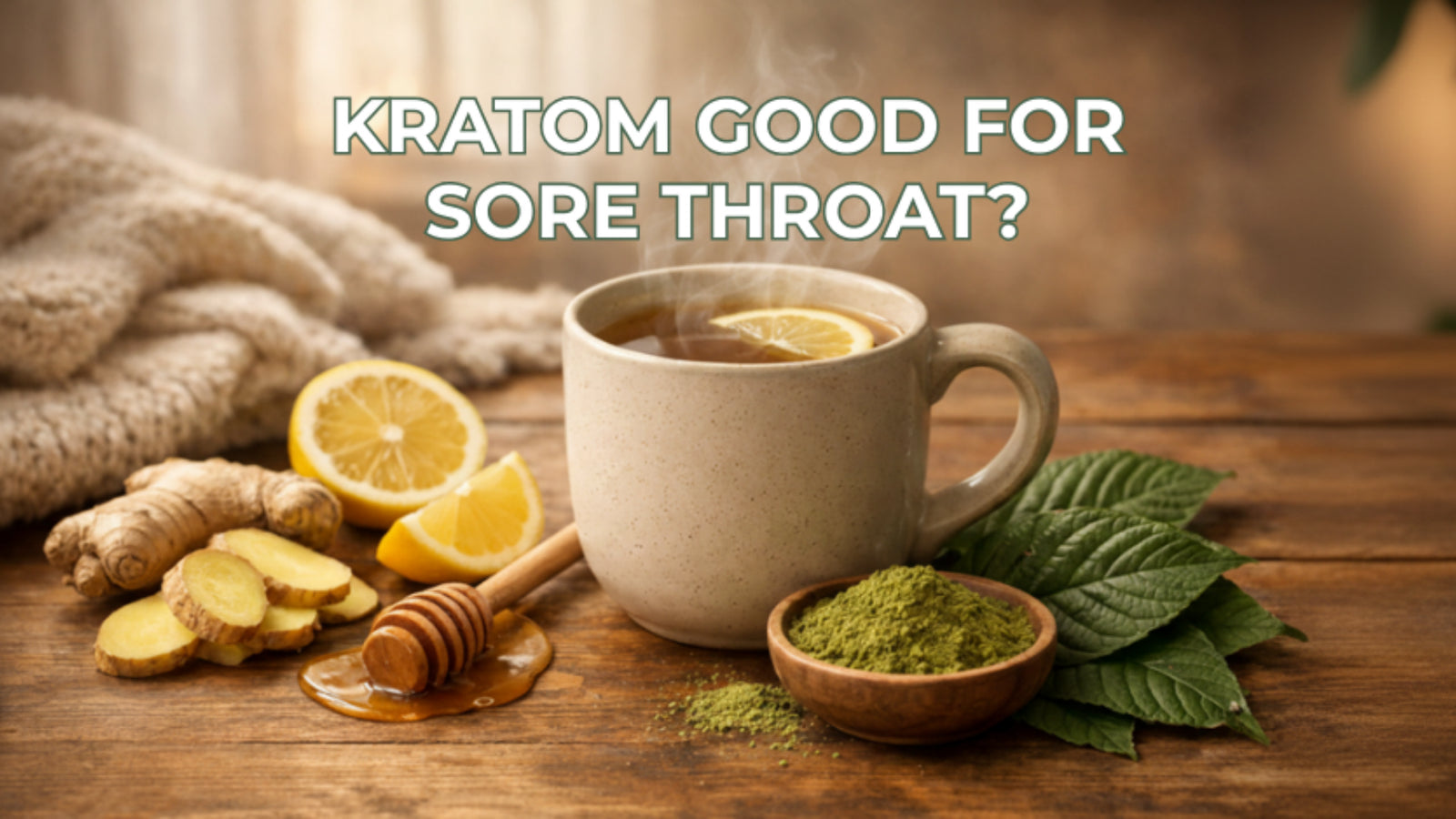
A scratchy, raw throat has a way of taking over your whole day. You notice it on the first swallow in the morning, and it tags along through every sip of coffee and every phone call after that. Most of us reach for the same familiar comfort measures our families always used, and for good reason. A sore throat is one of the most common reasons people look up home care, and the Centers for Disease Control and Prevention notes that most sore throats are caused by viruses and tend to ease on their own with rest and supportive care (CDC, sore throat basics).
This roundup walks through the natural remedies for sore throat that people lean on at home, from a warm salt-water gargle to honey, herbal tea, and a humidifier. We also take a careful, claim-free look at where botanicals like kratom and kava fit for the folks who already keep them in their wellness routine. Nothing here is a cure, and nothing here replaces a conversation with your doctor. Think of it as a friendly, organized look at the home comfort steps people actually use.
One quick note before we start. This article is educational and is not medical advice. Kratom is not approved by the FDA to treat, cure, or prevent any condition, including a sore throat. If your symptoms are severe or stick around, please see a healthcare professional.

Table of Contents
- TL;DR
- How We Chose These Comfort Measures
- Comfort Measures at a Glance
- Warm Salt-Water Gargle
- Honey and Warm Liquids
- Hydration Through the Day
- Herbal and Throat Teas
- Humidifier and Moist Air
- Rest and Easy Days
- Lozenges and Hard Candy
- Soft Foods and Cool Treats
- Where Botanicals Like Kratom and Kava Fit
- Things People Often Skip
- When to See a Professional
- Quick Comparison Table
- Notable Mentions
- Frequently Asked Questions
- Final Thoughts
TL;DR
- Most sore throats come from viruses and tend to settle with rest and gentle home care, so comfort measures are usually the first thing people try.
- A warm salt-water gargle is one of the oldest and simplest home remedies sore throat sufferers reach for, and it costs almost nothing.
- Honey stirred into warm water or herbal tea gives a soothing, coating texture that many people find comforting.
- Steady hydration keeps the throat moist, which is why sipping fluids all day is on nearly every home-care list.
- Caffeine-free herbal tea, like chamomile or ginger, doubles as a warm drink and a cozy ritual.
- A clean humidifier adds moisture to dry indoor air, which can feel kinder to an irritated throat in winter.
- Botanicals like kratom and kava are plants some people include in their routine, but they are not treatments for a sore throat or any condition.
- See a healthcare professional if a sore throat lasts more than about a week, comes with a high fever, or makes swallowing or breathing difficult.

How We Chose These Comfort Measures
We wanted this list to reflect what people genuinely use, not a wishlist of exotic ingredients. So we leaned on three simple ideas. First, accessibility, since almost everything here lives in a normal kitchen or corner store. Second, gentleness, because a scratchy throat is already irritated. Third, honesty, because we are describing comfort, not cures. Home care can make you feel better while a common cold runs its course, and that is worthwhile on its own.
We also kept the medical claims off on purpose. The CDC points out that antibiotics do not help sore throats caused by viruses, which is most of them, and that supportive care is the usual path (CDC, sore throat and antibiotic use). That framing shaped everything below. If you are curious about the broader picture of common cold symptoms and self-care, the National Library of Medicine keeps a plain-language overview worth a read (NCBI Bookshelf, common cold).
Comfort Measures at a Glance
Here is the short version of what is coming. The throat-care basics are warm salt-water gargles, honey in warm liquids, steady hydration, herbal tea, and a humidifier. Add rest, lozenges, and soft foods, and you have most of the toolkit families pass down. Toward the end, we touch on botanicals like kratom and kava for readers who already keep them around, plus a clear list of warning signs that mean it is time to call a professional. None of these steps is a treatment, but together they describe how a lot of people make a rough few days more bearable.
Warm Salt-Water Gargle
The warm salt-water gargle is the classic for a reason. It uses two things almost everyone has, costs basically nothing, and takes under a minute. People stir a little salt into a glass of warm water, gargle gently for a few seconds, then spit it out and repeat. It is one of the most widely cited home remedies sore throat sufferers reach for, and it shows up across reputable self-care guidance as a simple comfort step.
A few practical notes. Use warm, not hot, water, keep it gentle, and do not have young children gargle, since they can swallow the mixture. This is a comfort measure, not a cure, but it is an easy one to keep in your back pocket.

Honey and Warm Liquids
Honey is a favorite for a simple reason. It has a thick, coating quality that a lot of people find soothing when their throat feels raw, and it blends beautifully into warm water or tea. A spoonful stirred into a warm drink is a small ritual that feels good on a rough morning. Some folks add a squeeze of lemon for brightness, though that is purely about taste.
One important safety note. Honey should never be given to infants under one year of age because of the risk of infant botulism, a point public-health agencies stress consistently. For everyone else, honey in a warm liquid is a gentle comfort step, not a treatment for any condition. If you like the idea of warm, soothing drinks in general, our overview of herbal drinks and what is inside them is a relaxed companion read.

Hydration Through the Day
When your throat is irritated, staying hydrated is one of the quietest but most reliable comfort habits. Fluids keep the throat moist, which can make swallowing feel less scratchy, and they support you generally while a cold runs its course. Most people find warm or room-temperature drinks easiest, though cold drinks feel good to some, especially if the throat feels hot.
You do not need anything fancy. Water, broth, warm herbal tea, and diluted juice all count. The trick is steady sipping rather than gulping a lot at once, so keep a glass or bottle nearby until it becomes automatic.

Herbal and Throat Teas
Herbal tea earns its place because it does two jobs at once. It is a warm fluid, which checks the hydration box, and it is a cozy ritual, which helps when you feel run down. Popular caffeine-free choices include chamomile, ginger, and slippery elm, and many stores sell blends marketed simply as throat teas. People often stir in honey, which loops back to the comfort of warm, coating liquids.
If you are sensitive to caffeine or trying to rest, lean toward the herbal, caffeine-free options in the evening. There is no single best tea here, so pick the flavors you actually enjoy, since you are more likely to keep sipping. For readers who like building a seasonal comfort routine, our winter wellness guide pairs nicely with a warm mug. Herbal tea is comfort, plain and simple, and not a treatment for any condition.

Humidifier and Moist Air
Dry indoor air can make an irritated throat feel worse, which is why a humidifier shows up on so many home-care lists, especially in winter when heating systems dry everything out. Adding a little moisture to the room can feel kinder on the throat overnight. A cool-mist humidifier on the nightstand is a common setup.
The catch is maintenance. Humidifiers need regular cleaning so they do not grow mold or bacteria, so empty and dry the tank between uses and follow the manufacturer instructions. If you do not own one, a steamy bathroom from a warm shower offers a quick, low-effort version of the same idea. As always, this is a comfort measure rather than a cure.

Rest and Easy Days
Rest is the remedy people most want to skip and most often need. When your body is fighting a common virus, sleep and downtime give it room to do its work. That can mean an earlier bedtime, a slower schedule, or simply permission to lie low for a day or two without guilt.
Resting your voice helps too. If your job involves a lot of talking, give it breaks where you can. None of this cures anything, but most people feel more human after a proper night of sleep, so treat rest as a real part of the plan.
Lozenges and Hard Candy
Throat lozenges and even plain hard candy work by a simple mechanism. They get you producing saliva and keep the throat moist, which can feel soothing for a little while. Plenty of options exist, from basic menthol drops to honey-lemon lozenges, and the right one is mostly about taste and preference.
Keep two cautions in mind. Lozenges and hard candy are choking hazards for young children, so they are not appropriate for little ones. And like everything here, they are about comfort rather than treatment. If you find a flavor you like, they are an easy thing to keep in a bag or on a desk for when the scratchiness flares.

Soft Foods and Cool Treats
Eating can feel like a chore with a sore throat, so people gravitate toward soft, easy-to-swallow foods. Warm soup and broth are perennial favorites, partly because they double as hydration. Yogurt, applesauce, mashed potatoes, oatmeal, and smoothies are all gentle on a tender throat.
Cool treats have a following too. Some people find cold yogurt, a smoothie, or a simple ice pop calming when the throat is hot and raw. Follow what feels comfortable, and the goal is simply to keep eating enough to support yourself while you recover.
Where Botanicals Like Kratom and Kava Fit
Let us be clear and careful here, because this part matters. Kratom and kava are botanicals, which means plants that some adults choose to include in their personal wellness routine. They are not remedies for a sore throat, and they do not treat, cure, or relieve a sore throat or any other condition. Kratom in particular is not approved by the FDA for any therapeutic use, and the agency has publicly stated it has not approved kratom for any medical purpose (FDA, on kratom).
So why mention them in a sore-throat roundup at all? Because readers who land here often already keep these botanicals on hand and wonder how they fit into a comfort-focused day. The honest answer is that they sit alongside a routine, the same way someone might enjoy a particular tea, and not as anything that acts on the throat. Some people prepare kratom as a warm tea simply because they like a warm beverage, which loops back to the broader comfort of warm liquids covered above.
If kratom is new to you, a plain-language primer helps before anything else. Our explainer on what Mitragyna speciosa actually is walks through the basics without the hype. For consumer-facing standards and education, the American Kratom Association publishes guidance for the adults who choose to use it (American Kratom Association). Whatever you decide, keep botanicals firmly in the lifestyle column, separate from the home comfort measures that people use when their throat is sore.

Things People Often Skip
A short word on what tends to backfire. Very hot drinks can add irritation, so warm usually beats scalding. Heavy alcohol and a lot of smoking are not friends of an already raw throat. And shouting or pushing your voice when it is strained can keep the soreness going longer than it needs to.
There is also the antibiotics question. Because most sore throats are viral, antibiotics will not help them, and using them when they are not needed contributes to antibiotic resistance. That is a decision for a clinician, not a guess at home.
When to See a Professional
Home comfort measures are great for the everyday scratchy throat, but some signs mean it is time to stop self-managing and get checked. See a healthcare professional if a sore throat lasts more than about a week or keeps getting worse, if you have a high or persistent fever, or if you notice trouble swallowing or breathing. Severe pain, a rash, swelling, or difficulty opening your mouth also deserve prompt attention.
This matters because a small share of sore throats are bacterial, such as strep, and those can need a proper diagnosis and care. A clinician can tell the difference far better than any home checklist. When your gut says something feels off, trust it and make the call. Nothing in this article replaces that visit.

Quick Comparison Table
| Comfort Measure | What People Like About It | Keep In Mind | Ease (out of 5) |
|---|---|---|---|
| Warm salt-water gargle | Cheap, fast, uses kitchen staples | Warm not hot, not for young kids | 5 |
| Honey in warm liquids | Soothing, coating texture | Never for infants under one year | 5 |
| Hydration | Keeps the throat moist all day | Sip steadily, warm or cool | 5 |
| Herbal tea | Warm fluid plus a cozy ritual | Choose caffeine-free to rest | 4 |
| Humidifier | Adds moisture to dry winter air | Clean it regularly | 4 |
| Rest | Lets the body recover | Rest your voice too | 4 |
| Lozenges or hard candy | Boosts saliva, simple to carry | Choking risk for young children | 4 |
| Soft and cool foods | Easy to swallow, gentle | Follow your own comfort | 4 |
Notable Mentions
A few extras did not need full sections but still come up a lot.
Steam from a Warm Shower
No humidifier? A few minutes in a steamy bathroom is a quick, no-cost way to breathe some moist air. People often pair it with a warm drink afterward.
Warm Compress on the Neck
Some folks find a warm compress against the outside of the neck comforting. It is purely about feeling cozy, not a treatment, but it is harmless and easy.
Saltwater Plus a Pinch of Baking Soda
A variation on the classic gargle adds a small pinch of baking soda to the warm salt water. Same gentle approach, slightly different feel, and another low-cost option.
Over-the-Counter Comfort Products
Throat sprays and pharmacy lozenges are widely used for short-term comfort. Read labels, follow directions, and ask a pharmacist if you are unsure which suits you.
Frequently Asked Questions
What are the most common natural remedies for sore throat at home?
The usual suspects are a warm salt-water gargle, honey in warm liquids, steady hydration, herbal tea, a humidifier, rest, and lozenges. These are comfort measures that people use while a common virus runs its course, not cures for any condition.
Does a warm salt-water gargle actually do anything?
People use it because it feels soothing and it is easy and cheap. It is one of the most common home remedies sore throat sufferers reach for. Keep the water warm rather than hot, gargle gently, and do not have young children try it.
Is honey safe for everyone?
Honey in a warm drink is a popular comfort step for older children and adults, but it should never be given to infants under one year because of the risk of infant botulism. As with everything here, it is about comfort, not treatment.
Can kratom or kava help a sore throat?
No. Kratom and kava are botanicals that some adults include in their routine, but they do not treat, cure, or relieve a sore throat or any condition. Kratom is not FDA-approved for any medical use. Please keep them separate from your sore-throat care.
How much should I drink when my throat hurts?
There is no magic number. Most people aim for steady sips of water, broth, or warm herbal tea through the day so the throat stays moist. Warm or room-temperature drinks tend to feel easiest, though some prefer cool.
Do I need antibiotics for a sore throat?
Usually not. The CDC notes that most sore throats are viral, and antibiotics do not help viral infections. Only a clinician can decide if antibiotics are appropriate, which is one reason to get checked when symptoms are severe or persistent.
How long should a sore throat last before I worry?
Many everyday sore throats ease within several days of supportive care. If yours lasts more than about a week, keeps worsening, or comes with a high fever or trouble swallowing or breathing, see a healthcare professional.
Are humidifiers worth it?
Many people find moist air kinder on an irritated throat, especially in dry winter rooms. The main thing is keeping the unit clean so it does not grow mold or bacteria. A steamy shower is a simple stand-in.
Final Thoughts
A sore throat is rarely fun, but the comfort toolkit is refreshingly simple. A warm salt-water gargle, honey in warm liquids, steady hydration, a soothing herbal tea, a clean humidifier, real rest, and a few lozenges cover most of what people actually do at home. None of it is a cure, and that is fine, because the point is to feel a little more comfortable while your body handles a common virus.
For readers who already keep botanicals in their lifestyle, kratom and kava sit in the routine column, never the treatment column. If you are exploring that side of things as an adult, GRH Kratom focuses on lab-tested botanicals and clear product information so you can make an informed choice. You might browse our Relax Blend Kratom Powder or the same blend in capsule form, the warm-beverage friendly GUD Tonics Raw Kava Extract Powder, our Green Maeng Da Kratom Powder, or the ready-to-sip GUD Tonics Baja Bliss Kava Kratom Extract. Keep them in the lifestyle column, lean on the comfort measures above when your throat is sore, and call a professional whenever something feels off.
Disclaimer: This article is for educational purposes only and is not medical advice. The home comfort measures described here are not cures for a sore throat or any condition. Kratom is not approved by the FDA to treat, cure, or prevent any disease. See a healthcare professional for a persistent, severe, or worsening sore throat, or for any concerning symptoms.


