



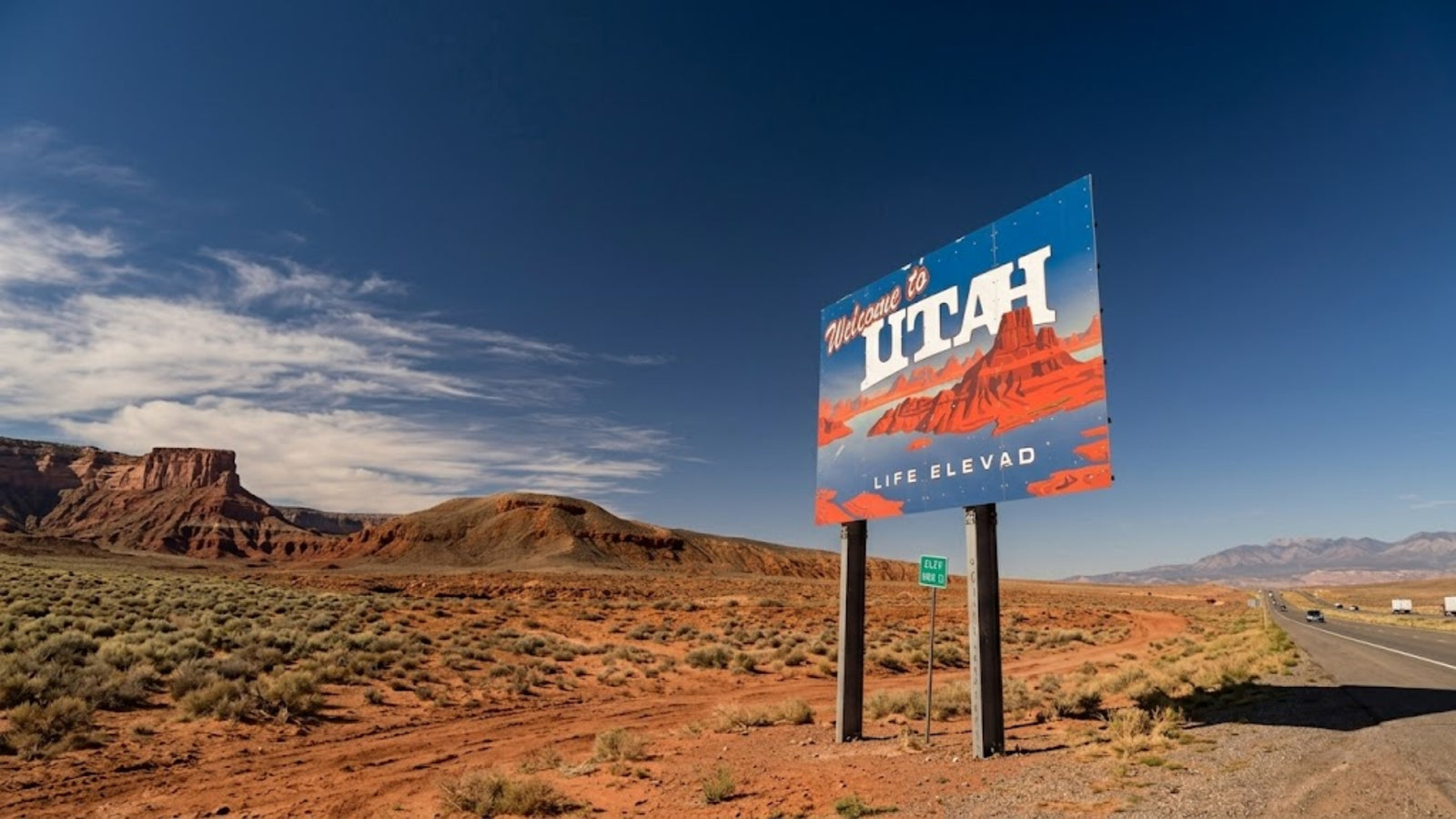
If you live in the Beehive State or are planning to visit, you may be wondering one simple thing: is kratom legal in Utah? The short answer is yes. Kratom is legal to buy, possess, and sell across Utah, from Salt Lake City to St. George. What makes Utah especially notable is that it was the very first state in the nation to pass a Kratom Consumer Protection Act, setting a national template for how this botanical should be regulated. According to the Utah Department of Agriculture and Food, kratom is legal for adults 21 and older, provided products meet the state's purity, labeling, and registration standards.
This guide breaks down exactly what the law says, how Utah became a pioneer in kratom regulation, what the rules mean for you as a buyer, and how to verify that the kratom you purchase is fully compliant. Understanding kratom legality in your home state helps you shop with confidence and supports a safer marketplace for everyone.

Table of Contents
- TL;DR: Quick Facts
- Is Kratom Legal in Utah? Current Status and the KCPA
- What the Kratom Consumer Protection Act Requires
- Utah's History as the First State to Regulate Kratom
- Federal Context: Where Kratom Stands Nationally
- Buying Kratom in Utah and the Age 21+ Rule
- How to Verify Legal, Compliant Kratom
- Frequently Asked Questions
- Final Thoughts
TL;DR: Quick Facts
- Yes, kratom is legal in Utah for adults 21 and older.
- Utah was the first state to pass a Kratom Consumer Protection Act, in 2019.
- The law requires lab testing, accurate labeling, and a ban on adulterated products.
- Only "pure leaf" kratom may be sold; synthetic and contaminated forms are prohibited.
- Vendors must register their products with the Utah Department of Agriculture and Food.
- The minimum age to buy kratom in Utah is 21, set in state code Section 4-45-105.
- Selling to anyone under 21 is a class A misdemeanor.
- Kratom remains legal and unscheduled at the federal level, so kratom legality is decided state by state.

Is Kratom Legal in Utah? Current Status and the KCPA
So, is kratom legal in Utah today? Absolutely. Kratom is fully legal to buy, possess, and sell throughout the state. Utah has not banned the plant, and there are no county-level or city-level prohibitions like those seen in a handful of other states. Residents in Salt Lake City, Provo, Ogden, Park City, and St. George all enjoy lawful access to kratom powder and other compliant products.
The framework that governs kratom in Utah is the Kratom Consumer Protection Act (KCPA), now operating as part of the state's Kratom Regulation Act. Rather than treating kratom as a banned substance, Utah chose to regulate it, much like a food or supplement. This approach protects consumers by setting quality standards while preserving legal access. It is a model that the American Kratom Association has championed for adoption nationwide.
This is an important distinction in any conversation about kratom legality. Some states ban the plant outright, others permit it but allow local restrictions, and a growing number, like Utah, keep it legal under a clear regulatory structure. Utah firmly sits in that third, consumer-protective category.

What the Kratom Consumer Protection Act Requires
The Kratom Consumer Protection Act does more than simply declare kratom legal. It establishes specific duties for anyone who manufactures, distributes, or sells kratom in Utah. These provisions are designed to keep low-quality and dangerous products off shelves while giving consumers honest information. The core requirements include:
- Lab testing for purity: Products must be tested to confirm their alkaloid content and to screen for contaminants, heavy metals, and pathogens.
- Accurate labeling: Vendors must disclose ingredients, product origin, and alkaloid content, and include required federal supplement-style label language.
- No adulteration: Kratom containing contaminants, synthetic alkaloids, illegal substances, or other adulterants may not be sold.
- Pure leaf only: Only identifiable plant-matter kratom is permitted; products that mimic candy or appeal to minors are banned.
- Age 21+ restriction: Kratom may not be distributed or sold to anyone under 21 years of age.
- State registration: Each uniquely labeled kratom product must be registered with the Utah Department of Agriculture and Food.
The penalties for ignoring these rules are real. The Utah Legislature's Senate Bill 58 and the subsequent statute allow the state to fine vendors, seize and destroy unregistered products, issue recalls, and revoke registrations. Repeat violations can escalate from a class B misdemeanor to a third-degree felony. This enforcement backbone is what gives the KCPA real meaning for consumers.

Utah's History as the First State to Regulate Kratom
Utah's path to becoming a kratom pioneer was not automatic. Earlier attempts to fold kratom into the state's controlled-substance list were proposed, and at one point a bill listed the plant alongside dangerous drugs. Thanks to advocacy from the kratom community and a recognition of responsible use, kratom was removed from that effort before it advanced.
Then, in 2019, Utah lawmakers took a constructive turn. Instead of banning the plant, they crafted legislation to regulate it. The Kratom Consumer Protection Act passed and made Utah the first state in the country to enact this kind of consumer-focused kratom law. The goal was twofold: protect the public from contaminated or mislabeled products and preserve lawful access for adults who choose to use kratom.
That decision rippled outward. Several other states have since modeled their own consumer protection acts on Utah's framework. When people search for kratom legal states and find a patchwork of rules, Utah stands out as the original blueprint for sensible regulation rather than prohibition. For more background on the plant itself, see our introduction to what kratom is and where it comes from.

Federal Context: Where Kratom Stands Nationally
To fully understand kratom legality, it helps to zoom out. At the federal level, kratom is not a controlled substance. The U.S. Drug Enforcement Administration has listed kratom as a drug of concern but has not scheduled it, meaning there is no nationwide ban. Because there is no federal classification, each state, and sometimes individual counties, decides how to handle the plant.
This is why kratom legality looks so different depending on where you are. A small number of states have banned kratom entirely, while others permit it with local carve-outs. The majority of kratom legal states, however, allow it without prohibition, and many are moving toward Utah-style consumer protection laws. The Congressional Research Service has documented this evolving federal and state landscape in detail.
For Utah residents, the takeaway is straightforward: there is no federal barrier to buying kratom, and the state has chosen a clear, protective path. If you want a broader look at how the rules differ across the country, you can explore our overview of kratom legality across the United States.

Buying Kratom in Utah and the Age 21+ Rule
Buying kratom in Utah is simple and legal, but there are a few rules worth knowing before you shop. The most important is the age requirement. Under state code Section 4-45-105, a kratom processor may not distribute, sell, or offer kratom to anyone under 21 years of age. Retailers who sell to underage buyers face a class A misdemeanor, and law enforcement is authorized to conduct underage compliance checks.
You will find kratom available in a variety of settings across Utah, including specialty shops, smoke and vape shops, and reputable online retailers. Wherever you buy, the smartest move is to choose vendors who clearly follow the KCPA: registered products, transparent lab results, and accurate labels. When you shop a quality selection of kratom strains, you are also supporting the responsible side of the industry that made Utah a regulatory leader.
Below is an example of the kind of clearly labeled, lab-tested kratom powder that fits within Utah's pure-leaf standard.

Taking a moment to know what you are buying is the heart of Utah's consumer-protection approach. The next section walks through a quick checklist you can use at the register or at online checkout.

How to Verify Legal, Compliant Kratom
Because Utah regulates kratom rather than banning it, the responsibility shifts toward choosing compliant products. Verifying that your kratom meets state standards is quick once you know what to look for. Use this simple checklist every time you buy:
| What to Check | Why It Matters |
|---|---|
| Certificate of Analysis (lab report) | Confirms purity, alkaloid content, and the absence of contaminants required by the KCPA. |
| Complete product label | Discloses ingredients, origin, and alkaloid content so you know exactly what you are buying. |
| Vendor and product registration | Shows the product is registered with the Utah Department of Agriculture and Food. |
| Age verification at checkout | Confirms the seller follows the 21+ requirement, a sign of a compliant retailer. |
| Pure leaf form | Ensures the product is genuine plant matter, not a synthetic or candy-style item. |
A trustworthy vendor will make this information easy to find. If a seller cannot produce a lab report, hides its labeling, or sells to minors, treat that as a clear warning sign and shop elsewhere. To go deeper on quality, see our guide to choosing high-quality kratom and reading lab results.

Frequently Asked Questions
Is kratom legal in Utah right now?
Yes. Kratom is legal to buy, possess, and sell in Utah for adults 21 and older, under the state's Kratom Consumer Protection Act.
How old do I have to be to buy kratom in Utah?
You must be at least 21 years old. State code Section 4-45-105 prohibits selling kratom to anyone under 21, and violations are a class A misdemeanor.
Was Utah really the first state to regulate kratom?
Yes. Utah passed the first Kratom Consumer Protection Act in 2019, becoming the model that several other states later followed.
What does the Kratom Consumer Protection Act actually require?
It requires lab testing, accurate labeling, a ban on adulterated or synthetic products, pure-leaf-only sales, a 21+ age limit, and product registration with the state.
Are there any cities or counties in Utah where kratom is banned?
No. Unlike some states that allow local bans, Utah keeps kratom legal statewide, including in Salt Lake City, Provo, Ogden, and St. George.
Is kratom legal at the federal level?
Yes. Kratom is not a federally controlled substance. The DEA lists it as a drug of concern but has not scheduled it, so kratom legality is determined by each state.
How can I tell if a kratom product is compliant in Utah?
Look for a current lab report, complete labeling, state product registration, age verification at checkout, and confirmation that the product is pure leaf kratom.
Can I buy kratom online and have it shipped to Utah?
Yes. You can legally buy kratom online in Utah as long as the retailer follows the KCPA standards, including the 21+ age requirement.

Final Thoughts
If you came here asking is kratom legal in Utah, you can rest easy: it is legal, accessible, and thoughtfully regulated. Utah's decision to become the first state to adopt a Kratom Consumer Protection Act transformed it from a place where the plant was once at risk of being banned into a national model for responsible policy. That history benefits you directly through clearer labels, tested products, and a marketplace built around consumer safety.
When you understand kratom legality and shop only from vendors who honor the KCPA, you get the best of both worlds: lawful access and genuine peace of mind. Whether you are exploring kratom for the first time or restocking a favorite strain, choosing compliant, lab-tested products keeps you on the right side of the law and supports the standards that made Utah a leader among kratom legal states. Always buy from a registered, transparent source, confirm the 21+ requirement, and review the lab results before you purchase.
[post-button]


