



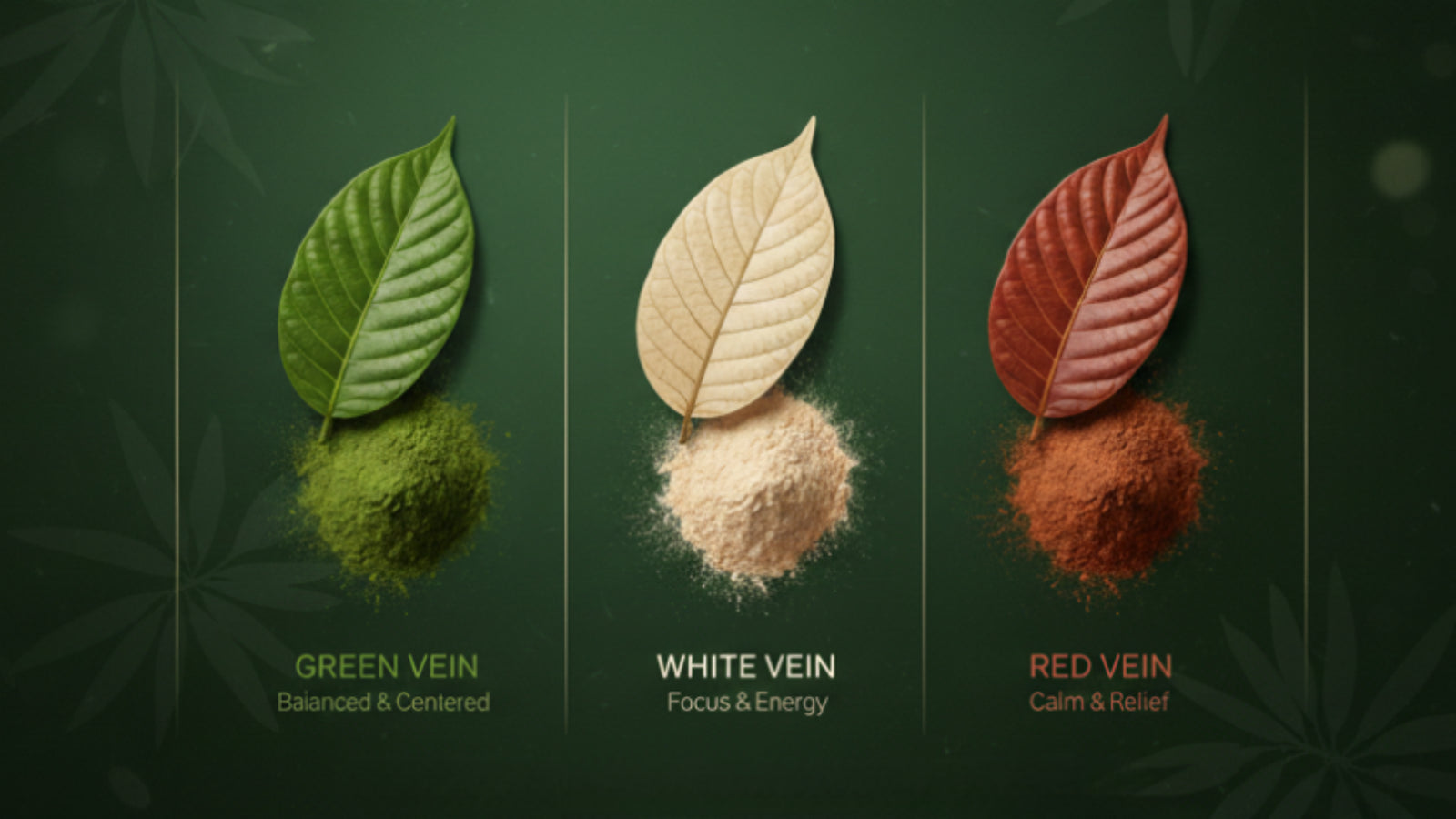
Walk into any conversation about kratom and one question comes up fast: green, white, or red? These color names refer to the vein color of the Mitragyna speciosa leaf, and they have become the everyday shorthand people use to talk about different kratom strains. This guide explains what those colors actually mean, the general profiles people commonly associate with each, and how shoppers think about matching a color to a daily routine. Kratom is a plant native to Southeast Asia, and researchers continue to study it; a peer-reviewed overview in the National Library of Medicine (PMC) describes how its alkaloid content can vary by plant, region, and processing. Nothing here is medical advice, and kratom is not approved by the U.S. Food and Drug Administration to diagnose, treat, cure, or prevent any disease.

Table of Contents
- TL;DR: Vein Colors at a Glance
- What Kratom Vein Color Actually Means
- Green Vein Kratom: The Middle Ground
- White Vein Kratom: The Morning Lean
- Red Vein Kratom: The Evening Lean
- Yellow and Gold: A Note on Blends and Processing
- How People Choose a Vein Color
- Quality, Sourcing, and Lab Testing
- Vein Color Comparison Table
- Frequently Asked Questions
- Final Thoughts
TL;DR: Vein Colors at a Glance
- Three main colors. Green, white, and red are the primary vein colors used to label kratom leaves.
- The color comes from the leaf. It refers to the central vein and stem of the kratom leaf at harvest.
- Green vein is commonly chosen as a balanced, middle-ground option for all-day use.
- White vein is often associated with morning and daytime routines.
- Red vein is frequently chosen for evening routines and winding down.
- Yellow and gold usually describe a blend or a special drying process, not a separate plant.
- Effects vary by person. Preference, the specific batch, and individual response all play a role.
- Not an FDA-approved product. Kratom is not approved to treat any condition; this is general education only.
What Kratom Vein Color Actually Means
The kratom plant produces broad, glossy leaves, and running down the center of each leaf is a vein and stem. As a leaf grows and matures, the color of that vein can shift, and harvesters and vendors use the dominant color as a simple label: green, white, or red. So when you see "green vein kratom," "white vein kratom," or "red vein kratom," the name is pointing at the look of the leaf the powder came from, not a guaranteed outcome for how you will feel.
That distinction matters. Kratom contains a mix of naturally occurring compounds called alkaloids, and the two most discussed are mitragynine and 7-hydroxymitragynine. A review indexed by the National Center for Biotechnology Information (NCBI) notes that the proportions of these alkaloids can differ from leaf to leaf and batch to batch. Vein color is a useful starting category, but it is not a precise chemical specification. Two bags labeled the same color can still differ, which is one reason consistent sourcing and lab testing matter so much.

Green Vein Kratom: The Middle Ground
Green vein kratom is the one people most often describe as the all-rounder. Because it sits between the white and red ends of the spectrum, it is commonly chosen by shoppers who want something for general daytime use without leaning strongly in any one direction. Newcomers frequently start here for exactly that reason: it is the familiar middle-ground category, and popular varieties like Green Maeng Da and Green Malay are widely available.
People who reach for green often describe it as a steady, even pick for working hours. As with every color, individual experiences differ, and the same green-labeled product can feel different to two different people. If you want to browse the category, GRH organizes its green vein kratom collection so you can see the varieties side by side.

White Vein Kratom: The Morning Lean
White vein kratom is the color most commonly associated with morning and early-day routines. People who prefer white often slot it into the start of their day, in the same role many of us give a first cup of coffee. Familiar names in this category include White Maeng Da, White Borneo, and White Thai, each with its own following.
It is worth repeating the theme of this guide: these are general associations people make, not promises. How a specific white-labeled batch comes across depends on the leaf, the processing, and you. If you would like to compare options, the white vein kratom collection at GRH groups the varieties together. For a deeper look at how young-leaf biology factors into the white label, the strain primers on the GRH blog go further than we can here.

Red Vein Kratom: The Evening Lean
Red vein kratom is the color people most often associate with the evening and with winding down at the end of the day. It tends to be the go-to category for those who want something for later hours rather than the morning rush. Red Bali, Red Borneo, and Red Maeng Da are among the most recognized red varieties on the market.
Red is frequently the first color people picture when they think of kratom, but remember that "red" is still just a leaf-color label, and responses vary from person to person. To understand what the red label actually refers to in terms of leaf biology, see the GRH explainer on what red vein kratom actually is. You can also browse the full red vein kratom collection to see the available varieties.

If you are not sure where to begin, a widely chosen starting point is a well-known green variety. GRH's Green Maeng Da Kratom Powder is one of its best sellers and a common first pick for people exploring the balanced, middle-ground category described above.

Yellow and Gold: A Note on Blends and Processing
Browse long enough and you will run into yellow and gold labels too. These are not a fourth naturally occurring vein color. In most cases, a yellow or gold label describes a blend of colors or a special drying and curing process applied to white or green leaf rather than a distinct plant grown in the field. Because the term is used loosely across the industry, it pays to read the product description and ask the vendor what a given yellow or gold actually contains. For a fuller breakdown, GRH has a dedicated post on what yellow vein kratom is and how it is made.

How People Choose a Vein Color
There is no single correct way to pick a vein color, but a simple framework helps many shoppers get oriented. Think about the time of day you have in mind and start from the general association most people make:
- Map the color to a time of day. White is commonly chosen for mornings, green for all-day balance, and red for evenings.
- Start in the middle if you are new. Many first-time shoppers begin with a green vein because it is the balanced, middle-ground category.
- Pick one variable and keep notes. Trying one color at a time makes it easier to learn your own preferences without guessing.
- Expect some trial and error. Because effects vary by person and batch, your favorite may not match a friend's.
- Re-read the label. Confirm the vein color, the strain name, and any blend information before you buy.

Quality, Sourcing, and Lab Testing
Color is only part of the story. Where the leaf came from and how it was tested matter just as much. Because alkaloid content can vary, as the NCBI/PMC literature describes, consistency depends on careful sourcing and verification. When you compare vendors, a few signals tend to separate the careful ones from the rest:
- Third-party lab testing. Independent testing for alkaloid content and for contaminants is a baseline expectation.
- Clear labeling. The vein color, strain name, and whether a product is a blend should be easy to find.
- GMP participation. Look for vendors taking part in the American Kratom Association's Good Manufacturing Practice program.
- Claim-free descriptions. Responsible sellers describe their products without making health or treatment claims.
The American Kratom Association publishes consumer-focused information and advocates for sensible standards, and reviewing it is a good habit before any purchase. Remember that the FDA has not approved kratom for any therapeutic use, so vendor honesty and lab transparency are the most practical things a shopper can actually verify.

Vein Color Comparison Table
The table below summarizes the general associations people commonly make. It is a snapshot of how shoppers talk about each color, not a statement of effects or outcomes, which vary by individual.
| Vein Color | Commonly Associated With | Typical Time People Choose It | Popular Varieties |
|---|---|---|---|
| Green | A balanced, middle-ground category | All-day / daytime | Green Maeng Da, Green Malay |
| White | A brisk, morning-leaning category | Morning / early day | White Maeng Da, White Borneo |
| Red | A mellow, evening-leaning category | Evening / winding down | Red Bali, Red Borneo |
| Yellow / Gold | A blend or special drying process | Varies by product | Yellow Vietnam, Gold Bali |
Use the table as a conversation guide rather than a rulebook. Two shoppers can read the same row and still land on different favorites, which is exactly why trying one color at a time and keeping notes works better than chasing a single perfect answer.

Frequently Asked Questions
Are green, white, and red different plants?
No. They all come from the same plant, Mitragyna speciosa. The color refers to the vein and stem of the leaf, which can change as the leaf matures and with how it is processed.
Which vein color is best for beginners?
Many newcomers start with a green vein because it is the balanced, middle-ground category. That said, there is no universal best choice, since responses differ from person to person.
What is the difference between the colors?
People commonly associate white with mornings, green with all-day balance, and red with evenings. These are general associations shoppers make, not guaranteed effects.
Is yellow or gold kratom a real vein color?
Not in the same sense. Yellow and gold usually describe a blend of colors or a special drying process applied to white or green leaf, rather than a separate naturally grown vein color.
Can the same vein color feel different between bags?
Yes. Because alkaloid content can vary by plant, region, and processing, two products with the same color label can differ. Consistent sourcing and lab testing help reduce that variability.
Does vein color tell me how strong a product is?
No. Color is a category label, not a potency rating. The only reliable way to understand a specific product is to read its description and any third-party lab results.
Is kratom approved by the FDA?
No. Kratom is not approved by the FDA to diagnose, treat, cure, or prevent any disease. This article is general education and not medical advice.
How should I choose between vein colors?
Think about the time of day you have in mind, start with one color, and keep simple notes on your own preference. Trying one variable at a time makes it easier to learn what you like.
Final Thoughts
Vein color is the most common language people use to sort kratom strains, and now you know what it really points to: the look of the leaf, paired with a set of general associations that shoppers have built over time. Green is the balanced middle, white leans toward mornings, red leans toward evenings, and yellow or gold usually means a blend or a special process. None of these are guarantees, because effects vary by person and by batch, and kratom is not FDA-approved to treat anything.
The most useful takeaways are practical. Match a color to a time of day, start simple, keep notes, and favor vendors that test their products and label them honestly. When you are ready to explore, you can browse the green, white, and red vein collections and decide what fits your own routine.


