



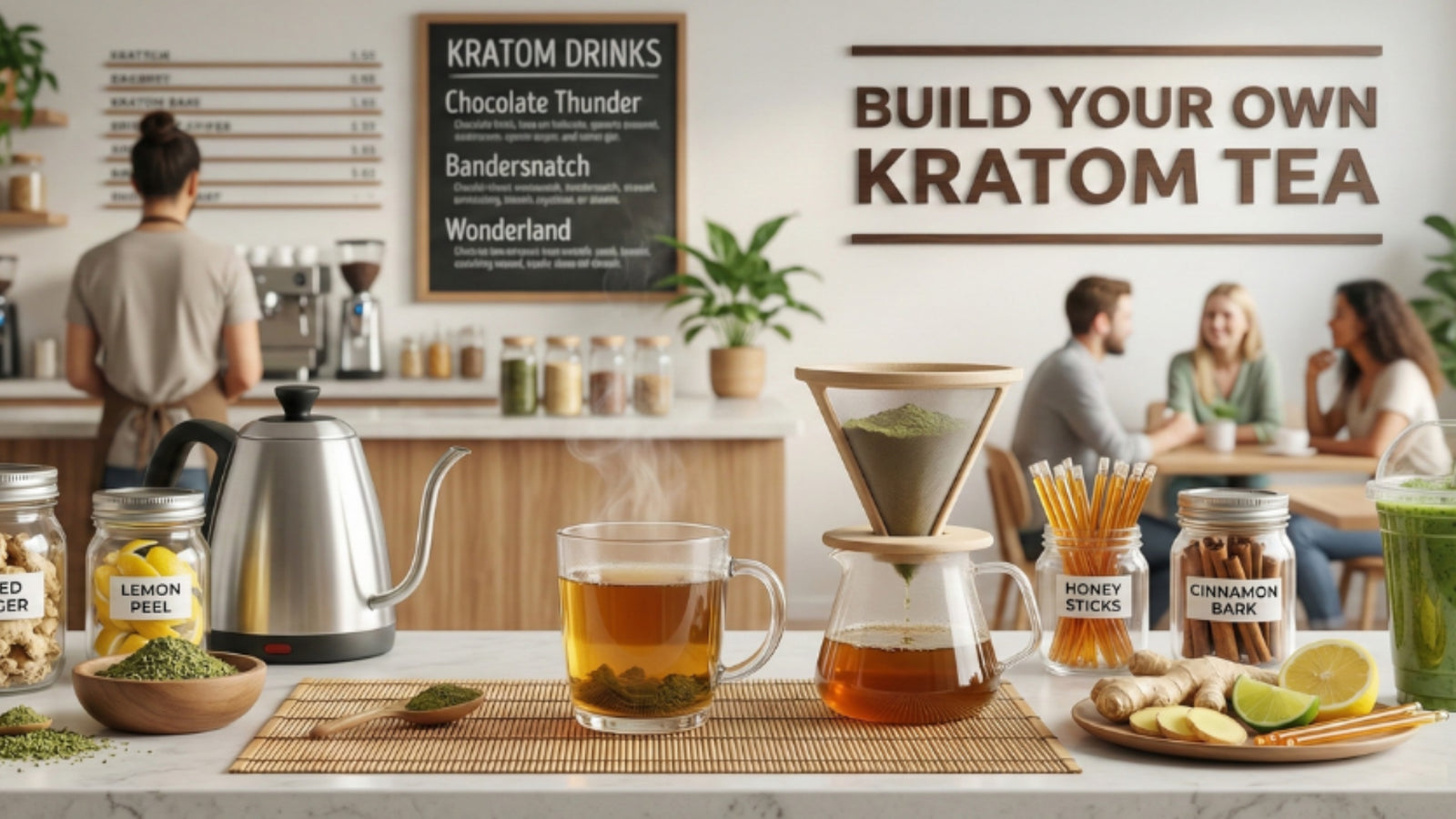
Kratom bars have quietly become one of the fastest-growing categories in the alcohol-free social space. If you've walked through Miami, Austin, or even certain Brooklyn blocks lately, you've probably noticed warm-lit storefronts that look like coffee shops crossed with cocktail lounges, with a menu of botanical drinks instead of liquor. That's a kratom bar. They serve crafted beverages built around the kratom leaf (Mitragyna speciosa), often paired with kava, lion's mane, adaptogens, and citrus. They feel like bars because they are bars, just without the alcohol.
The category sits inside a larger shift toward sober-curious nightlife, plant-based wellness, and "third-place" social spaces that aren't tied to drinking. According to Kratom Consumer Protection Act tracking, more than 18 states have now adopted KCPA-style legislation that regulates rather than prohibits kratom, which has given operators the legal clarity to open licensed bars in growing parts of the country. This guide walks through everything you need to know before your first visit: what's on the menu, how the dosing actually works, who these places are for, what the law looks like in 2026, and how to enjoy a kratom bar responsibly.
Table of Contents
- What a Kratom Bar Actually Is
- A Quick History of How Kratom Bars Got Here
- What's Actually in a Kratom Bar Drink
- How Kratom Affects You at a Bar
- What Makes a Kratom Bar Different From a Regular Bar
- Where Kratom Bars Are Legal in 2026
- Who Goes to Kratom Bars
- How to Visit a Kratom Bar for the First Time
- What to Order: A Beginner's Menu Walk-Through
- What to Look for in a Quality Kratom Bar
- Common Misconceptions About Kratom Bars
- Frequently Asked Questions
- Final Thoughts
TL;DR
- Kratom bars are licensed retail establishments serving drinks built around kratom leaf, kava root, and supporting botanicals; the format borrows from cocktail bars but the active ingredient is plant-based and non-alcoholic.
- The category grew out of the South Florida kava bar movement, accelerated after 2016 mainstream awareness, and expanded sharply during the 2020 sober-curious wave.
- More than 18 states have adopted Kratom Consumer Protection Act laws that regulate kratom (21+ age check, lab testing, accurate labeling), making bar operations feasible.
- A balanced kratom bar drink contains 1 to 4 grams of leaf equivalent. Reputable bars do not pour synthetic 7-hydroxymitragynine concentrates.
- Effects follow a biphasic curve: stimulating at low doses, sedating at higher doses. Onset 20 to 45 minutes, peak around 90 minutes, tail 2 to 4 hours.
- Bar regulars include sober-curious professionals, the recovery community, fitness customers, and chronic pain patients seeking a non-opioid option.
- First-visit playbook: tell the bartender it's your first time, eat first, hydrate, wait 45 minutes before reordering, skip extracts, avoid alcohol that day.
- Quality markers in a bar: lab-tested COAs, 21+ ID check, trained bartenders, printed serving sizes, no synthetic 7-OH extracts on the menu.
- The 2026 landscape is split. Federal pressure pushes toward scheduling; state-level reform like the April 2026 Rhode Island Kratom Act pushes toward regulated access.

What a Kratom Bar Actually Is
A kratom bar is a licensed retail establishment that serves drinks made primarily from kratom leaf, kava root, and supporting botanicals. The format borrows almost everything from a normal bar: tall counters, bartenders shaking and stirring, low lighting, social seating, sometimes live music or trivia nights. The difference is that the active ingredient driving the experience is plant-based and non-alcoholic.
Most kratom bars serve a small core menu of a few staple drinks plus rotating specials. A typical menu includes hot kratom tea, iced kratom blends, kava shells, kratom-kava combinations, and creative house drinks built with juices, citrus, ginger, honey, lion's mane, ashwagandha, or rhodiola. Some bars also serve adaptogen mocktails, cold-brew coffee, and matcha for guests who want to keep things lighter or stick to caffeine.
Most operators position their bars as community wellness spaces rather than nightlife venues. The crowd skews toward sober-curious adults in their twenties and thirties, fitness-aware professionals, and people in recovery looking for a social environment that doesn't revolve around alcohol. The vibe is closer to a coffee shop with cocktail-style craft than a club.
A Quick History of How Kratom Bars Got Here
The kratom bar concept grew out of the kava bar movement that started in South Florida in the early 2000s. Kava bars were already serving guests a calming, non-alcoholic plant beverage from the Pacific Islands, and as kratom awareness grew through the 2010s, many of those operators added kratom to the menu. By the time Joe Rogan's 2016 commentary brought kratom into mainstream awareness, kava-kratom hybrid bars were already established in a handful of states.
The next wave came after 2020, when the pandemic accelerated interest in alcohol-free social spaces. Sober-curious adults, people in recovery, and people who simply wanted to feel sharper the next morning started looking for third places that didn't push drinks. Kratom bars filled that gap better than juice bars or cafes because they offered the social rhythm of a bar (someone makes you a drink, you sit with friends, the room has energy) without the alcohol.
By 2026, kratom bars have spread well beyond Florida. Texas, Colorado, Tennessee, Ohio, North Carolina, and parts of California now host them. Operators report waiting lists for new locations, and several brands are actively franchising. The growth tracks closely with the broader alcohol-free beverage market, with the global kratom category alone reaching $2.19 billion in 2024 and projected to grow to $7.80 billion by 2032 (a 17.2% compound annual growth rate). Bars are one of the fastest-growing retail formats inside that curve.

What's Actually in a Kratom Bar Drink
The active ingredient in any kratom drink is mitragynine and a small amount of 7-hydroxymitragynine, the two main alkaloids in the kratom leaf. According to the Association of State and Territorial Health Officials, kratom contains around 40 distinct alkaloids, but those two do most of the work. Mitragynine binds partially to opioid receptors at low doses and tends to feel stimulating; 7-hydroxymitragynine is more potent at the same receptors and contributes to relaxation and pain relief at higher doses.
Bartenders typically work with one of three kratom inputs:
- Brewed leaf tea, made fresh from loose powder steeped in hot water with a small amount of black pepper or citrus to improve absorption.
- Standardized leaf extract, a more concentrated liquid that gives bartenders a predictable alkaloid profile across drinks.
- Powdered leaf shots, mixed into juice or a sweetened base for guests who want a small, faster experience.
Reputable bars do not pour synthesized 7-hydroxymitragynine concentrates. Those products, sometimes sold as "7-OH tablets" or "7-OH shots," can reach concentrations of up to 98% pure 7-hydroxymitragynine when synthesized in a lab, well beyond the 0.01% to 2% that occurs in the natural plant. Most state regulators have started restricting those products specifically, and serious bars stay away from them on principle.
A balanced kratom bar drink typically contains 1 to 4 grams of kratom leaf equivalent, depending on size and strain. The bartender will usually ask about your tolerance, especially if you've never had kratom before, and steer you toward a smaller serving for the first visit.

How Kratom Affects You at a Bar
Drinks at a kratom bar follow the same biphasic curve that researchers have documented with kratom in general. At lower doses (one small drink, roughly 1 to 2 grams of leaf equivalent), most guests report a stimulating, mood-lifted, sociable feeling. It feels a little like a strong cup of coffee with a smoother emotional texture. At higher doses (multiple drinks or a stronger blend), the experience shifts toward relaxation, body warmth, and mild sedation.
The onset is typically 20 to 45 minutes from your first sip, with peak effects around the 90-minute mark and a tail of two to four hours. That's a longer arc than alcohol, which is part of why kratom bars work as a full social outing rather than a quick stop.
Side effects to know about: nausea is the most common, especially if you stack drinks too fast or drink on an empty stomach. Sweating, dizziness, and constipation are reported at higher doses. The simple rule that experienced bartenders share with first-timers is: order one drink, give it 45 minutes, then decide whether you want a second.

What Makes a Kratom Bar Different From a Regular Bar
A few things separate the kratom bar experience from a typical alcohol bar in ways that matter for first-time visitors.
Pace is slower. Because kratom takes longer to come on than alcohol and lasts longer per drink, guests usually order half as many drinks per visit. The economics of the bar are built around this. Drinks tend to cost a little more individually, but the average bill per person ends up similar to a wine bar.
Conversation tends to go deeper. Customers and operators both report that kratom drinks reduce social anxiety without the disinhibition or fog that comes with alcohol. People stay sharp, remember the conversation the next day, and tend to leave feeling rested rather than impaired.
The morning after is different. Kratom doesn't dehydrate the body the way alcohol does, and there's no acetaldehyde buildup, which is the toxic byproduct that drives most hangover symptoms. Most guests wake up clear, sometimes with mild stomach sensitivity if they overdid it, but without a true hangover.
Recovery-friendly. A meaningful share of kratom bar regulars are people who don't drink for personal or medical reasons. Operators are usually thoughtful about this. You'll see "no alcohol on premises" signs, sober community events, and a culture that welcomes people who would otherwise feel left out at a wine bar.

Where Kratom Bars Are Legal in 2026
The patchwork of state law is the single most confusing thing about kratom bars, so it helps to think in three buckets.
The first bucket is states that have adopted the Kratom Consumer Protection Act. These states regulate kratom rather than prohibit it. They require 21+ age verification, third-party lab testing, accurate labeling, and in some cases licensing for retailers. As of 2026, more than 18 states have passed KCPA-style legislation, which is the legal foundation that makes kratom bars feasible. Texas, Colorado, Florida, Tennessee, Georgia, Utah, Nevada, and Oklahoma are among the early adopters.
The second bucket is states that are legal but unregulated. Kratom is allowed for sale, but there are no quality standards or age limits at the state level. Bars can operate, but the consumer protection burden falls on the operator and the customer.
The third bucket is states where kratom is banned outright. As of 2026, that list includes Alabama, Arkansas, Connecticut, Indiana, Louisiana, Vermont, and Wisconsin. Rhode Island used to be on this list and reversed the ban effective April 1, 2026, which made it the first state to legalize kratom after a previous prohibition.
Federal law remains permissive. There is no federal kratom ban in place, though the FDA has periodically signaled interest in scheduling it. A March 2026 letter from a group of senators led by Pete Ricketts to the FDA pushed again for federal action, but no rule has been issued. State-level reform is moving in the opposite direction: in March 2026 the Idaho Senate State Affairs Committee advanced a kratom regulation bill modeled on KCPA principles after hours of testimony, joining the growing list of states choosing regulation over prohibition.

Who Goes to Kratom Bars
The customer base is broader than people expect, and it tends to break into a few clear segments.
Sober-curious professionals make up the largest share. People in their late twenties through forties who don't want to drink three nights a week but still want a place to meet friends, have a drink in their hand, and feel a small lift. This is the same demographic driving the alcohol-free beer and zero-proof spirits boom.
People in recovery come second. Kratom bars provide a social space that doesn't trigger old patterns and doesn't require explaining to a server why you're not drinking. Operators are often careful about how they market here, and many kratom bars host recovery community events as a matter of mission.
Fitness-focused customers are growing. The same demographic that listens to The Joe Rogan Experience, follows hybrid athlete content, and treats supplements as part of their training stack has adopted kratom bars as a place to socialize without losing tomorrow's workout.
People with chronic pain make up a smaller but loyal segment. Kratom's analgesic effect at moderate doses gives some chronic pain patients a non-opioid option that doesn't require a prescription. Bars are a casual way to access it in a guided setting rather than self-dosing at home.
| Segment | Why They Come | Typical Visit |
|---|---|---|
| Sober-curious | Social outing without alcohol | One small drink, 90 minutes |
| Recovery community | Safe third place | Hot tea, longer conversation |
| Fitness/supplement | Wellness + social | Pre-workout shot or post-gym recovery drink |
| Chronic pain | Non-opioid relief | Stronger blend, 2 to 3 hours |

How to Visit a Kratom Bar for the First Time
The biggest mistake first-timers make is treating kratom bars like wine bars. Slow down and let the bartender steer you, and the visit will go well.
Tell the bartender it's your first time. They'll usually adjust the dose down and steer you toward a milder strain. Most bars use green or white vein leaves for first-timers because the experience is closer to coffee than to wine.
Eat something first. Kratom on a fully empty stomach is much more likely to cause nausea. A small meal an hour before, or a snack at the bar, smooths out the experience.
Hydrate. Have a glass of water alongside your drink. This prevents the mild dryness some people feel and reduces post-visit grogginess.
Wait before reordering. The 45-minute rule is the one piece of advice every experienced kratom drinker passes on. The peak hits later than alcohol, so if you order a second drink at 20 minutes, you've already overshot.
Skip the extracts on day one. Most bars offer extract shots or stronger blends for regulars. On your first visit, those are not for you. Stick to the standard menu and a small dose.
Avoid alcohol that day. Kratom and alcohol interact in unpredictable ways. The standard rule from harm-reduction literature, and from most operators, is to not stack the two on the same evening.
If you want a structured way to find your tolerance before your first visit, our kratom dosage guide walks through the tier-by-tier approach we recommend for any first-time user.

What to Order: A Beginner's Menu Walk-Through
Most kratom bar menus are organized in three or four tiers based on intensity. Here's how to read them.
Tier one is light tea or kava-forward drinks. These contain a small kratom dose (often 1 gram or less of leaf equivalent) blended with kava, lion's mane, citrus, ginger, or honey. They feel social and mild. Order this first if you've never had kratom.
Tier two is a single-serving kratom drink, hot or cold, made with brewed leaf tea or a standardized extract. The dose is typically 2 to 3 grams of leaf equivalent. Most regulars settle here.
Tier three is a stronger blend, often called something like "house special" or named after the strain. The dose runs 3 to 4 grams. Save this for your third or fourth visit.
Tier four, when offered, is an extract shot. These are concentrated and act faster. Skip them for at least the first month of visits.
If you want to recreate a kratom bar drink at home for a slow weekend, our six best kratom recipes guide covers the most popular bar-style drinks with measurements you can scale to your tolerance.

What to Look for in a Quality Kratom Bar
Not all kratom bars are equal. A few markers separate a serious operation from a shaky one.
Lab-tested leaf with COAs available on request. Reputable bars source from vendors who publish certificates of analysis for alkaloid content, heavy metals, and microbial contamination. Ask. If the answer is vague, that's information.
21+ age verification at the door, with no exceptions. KCPA-compliant operators check IDs the same way an alcohol bar does.
Trained bartenders who can talk through dose, strain, and effects without overselling. The right answer to "what should I get?" is always a question first ("have you had kratom before?"), not a recommendation.
A printed menu with serving sizes. The dose should not be a mystery. Bars that serve plant-based drinks should be at least as transparent as alcohol bars about what's in your glass.
A no-7-OH-extract policy. Concentrated synthetic 7-hydroxymitragynine products are the source of most of the recent overdose news. Quality bars don't carry them.
Visible water and snacks. Operators who want repeat customers want them to leave feeling well. Free water and small snack options are the easiest indicator that the bar is built for sustained business rather than a quick flip.

Common Misconceptions About Kratom Bars
A few myths show up in nearly every conversation about kratom bars, so they're worth addressing directly.
"Kratom bars are basically opioid bars." Not accurate. Kratom interacts with opioid receptors partially and selectively, which is why low to moderate doses feel stimulating rather than sedating. The pharmacology is closer to coffee with mild analgesic activity than to morphine.
"All kratom is the same." Vein color, strain, growing region, and processing all matter. A green Maeng Da is going to feel different from a red Bali, and a quality bartender will explain why.
"Kratom is unregulated, so it must be unsafe." Federal law is permissive, but more than 18 states have adopted KCPA-style protections that require lab testing, age verification, and accurate labeling. The category is more regulated than most people realize, especially in states where bars are legal.
"You can't get hooked on a plant." Daily kratom use can produce physical dependence and a withdrawal syndrome that resembles a milder opioid withdrawal. Bars handle this through the same culture norms that responsible alcohol bars use: dose awareness, pacing, and not coming in every night. For more on what the upper-bound risks actually look like, our guide on whether you can overdose on kratom walks through the medical literature in plain language.
"It's just for recovery folks." A meaningful share of customers are in recovery, but the broader customer base is sober-curious people who simply want a third place that isn't built around alcohol.
Frequently Asked Questions
Is a kratom bar legal in my state?
Depends on the state. Texas, Colorado, Florida, Tennessee, Georgia, Utah, Nevada, and Oklahoma are among the KCPA states where kratom bars operate legally. Alabama, Arkansas, Connecticut, Indiana, Louisiana, Vermont, and Wisconsin currently ban kratom outright.
Do I have to be 21 to enter?
In KCPA states, yes. Most operators check IDs at the door whether the law requires it or not.
Will I fail a drug test after a kratom bar?
Standard SAMHSA-5 panels do not test for mitragynine, but specific kratom panels exist and some employers run them. Tell the bartender if you have a regulated test coming up.
Can I drive home after one drink?
At a low dose, the effects are typically comparable to a cup of coffee. That said, peak hits at 90 minutes, and individual sensitivity varies. If you're new to kratom, plan for a ride share or a long enough stay that the peak passes before you drive.
How much does a kratom bar drink cost?
Most fall in the $10 to $18 range, comparable to a craft cocktail. Some bars offer flights or smaller pours for $7 to $10.
Can I drink kratom every day?
Daily use builds tolerance and increases dependency risk. Most experienced kratom drinkers take at least two non-use days per week. Bar visits, if you're going regularly, should follow the same rule.
What's the difference between a kratom bar and a kava bar?
Many bars serve both. Kava is more sedating and tends to feel like a single sustained note. Kratom has a wider range across the dose curve. Kava-only bars exist; kratom-only bars exist; most operators today serve both.
Final Thoughts
Kratom bars sit at the intersection of two real shifts in American social life: the move away from alcohol-centric nightlife, and the move toward plant-based wellness as a daily practice rather than a niche. They're not for everyone, and the regulatory landscape is still uneven, but for people who want a social space that leaves them sharp the next morning, they offer something the previous generation of bars couldn't.
If you're going for the first time, treat it like any other unfamiliar beverage. Start small, ask questions, eat something first, hydrate, and let the dose develop before you order another. Find a bar that publishes its sourcing and tests its leaf. And if your bar visit makes you want to keep kratom in your routine at home, our team at GRH Kratom keeps lab-tested, lot-traceable leaf available across all the standard vein colors at grhkratom.com. It's a sensible next step if a bar visit turned curiosity into a regular habit.
The category is still young, and the best operators are still figuring out what a kratom bar should be. The fact that more than 18 states now treat it as a regulated, legal business says the experiment is working better than anyone expected ten years ago.


