



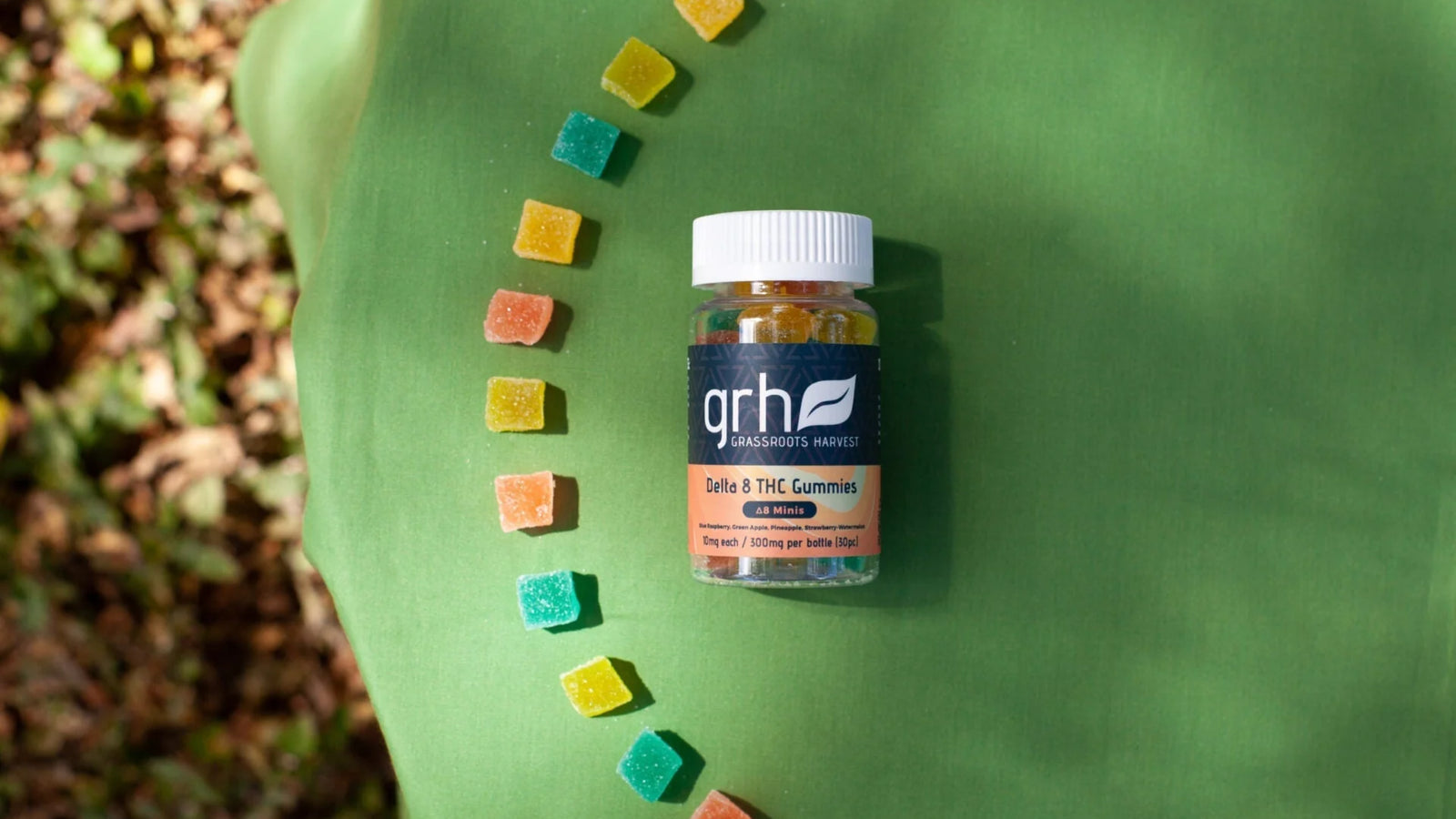

For nearly five years, one question hung over hemp shops across the state: is delta 8 legal in Texas? A court order kept products on shelves while a lawsuit against the Texas Department of State Health Services (DSHS) worked its way up to the highest court in the state. In May 2026, that question reached a turning point. The Texas Supreme Court issued its decision, lifted the injunction that had protected sales, and reshaped the legal picture for shoppers and retailers alike.
This guide focuses on the decision and what it actually means, not the original debate over whether the ban should exist. We walk through how the case started, what each court ruled, and what the 2026 outcome changes on the ground. Because the 2018 Farm Bill removed hemp containing less than 0.3% delta-9 THC from the federal definition of marijuana (per the FDA), the legal status of delta-8 THC has been contested at the state level ever since. The status remains contested, and you should always verify the current law before you buy or sell.
Table of Contents
- TL;DR: The Quick Version
- Background: How Delta-8 Became a Legal Question
- The Lawsuit Against DSHS
- The Rulings: Trial Court and Appeals
- The 2026 Texas Supreme Court Decision
- What It Means for Texas Shoppers and Retailers
- Timeline of the Case
- Delta-8 vs Delta-9: A Quick Comparison
- How to Check the Current Status
- Frequently Asked Questions
- Final Thoughts
TL;DR: The Quick Version
- The fight centers on a delta 8 texas question: whether DSHS could classify manufactured delta-8 THC as a Schedule I controlled substance.
- In October 2021, DSHS posted a notice on its website stating that delta-8 THC was already a Schedule I controlled substance under state law.
- Hemp retailers, led by Sky Marketing Corp. (doing business as Hometown Hero), sued DSHS, arguing the agency skipped required rulemaking steps.
- In November 2021, a Travis County (Austin) trial court granted a temporary injunction that blocked enforcement and kept products on shelves.
- In 2023, a Texas appeals court affirmed that injunction, and DSHS appealed to the Texas Supreme Court.
- On May 1, 2026, the Texas Supreme Court reversed and lifted the injunction, ruling the DSHS commissioner had authority to classify delta-8 and that the agency was protected by sovereign immunity.
- The court also said the website notice has no independent legal effect on its own, no one can be civilly penalized for violating the statement, and DSHS said it would not enforce the website statement.
- The status is contested and may change. The plaintiffs signaled an expected appeal, so always verify the current law and consult a licensed attorney before relying on it.

Background: How Delta-8 Became a Legal Question
To understand the texas delta 8 ruling, start with the federal law that opened the door. The 2018 U.S. Farm Bill redefined "hemp" and removed cannabis material with no more than 0.3% delta-9 THC from the federal Schedule I list of controlled substances. The next year, Texas adopted those federal definitions in its own 2019 Texas Farm Bill, and the state's hemp program began.
Delta-8 THC is a cannabinoid that occurs in only trace amounts in the hemp plant. Manufacturers learned to convert hemp-derived CBD into larger quantities of delta-8, which is milder than the delta-9 THC found in marijuana but still produces noticeable effects. Because the 2018 Farm Bill language focused on delta-9 THC content, many retailers read it to mean that hemp-derived delta-8 was legal. Products spread quickly across Texas storefronts.
In 2020, the federal Drug Enforcement Administration updated its rules to align with the Farm Bill. DSHS, however, took a different view. The agency objected to that reading and, in 2021, posted a notice on its website classifying any amount of delta-8 THC, and any amount of delta-9 over 0.3%, as Schedule I controlled substances. In effect, the notice treated these products as illegal. That single posting set off the entire dispute over whether delta 8 texas sales were lawful.
The Lawsuit Against DSHS
Hemp companies did not accept the website notice quietly. Sky Marketing Corp., which does business as the Austin-based retailer Hometown Hero, joined other retailers in suing DSHS to stop the agency from enforcing the notice. Their central argument was procedural: they alleged that DSHS acted outside its authority when it reclassified hemp products and that it failed to follow the proper rulemaking steps required under the Texas Administrative Procedure Act (APA).
In plain terms, the plaintiffs said an agency cannot rewrite what is legal with a quiet website posting. Real rules, they argued, require public notice, a comment period, and the formal process the APA lays out. For an industry that had built storefronts, jobs, and customer relationships around these products, the stakes were high. A talk of a sudden delta 8 thc ban threatened inventory, livelihoods, and access for customers who relied on these products.

The Rulings: Trial Court and Appeals
The first major ruling came quickly. In November 2021, a Travis County district court in Austin granted a temporary injunction. That order paused the DSHS notice from taking effect while the lawsuit continued, which meant hemp shops could keep selling delta-8 THC products without the immediate threat of the agency's reclassification. The trial court signaled concern that DSHS had not followed the required rulemaking process.
DSHS challenged that injunction, and the dispute moved up. In 2023, a Texas appeals court affirmed the injunction, leaving the protection in place. With the appeal resolved against it at that level, DSHS took the case to the Texas Supreme Court, where it was docketed as cause number 23-0887. For several years, that injunction is what kept delta-8 widely available statewide while the legal questions stayed unresolved.

The 2026 Texas Supreme Court Decision
On May 1, 2026, the Texas Supreme Court issued the decision that changed the landscape. The justices reversed the lower courts and lifted the temporary injunction that had protected delta-8 sales. The court held that the DSHS commissioner had the authority to classify delta-8 THC as a Schedule I controlled substance, and that the agency was protected by sovereign immunity, a principle that shields the state and its agencies from many lawsuits.
Notably, the court did not rule that the businesses had no point. The justices acknowledged the retailers likely faced real harm and lost sales tied to the reclassification, and they recognized that the hemp industry had openly operated during the years the injunction was in place. As Justice Evan Young wrote for the court, manufactured delta-8 products had "sprung back" and were sold "without fear of department penalty" during the injunction. Even so, the court concluded the legal authority rested with the agency, and it rejected the argument that the notice had to go through APA rulemaking. The justices also held that the 2019 Texas Farm Bill did not legalize anything beyond the trace amounts of delta-8 that naturally occur in hemp.
One point matters enormously for how this plays out. According to the court's opinion, the website notice has no independent legal effect on its own. No one can be civilly penalized merely for violating that statement, and DSHS said it would not enforce the website statement. DSHS can impose only civil penalties under the Texas Controlled Substances Act, not criminal ones. The protective injunction was set to expire on May 28, 2026, and the plaintiffs, through the Texas Hemp Business Council, signaled they expected to appeal and continue fighting. You can read the broader debate that preceded this decision in our companion post on the DSHS lawsuit and the delta-8 ban discussion.

What It Means for Texas Shoppers and Retailers
The practical takeaway is nuanced, which is exactly why so much confusion followed the headlines. The decision removed the court protection that had blocked DSHS from treating manufactured delta-8 THC as a controlled substance. At the same time, the court was clear that the website notice itself carries no independent legal weight, and DSHS stated it would not enforce that posting.
For shoppers, this means the legal status is genuinely contested rather than cleanly settled. Some retailers continued operating; others paused or adjusted. Enforcement guidance from the agency had not been clearly spelled out, so the safest approach is to verify the current rules and your local situation before buying.
For retailers, the lifting of the injunction increased legal uncertainty. Because penalties under the controlled substances framework here are civil rather than criminal, and because the notice has no standalone effect, businesses faced a judgment call about risk tolerance. Many in the industry watched for the expected appeal and any formal enforcement position. None of this is legal advice, and a licensed Texas attorney is the right resource for any specific business decision.
| Question | What the 2026 decision indicates |
|---|---|
| Did the court ban delta-8 outright? | No. It lifted the injunction and recognized the agency's authority to classify it, but the status remains contested. |
| Does the DSHS website notice itself make delta-8 illegal? | No. The court said the notice has no independent legal effect on its own. |
| Can someone be criminally charged based on the notice? | The court said no one can be civilly penalized for violating the notice; DSHS said it would not enforce the website statement. |
| What kind of penalties can DSHS impose? | Civil penalties under the Texas Controlled Substances Act, not criminal ones. |
| Is the case fully over? | No. Plaintiffs signaled an expected appeal and continued litigation. |
Timeline of the Case
Here is the sequence of events that defines this dispute. The dates below live in the text, so the path is easy to follow without flipping between sources.
- 2018: The U.S. Farm Bill removes hemp with no more than 0.3% delta-9 THC from the federal Schedule I definition.
- 2019: Texas adopts the federal hemp definitions through its own Texas Farm Bill, and the state hemp program begins.
- 2020: The DEA updates its regulations to align with the Farm Bill; DSHS objects to that reading.
- October 2021: DSHS posts a website notice classifying delta-8 THC (and delta-9 over 0.3%) as Schedule I controlled substances.
- October and November 2021: Sky Marketing Corp. (Hometown Hero) and other retailers sue DSHS, alleging the agency bypassed required APA rulemaking.
- November 2021: A Travis County trial court grants a temporary injunction blocking enforcement, keeping products on shelves.
- 2023: A Texas appeals court affirms the injunction; DSHS appeals to the Texas Supreme Court (cause 23-0887).
- May 1, 2026: The Texas Supreme Court reverses and lifts the injunction, recognizing the agency's authority while noting the notice has no independent legal effect.
- May 28, 2026: The protective injunction is set to expire; plaintiffs signal an expected appeal.

Delta-8 vs Delta-9: A Quick Comparison
Part of the reason delta 8 thc sparked a legal fight is that it sits in a gray zone between hemp and marijuana. Understanding how it differs from delta-9 helps explain why the courts focused on the 0.3% delta-9 threshold and the definition of hemp.

Delta-8 THC is typically described as a milder cousin of delta-9. It occurs naturally in only tiny amounts, so most commercial delta-8 is manufactured by converting hemp-derived CBD. Delta-9 THC is the primary intoxicating compound in marijuana and is the one the Farm Bill's 0.3% limit measures. The Texas Supreme Court leaned on this distinction when it concluded the 2019 Texas Farm Bill legalized only the trace, naturally occurring delta-8 in hemp, not the larger manufactured quantities. For a wider view of where these products stand around the country, see our guide on where delta-8 THC is illegal in the U.S.
How to Check the Current Status
Because this area changes, the most useful skill is knowing how to check the current law yourself rather than relying on an old headline. The decision in this case is significant, but litigation continues and agency guidance can evolve.

Start with official sources. The Texas Department of State Health Services publishes agency positions, and the Texas court system hosts case records and opinions, including cause 23-0887. Reputable news outlets such as KUT, Austin's NPR station, cover developments as they happen. Confirm details with the retailer, and for any decision that affects you legally or financially, consult a licensed Texas attorney. We follow a careful sourcing process for our coverage, which you can read about in our note on how we research and verify our content.

Frequently Asked Questions
So, is delta 8 legal in Texas right now?
The status is contested. The 2026 Texas Supreme Court decision lifted the injunction that had protected sales and recognized the agency's authority to classify delta-8, but the court also said the website notice has no independent legal effect, and the plaintiffs signaled an appeal. Verify the current law and consult an attorney before relying on it.
What exactly did the Texas Supreme Court decide in 2026?
On May 1, 2026, the court reversed the lower courts and lifted the temporary injunction. It held the DSHS commissioner had authority to classify delta-8 THC as Schedule I, that the agency had sovereign immunity, and that the notice did not require APA rulemaking. It also found the 2019 Texas Farm Bill did not legalize more than trace, naturally occurring delta-8.
Why does it matter that the notice has "no independent legal effect"?
It means the website posting alone does not criminalize conduct or impose penalties by itself. The court stated no one can be civilly penalized for violating the notice, and DSHS said it would not enforce the website statement. This is a key reason the situation is described as contested rather than a clear delta 8 thc ban.
Who sued DSHS?
Sky Marketing Corp., doing business as the Austin-based hemp retailer Hometown Hero, along with other retailers. They argued DSHS reclassified hemp products without following the proper rulemaking process under the Texas Administrative Procedure Act.
When did the injunction start, and when did it end?
A Travis County trial court granted the temporary injunction in November 2021. A Texas appeals court affirmed it in 2023. The Texas Supreme Court lifted it on May 1, 2026, and the protection was set to expire on May 28, 2026.
What is the difference between delta-8 and delta-9 THC?
Delta-8 is generally a milder cannabinoid that occurs naturally in only trace amounts, so most commercial delta-8 is manufactured from hemp-derived CBD. Delta-9 is the primary intoxicating compound in marijuana and is what the Farm Bill's 0.3% threshold measures.
Can I be arrested just for having delta-8 in Texas?
This guide is not legal advice. The court noted that DSHS can impose only civil penalties under the Texas Controlled Substances Act and that the website notice has no independent legal effect. Enforcement realities can vary, so consult a licensed Texas attorney about your specific situation.
Where can I follow updates on this case?
Check the DSHS website, the Texas court system's case records for cause 23-0887, and reputable Texas news outlets. Litigation was ongoing, so the picture may continue to change.
Final Thoughts
The Texas delta-8 saga is a reminder that a product's legal status can shift through the courts, not just the legislature. The 2026 decision lifted a long-standing injunction and recognized the agency's authority, yet it also limited the reach of the original notice and left room for further appeals. That blend of significance and uncertainty is why the honest answer to "is delta 8 legal in Texas" is: it is contested, and you should verify the current law for yourself.
At GRH Kratom, our focus is premium, lab-conscious botanical wellness. While this article covers the delta-8 legal landscape, our own lineup centers on high-quality kratom. If you are exploring trusted options, our customers love the smooth, long-lasting experience of our King K Gold Liquid Kratom Extract.

Prefer something to sip and savor? Try a customer favorite like our Joy Blend Kratom Powder, or browse the full GRH Kratom collection to find your fit. As always, follow the law in your area and reach out to our team with any questions.
This article is for general information only and is not legal advice. Laws change, and the matters described here were contested and subject to appeal. Verify the current law and consult a licensed attorney before making legal or business decisions.


