



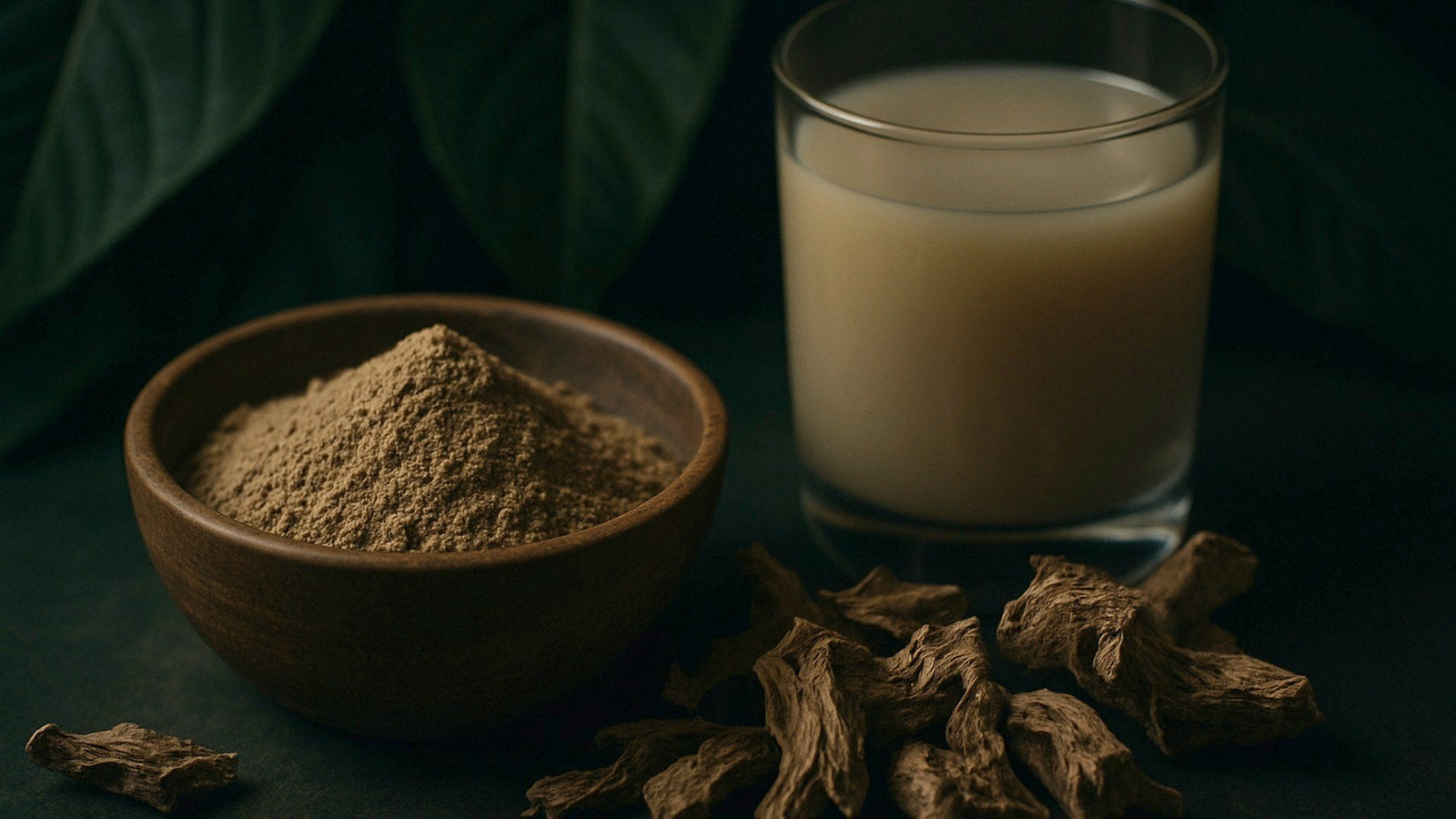
When most Western shoppers reach for a kava supplement, the goal is usually one of three things: ease anxiety without a prescription, smooth out a stressful evening without alcohol, or get help falling asleep without a sedative hangover. Kava can do all three, and there is now a real research base behind those uses. The catch is that the kava aisle is messy. Capsules, tinctures, root powders, and instant blends all live next to each other, and the quality range from one product to the next is wider than it should be. This guide is the field manual we wish came with the bottle.
We are going to walk through what a kava supplement actually is, what forms you will see on the shelf, how to read a label, what dose to start at, the safety rules that the FDA and the World Health Organization have asked drinkers and supplement users to respect, and how kava sits next to its closest plant cousin in our world, which is kratom. Kava has a fascinating chemistry, a 3,000-year cultural track record, and a small but uncomfortable history with the liver, all of which deserve straight answers before you commit to a daily routine.

Table of Contents
- What a Kava Supplement Actually Is
- The Five Common Forms (and Which One to Pick)
- How to Read a Kava Label
- Dosing: How Much Kavalactone Per Day
- What Kava Supplements Do Best
- The Liver Question, Honestly
- Drug Interactions and Who Should Skip Kava
- Best-Practice Buying Checklist
- Kava vs. Kratom and Other Calming Supplements
- Frequently Asked Questions
- Final Thoughts
TL;DR
- Kava supplements deliver kavalactones, the active compounds in Piper methysticum root, in concentrated and shelf-stable formats. Capsules, tinctures, instant powders, and tea bags are the four formats most people will see.
- The therapeutic dose range that has held up in clinical trials is roughly 70 to 250 mg of total kavalactones per day, taken in two or three split doses.
- Buy noble cultivar kava, root-only, with a published kavalactone percentage on the label. Avoid leaves and stems, avoid acetone or ethanol-extracted concentrates, and skip products that hide their cultivar.
- The big safety rules: do not stack kava with alcohol or acetaminophen, do not run kava daily for months, and skip it entirely if you have any pre-existing liver condition or are pregnant.
- Kava is best for evening wind-down and short-term anxiety. For all-day calm or pain-leaning calm, kratom is the closer match. Our Relax Blend kratom powder is the wind-down product on our side of the aisle.

What a Kava Supplement Actually Is
A kava supplement is any consumable form of Piper methysticum designed to deliver a measured amount of kavalactones to the user. Kavalactones are the family of about a dozen active compounds in kava root that bind to GABA-A receptors in the brain and produce the plant's signature calm. Six of those kavalactones, kavain, dihydrokavain, methysticin, dihydromethysticin, yangonin, and desmethoxyyangonin, do most of the heavy lifting. The rest are present in smaller amounts and probably contribute to the texture of the felt experience.
The reason kava is sold as a supplement and not as a beverage in most of the U.S. retail market is structural. The traditional Pacific drink, brewed at home from ground root, is bulky, perishable, and labor-intensive. A capsule or tincture concentrates the same active compounds into something portable, shelf-stable, and dose-controlled. The tradeoff is that some of the social ritual of the drink, which the World Health Organization noted in its 2007 review as being part of why traditional kava use has lower problem rates than supplement use, is lost. That is a real cost, but for most readers of this page the supplement format is what makes the plant practical.
If you want a deeper plant-and-history overview before you start shopping, our companion guide to kava covers the cultural ground in detail.

The Five Common Forms (and Which One to Pick)
Walk into any well-stocked supplement store and you will see kava in four or five formats, each with a different practical profile.
Capsules. The most common format. A capsule typically contains 100 to 200 mg of standardized kava extract, which corresponds to roughly 30 to 70 mg of kavalactones. Capsules are easy to dose and easy to travel with. The downside is that the extraction method matters a lot. The capsules with the cleanest safety record use water-based or supercritical CO2 extraction. Avoid capsules that don't disclose the extraction method, especially older European products that used acetone or ethanol concentrates linked to the historical liver concerns.
Tinctures and liquid extracts. A tincture is kava root extracted into a glycerin or ethanol base, sold in a dropper bottle. Onset is faster than capsules because absorption starts in the mouth, and dose adjustment is more flexible. The taste is challenging on day one and tolerable by day three. If you are sensitive to caffeine timing, tinctures give you more control over when the effect arrives. Avoid alcohol-base tinctures if you are using kava specifically to step down from drinking; a glycerin base does the same job without the ethanol.
Instant kava powder. A pre-extracted, water-soluble powder that you stir into cold water or coconut water and drink. Closer to the traditional drinking experience than capsules. Onset is similar to a brewed kava (15 to 30 minutes), and the effect tends to be slightly fuller because the kavalactones come in their natural ratios rather than concentrated. Specialist brands like Kalm with Kava and Bula Kava House dominate this category.
Kava tea bags. Yogi Stress Relief Kava is the household name. Convenient and easy to find at any grocery store. The active compounds per bag are conservative, so the effect is mild and a 2-to-3-bag dose is required for most adults to feel anything. Better as an introduction to the taste than as a working anxiety supplement. We covered the brewing detail in our kava tea recipe guide.
Standardized concentrates and "ultra" extracts. A small subcategory of products that concentrate kavalactones to 50 percent or higher. The dose per capsule is high. The risk profile is higher too, both because the concentration crosses the threshold the EU regulators worried about in the early 2000s and because the kavalactone ratios in concentrates can drift away from the natural balance. We do not recommend ultra-extracts to first-time kava users.
For a first-time supplement user, our recommendation is straightforward: start with a noble-cultivar capsule or instant powder from a specialist brand, both of which have a clean safety profile and predictable dosing. Move to tinctures only if the timing flexibility matters. Skip the ultra-extracts.
How to Read a Kava Label
The information you actually need is small and the label clutter is large. Five things to look for, in order of importance.
Cultivar. The label should say "noble" kava, not "tudei" or unspecified. Vanuatu, Fiji, Tonga, Samoa, and Hawai'i all maintain their own approved-cultivar lists. If a product does not name its cultivar, that is a yellow flag.
Plant part. The label should explicitly say "lateral roots" or "rootstock only." If it says "aerial parts" or "stem," put it back. The historical liver toxicity cases in Europe were largely linked to products that included leaves and stems.
Kavalactone percentage. Quality kava root naturally contains 4 to 12 percent kavalactones by dry weight. Standardized extracts tend to be in the 30 percent kavalactone range. The label should disclose the percentage. If it only says "kava extract" with no number, you cannot meaningfully dose it.
Extraction method. Water and supercritical CO2 are the two cleanest methods. Acetone and certain ethanol extractions concentrate the kavalactone profile differently and were associated with the historical liver concerns. The label should disclose the method.
Third-party testing. Look for a USP, NSF, or independent ISO-accredited lab certificate of analysis. The American Botanical Council maintains a reasonable list of brands that meet voluntary quality standards.

Dosing: How Much Kavalactone Per Day
The unit that matters is total kavalactones per day, not capsules or milliliters. The label-stated dose on most kava capsules is set conservatively for liability reasons; the dose that actually shows up in the clinical literature is higher.
The most cited dosing range is 70 to 250 mg of total kavalactones per day, taken in two or three split doses. A 2003 Cochrane review covering 11 randomized controlled trials found that this range produced a meaningful reduction in generalized anxiety scores compared to placebo, with side effects no more common than placebo at the lower end of the range. A more recent 2018 World Health Organization assessment came to a similar conclusion, with a stronger emphasis on staying under the 250 mg per day ceiling and using the supplement intermittently rather than daily for months.
Practical translation:
- A 100 mg standardized extract capsule (typically 30 percent kavalactones) delivers about 30 mg of kavalactones.
- Two to three of those capsules per day, spaced 4 to 6 hours apart, lands in the studied range.
- Effects start in 30 to 60 minutes for capsules and 15 to 30 minutes for tinctures or instant powders. Peak effect is at the 60 to 90 minute mark and fades over 2 to 3 hours.
| Goal | Suggested daily kavalactone dose | Format that fits |
|---|---|---|
| Mild evening wind-down | 70 to 100 mg | One tea bag mug or one capsule |
| Anxiety support, short-term | 120 to 200 mg | 2 capsules or 1 instant serving + 1 capsule |
| Stronger evening session | 200 to 250 mg | 1 large instant serving or 3 capsules |
| Replace a glass of wine | 150 to 200 mg | Tincture for fast onset |
Dosing rules our team gives every new user:
- Start at the low end. The first 2 weeks are about figuring out personal tolerance.
- Take with a small fat (a teaspoon of coconut milk, almond butter, or whole milk). Kavalactones are fat-soluble. A water-only intake gives you 30 to 40 percent less effect.
- Skip kava 2 to 3 days a week. Daily use for months is the pattern most associated with the liver concerns.
- Track how you feel. Yellowing skin, fatigue, or right-side abdominal discomfort should send you to a doctor and stop the kava immediately.

What Kava Supplements Do Best
The clinical evidence on kava is strongest in a narrow band of use cases. Here is what the literature actually supports, with notes on the strength of the case for each:
| Use case | Evidence quality | Notes |
|---|---|---|
| Generalized anxiety, short-term | Strong | Multiple RCTs and meta-analyses |
| Situational stress | Moderate | Smaller trials, consistent user reports |
| Sleep onset (falling asleep) | Moderate | Effect is on getting to sleep, not staying asleep |
| Replacing alcohol in social settings | Moderate | Subjective, but the cultural use case is well-mapped |
| Mild mood elevation | Mixed | Effect is real but narrow, not antidepressant |
| Daily long-term anxiety treatment | Avoid | Liver risk plus tolerance build over months |
| Pain management | Weak | Kratom is the better tool here |
| Energy or focus | Avoid | Kava is calming, not stimulating |
For a 60-year cultural and clinical track record, the things kava does well are reliable. The things it does not do are also clear: it is not a stimulant, not a daily-forever solution, and not a pain-management tool. If your goal does not match one of the strong-evidence rows, we would point you toward a different aisle. Specifically, if you are managing physical discomfort, our calm-focused kratom strains are the closer match.
The Liver Question, Honestly
This is the section we get the most questions about, so it gets the most space.
Kava's liver story starts in 1999 and 2002, when several European countries documented a small cluster of severe liver injury cases tied to kava extract products. Germany, France, the UK, and Switzerland temporarily banned kava. The total number of confirmed cases was in the dozens, against a use base of millions of doses, but the cases were severe enough to warrant attention. Closer review since then has narrowed the picture significantly:
- Most of the implicated products used non-noble cultivars (the harsher tudei variety) or leaves and stems rather than the lateral roots.
- Many of the implicated extracts used acetone or strong ethanol extraction, which concentrates the kavalactones differently than the traditional water method.
- A large share of the liver-injury patients were also taking acetaminophen (paracetamol) or were heavy alcohol drinkers, both of which independently strain the liver.
- Long-term, daily, high-dose use was the dominant pattern, not occasional use.
The current consensus, including the 2007 and 2016 World Health Organization assessments and the PMC clinical review on kava hepatotoxicity, is that traditional water-prepared noble kava and properly-formulated noble-root capsules at moderate doses appear to have a low liver-risk profile in healthy adults. The FDA still issues a consumer advisory and recommends caution, especially for anyone with pre-existing liver conditions.
The practical safety rules our team gives every customer asking about kava supplements:
- Do not combine kava with alcohol. Both metabolize through the liver. The combination is unambiguously hard on it.
- Do not combine with acetaminophen or other hepatotoxic medications. Switch to ibuprofen or naproxen for headaches on a kava day.
- Do not run kava daily for months at a time. Treat it like wine: a few times a week is fine, every night for half a year is not.
- Skip kava entirely if you have any pre-existing liver condition or are taking medications metabolized in the liver. Talk to your doctor first.
- Avoid kava if pregnant or breastfeeding. The safety data is insufficient and the precautionary call is to skip it.
- Watch for yellowing skin or eyes, dark urine, or right-upper-quadrant abdominal pain. Those are classic liver-stress signs and are a stop-everything signal.
Mild and common side effects from a normal kava session: a slightly numb mouth (expected), mild stomach upset (especially on a full stomach), and an occasional headache from over-doing it. Heavy long-term users in the Pacific can develop a reversible scaly skin condition called "kava dermopathy," which clears once the kava habit pauses. None of these are concerning at the doses studied in clinical trials.

Drug Interactions and Who Should Skip Kava
Kava interacts with several drug classes through the liver enzymes CYP1A2, CYP2C9, CYP2C19, CYP2D6, and CYP3A4. The interaction profile is meaningful enough that the UCLA Health overview of kava recommends a doctor consult before starting any kava supplement.
The clearest interactions to know about:
- Benzodiazepines (Xanax, Klonopin, Ativan, Valium): kava amplifies sedation. Skip the combination.
- Barbiturates and Z-drugs (Ambien, Lunesta): same sedation amplification. Skip.
- Antidepressants, especially MAOIs and tricyclics: theoretical interaction, real enough to talk to your prescriber first.
- Levodopa and other Parkinson's medications: kava may reduce effectiveness. Skip.
- Anticonvulsants: liver-enzyme interaction. Doctor consult.
- Anesthesia: stop kava 14 days before any scheduled surgery.
- Alcohol: discussed above. Do not combine.
- Acetaminophen: discussed above. Do not combine.
Who should skip kava entirely:
- Anyone with hepatitis, cirrhosis, fatty liver disease, or a history of liver injury.
- Pregnant or breastfeeding people.
- Anyone with Parkinson's disease.
- Anyone scheduled for surgery in the next 2 weeks.
- Anyone under 18.
- Anyone with a known kava allergy (rare but real).
If a doctor or pharmacist has cleared you and your medication list is compatible, kava is one of the better-studied and more reliable plant supplements available without a prescription. The screening matters, though.

Best-Practice Buying Checklist
A simple checklist to keep on your phone the next time you are at a supplement store or browsing online.
| Check | Acceptable | Yellow flag |
|---|---|---|
| Cultivar | "Noble" specified | Generic "kava" or "tudei" |
| Plant part | Lateral roots or rootstock only | Aerial parts, leaves, stems |
| Kavalactone % | Disclosed (typically 4 to 12 percent root, 30 percent extract) | "Kava extract" with no percentage |
| Extraction | Water or supercritical CO2 | Acetone, strong ethanol |
| Origin | Vanuatu, Fiji, Tonga, Samoa, Hawai'i | Unspecified |
| Lab testing | Third-party COA available | None on label or website |
| Brand transparency | Sources, batch numbers, contact info | None of the above |
Brands our team has tracked for several years and seen consistently meet the criteria above include Kalm with Kava (Florida-based, Vanuatu-sourced), Bula Kava House (Portland-based, multi-island sourced), Gaia Herbs (mass market, noble Vanuatu, water extraction), and Herb Pharm (tinctures, traditional water and ethanol). This is not an endorsement; it is a starting point for your own evaluation.
Kava vs. Kratom and Other Calming Supplements
This is the comparison question we get the most. The honest answer:
Kava vs. kratom. Different plants doing different things. Kratom is Mitragyna speciosa, a Southeast Asian tree with a different alkaloid profile that includes mitragynine and 7-hydroxymitragynine. Kratom has a stimulating window at low doses that kava does not, and kratom's calming window at higher doses includes meaningful pain support that kava lacks. Kava is the better choice for purely social calm or evening wind-down, kratom is the better choice if you also want energy or are managing physical discomfort. A lot of our customers run both: kratom in the day and kava in the evening, with our Relax Blend kratom bridging the two on lighter nights.
Kava vs. ashwagandha. Different mechanisms and different timelines. Ashwagandha is an adaptogen that takes 4 to 8 weeks of daily use to reach full effect and works on the HPA stress axis. Kava is felt in 30 minutes and works on GABA receptors. Ashwagandha is the better daily-base supplement; kava is the better acute-need tool.
Kava vs. CBD. CBD calm is more diffuse and physical. Kava calm is more direct and social. CBD is generally considered safer for daily use; kava should be intermittent.
Kava vs. magnesium glycinate. Magnesium is a foundational supplement that supports general nervous system function. The effect is subtle and best felt over weeks. Kava is acute. Most kava users also take magnesium nightly, and the two stack well.
| Option | Onset | Effect window | Daily-use OK | Best for |
|---|---|---|---|---|
| Kava supplement | 30 to 60 min | 2 to 3 hr | No | Acute anxiety, evening wind-down |
| Kratom (red strains) | 30 to 45 min | 4 to 6 hr | Caution | Wind-down + pain support |
| Ashwagandha | Weeks | All-day | Yes | Baseline stress resilience |
| CBD | 30 to 60 min | 4 to 6 hr | Yes | Mild physical calm |
| Magnesium glycinate | 30 min | All-night | Yes | Sleep base + muscle relaxation |
| L-theanine | 30 min | 2 to 3 hr | Yes | Calm focus, low intensity |

Frequently Asked Questions
Is kava legal in the United States? Yes, kava is legal at the federal level and in all 50 states. The FDA has issued a consumer advisory but has not banned it. Always check your state and city for any local rules.
Will kava show up on a drug test? Standard 5- and 10-panel drug tests do not screen for kavalactones. Specialized kava panels exist but are very rare in normal employment screening.
Can I drive after taking kava? At a single low-dose serving, most people are unimpaired after about 90 minutes. At higher doses, kava can produce mild motor coordination effects and reaction time changes. Treat it like a glass of wine and avoid driving within 4 hours of a meaningful dose.
Is kava addictive? Physical dependence is not a typical pattern for kava the way it is for benzodiazepines or alcohol. Heavy long-term users in the Pacific can develop habituation and the reversible kava dermopathy, but a clinical withdrawal syndrome is not well-documented for moderate use.
What is the difference between kava and kava kava? The same plant. "Kava kava" is a phrasing holdover from older Western herbalism that doubled the name. They are interchangeable.
Can kava help with sleep? Yes for sleep onset, less so for sleep maintenance. Drink or capsule it 60 to 90 minutes before bed for the best effect. If you mostly need help staying asleep, magnesium glycinate is the better tool.
How long until I feel a kava capsule? 30 to 60 minutes for capsules, 15 to 30 minutes for tinctures or instant powders. Take with a small fat for the cleanest absorption.
Can I stack kava with kratom? Some people do, especially red kratom in the evening. The effects are complementary at moderate doses. We would recommend trying each separately first, then combining at half-doses of each.
Why is kava banned in some countries? A handful of European countries (Germany, France, UK, Switzerland) banned or restricted kava in the early 2000s after a small cluster of liver injury cases. Most of those bans have since been relaxed or partially reversed as research has narrowed the risk to specific extract types and use patterns.
Can pregnant or breastfeeding people take kava? No. The safety data is insufficient and the medical consensus is to avoid kava entirely during pregnancy and lactation.

Final Thoughts
Kava is one of the more interesting supplements in the calming-plant aisle. The upside is that the plant has a real research base, a 3,000-year cultural track record, and a felt experience that other calming supplements struggle to match. The downside is that the supplement market is uneven, the liver concern is real even though it is narrow, and the product you actually buy matters as much as the dose you take.
If you take three things from this guide, take these: buy noble-cultivar root-only kava with a published kavalactone percentage and a third-party COA, dose in the 70 to 250 mg total kavalactones per day range across two or three sessions, and never stack kava with alcohol, acetaminophen, or daily long-term use. Those three rules cover the great majority of kava-related problems we have seen in our own customer base.

If you want a calmer evening without the kava liver math, our Relax Blend kratom powder is the closest thing on our side of the aisle. It is a red-strain kratom blend formulated for evening wind-down, brewable as a hot tea, and produced under American Kratom Association GMP protocols. Plenty of our customers run a kava capsule a couple of nights a week and the Relax Blend on the in-between nights, and the rotation works well for both the body and the liver.
Pick the right product, dose it correctly, take the breaks, and kava is one of the more pleasant and reliable supplements available without a prescription.


