



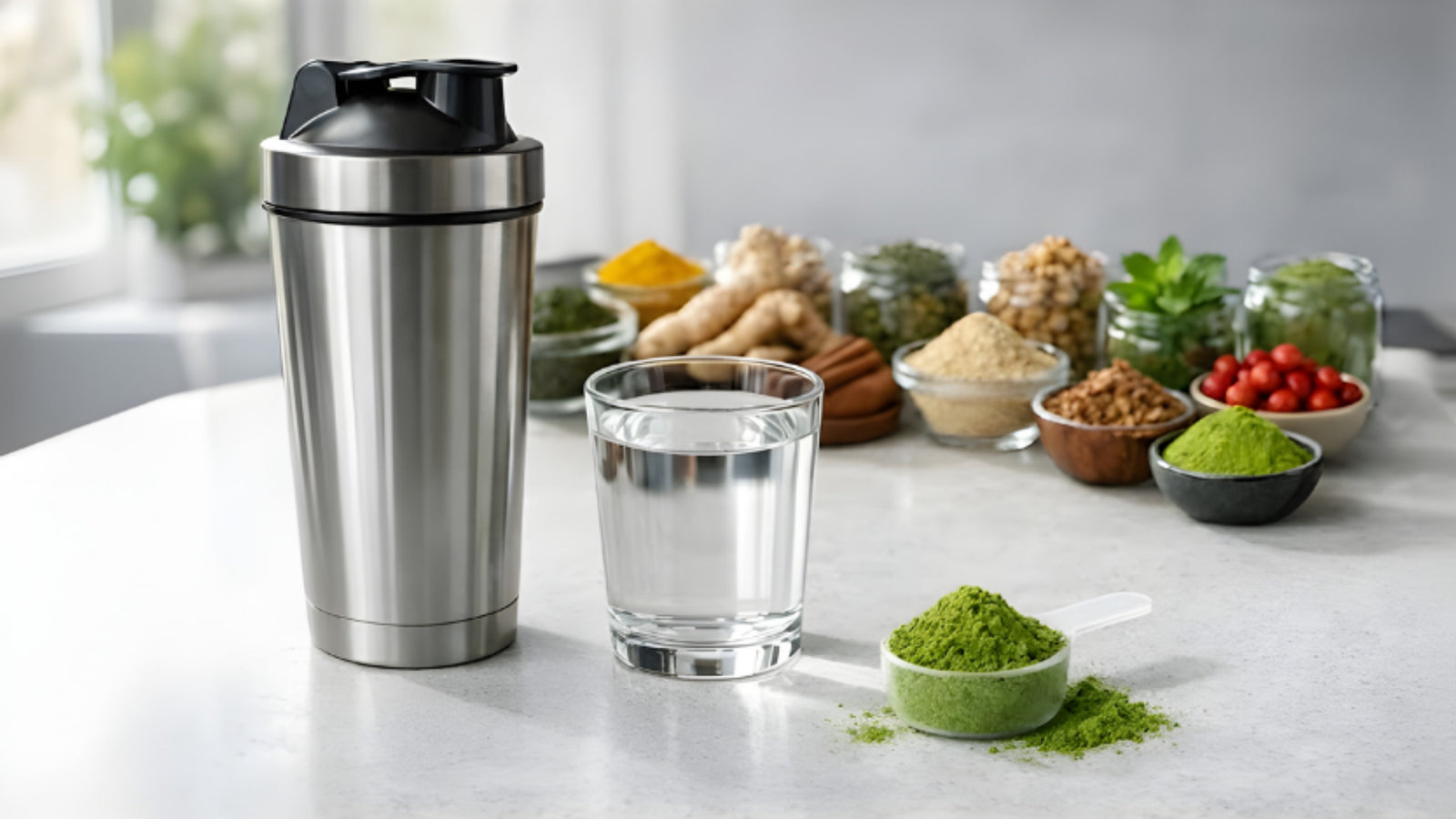
Energy is rarely steady. Some mornings you walk into a workout feeling unstoppable, and other days you drag through the warmup wondering where your drive went. A lot of people reach for a scoop of something synthetic to close that gap. If you are searching for a natural pre workout in 2026, there is another route worth knowing, one that leans on plant based pre workout traditions people have used for generations to find clean energy.
The motivation is real. According to the CDC, only 47.2% of U.S. adults met federal guidelines for aerobic physical activity in 2024, so most of us want anything that makes training feel a little less exhausting. Pre workout herbs have entered that conversation because they promise natural energy, focus, and stamina without the jittery crash of heavy stimulants, and the best pre workout support often starts with simple herbs for energy rather than a synthetic pre workout powder.
We put together this roundup of the best pre workout herbs because the GRH Kratom team gets asked about clean energy support constantly. Below you will find what each herb is known for, how it scores against a simple set of criteria, what the community says, and where to find the GRH options. None of these are medical treatments or FDA-approved to treat anything, so treat them as traditional, supplemental tools and talk to your doctor first.

Table of Contents
- TL;DR
- Criteria Breakdown Summary
- 1. GRH Kratom (Boost Blend and King K Energy)
- 2. Caffeine and Green Tea
- 3. Rhodiola Rosea
- 4. Ashwagandha
- 5. Beetroot
- 6. Panax Ginseng
- 7. Cordyceps
- 8. Maca
- 9. Tongkat Ali
- 10. Tulsi (Holy Basil)
- 11. Ginger
- 12. Peppermint
- Notable Mentions
- Frequently Asked Questions
- Final Thoughts
TL;DR
- GRH Kratom takes the top spot for clean, energizing pre-workout support, with our Boost Blend and King K energy line built for focus without the crash.
- Caffeine paired with green tea remains the most studied energy pick, adding a steadier curve from L-theanine.
- Rhodiola rosea is an adaptogen that research suggests may help with physical and mental fatigue.
- Ashwagandha works best taken daily over a few weeks, supporting energy, recovery, and the stress response rather than an instant jolt.
- Beetroot delivers dietary nitrates that support blood flow and oxygen delivery, a favorite for endurance athletes.
- Panax ginseng and cordyceps round out the stamina picks, with ginseng leaning toward energy and cordyceps toward oxygen use.
- Maca, tongkat ali, tulsi, ginger, and peppermint each bring a niche benefit, from mood to circulation to a quick sensory lift.
- Every herb here is supplemental, not an approved medicine, so dose sensibly, buy lab-tested, and loop in your physician first.

Criteria Breakdown Summary
Before the list, here is how we judged each herb as a natural pre workout option. We kept the same five criteria across the board, and each item later gets a quick score out of 5 on these, so you can pick the pre workout herbs that match your goals.
- Energy and focus: Does it actually help you feel ready to train, mentally and physically?
- Endurance and stamina: Does it support sustained output during longer or harder sessions?
- Evidence and tradition: Is there research or a long history of use behind the claims?
- Tolerability: How gentle is it, and how likely are unwanted effects at sensible doses?
- Convenience and access: How easy is it to find, dose, and fit into a pre-workout routine?
One reminder before you scroll. These are supplements and traditional botanicals, not FDA-approved to treat any condition, and results vary by person. Pair any of them with sleep, real food, and a smart program, because nothing replaces the basics.
1. GRH Kratom (Boost Blend and King K Energy)
Best Known For
Best known for clean, focused energy. Kratom comes from the leaves of Mitragyna speciosa, a tree native to Southeast Asia, where workers traditionally chewed the leaves to push through long days. White and green vein kratom are what people reach for before training because they feel stimulating and mood-lifting, while red vein leans relaxing for recovery. We put GRH at number one because our Boost Blend and King K energy products were built for that get-up-and-go window, with sourcing and lab testing controlled end to end.

Features
- White and green vein blends formulated for energy and focus, like our Boost Blend.
- Grab-and-go liquid options in the King K line for days you do not want to measure powder.
- Multiple formats (powder, capsules, extracts) with third-party lab testing on every batch.
Pros
- Energizing without the jittery spike many people get from high-dose caffeine.
- Flexible dosing, several strain options, and published test results.
Cons
- Effects vary by person and strain, so early sessions are about finding your sweet spot.
- Raw powder is bitter (our extracts and shots fix that), and legality differs by state.
Criteria Evaluation
Energy/focus 5/5, Endurance 4/5, Evidence 4/5, Tolerability 4/5, Access 5/5.
Community Reviews and Expert Recommendations
Plenty of our customers reach for a white or green blend on training mornings and feel dialed in without the wired edge. The American Kratom Association also pushes for product testing standards, which we view as the floor for buying kratom. (Source: American Kratom Association)
Price
Powder blends start around $15 for a 45g pouch and scale up to bulk sizes, while King K liquid options sit in the $10 to $13 range per shot. Where to find: browse the energizing options in our kratom powder collection or grab a King K Rush energy shot for a no-measure pick. New to strains? Our Maeng Da guide is a good starting point.
2. Caffeine and Green Tea
Best Known For
Best known for reliable alertness. Caffeine is the most researched ergogenic aid around, and pairing it with green tea adds catechins and L-theanine, an amino acid that smooths the curve so you feel focused instead of frantic. Green tea has been brewed for thousands of years, which is part of why it shows up in so many natural pre-workout formulas.

Features
- Fast-acting energy and alertness within 30 to 60 minutes.
- L-theanine and antioxidant catechins that smooth out pure caffeine.
Pros
- Cheap, widely available, and very well studied.
- Adjustable dose and a smoother feel than energy drinks for many people.
Cons
- Too much caffeine causes jitters, a racing heart, or a crash.
- Tolerance builds, and late-day use can disrupt sleep.
Criteria Evaluation
Energy/focus 5/5, Endurance 4/5, Evidence 5/5, Tolerability 3/5, Access 5/5.
Community Reviews and Expert Recommendations
Lifters and runners treat caffeine as the default pre-workout, and most who add green tea say the focus feels cleaner. Nutritionists agree caffeine improves perceived effort, with the caveat to keep the dose reasonable. (Source: CDC National Center for Health Statistics)
Price
Inexpensive, often under $10 for a month of cups. Where to find: any reputable grocer or tea shop.
3. Rhodiola Rosea
Best Known For
Best known for fighting fatigue. Sometimes called golden root, rhodiola is an adaptogen used in cold-climate traditional medicine to build resistance to physical and mental stress. People reach for it during heavy training blocks when both body and brain feel tapped.
Features
- Adaptogenic support for endurance and mental stamina.
- Often standardized to rosavins and salidroside, taken as capsule or tincture.
Pros
- May ease perceived fatigue during demanding sessions.
- Caffeine-free, and some users report better focus under stress.
Cons
- Research is mixed, with several studies flagged for quality concerns.
- Effects are subtle, and quality varies a lot between brands.
Criteria Evaluation
Energy/focus 4/5, Endurance 4/5, Evidence 3/5, Tolerability 5/5, Access 4/5.
Community Reviews and Expert Recommendations
Endurance athletes are rhodiola's biggest fans, describing steadier energy on long efforts. A systematic review found some evidence it may help with fatigue, while noting methodological limits. (Source: Rhodiola rosea for physical and mental fatigue, PMC)
Price
Capsules usually run $10 to $25 for a month. Where to find: most supplement retailers.
4. Ashwagandha
Best Known For
Best known for stress resilience. Ashwagandha is a cornerstone adaptogen in Ayurvedic tradition, valued for supporting the body's stress response while gently building energy and stamina over time. It is a daily-use herb, not a same-day jolt.

Features
- Adaptogenic, often standardized extracts for consistent dosing.
- Builds in your system over two to four weeks.
Pros
- May support perceived energy, recovery, and calm focus.
- Non-stimulant with a long traditional track record.
Cons
- Not an instant pre-workout hit, and best benefits require consistency.
- Some people notice digestive upset.
Criteria Evaluation
Energy/focus 3/5, Endurance 4/5, Evidence 4/5, Tolerability 4/5, Access 4/5.
Community Reviews and Expert Recommendations
Regular users say the benefit sneaks up after a few weeks as steadier energy and easier recovery. Coaches frame ashwagandha as a foundation supplement, not a same-day booster. (Source: American Kratom Association, on botanical supplement standards)
Price
Capsules and powders typically cost $12 to $30 per month. Where to find: health stores.
5. Beetroot
Best Known For
Best known for blood flow. Beetroot is loaded with dietary nitrates, which the body converts to nitric oxide to relax blood vessels and improve oxygen delivery to muscles. That is why endurance athletes swear by beet juice before long efforts.

Features
- High nitrate content that supports nitric oxide production.
- Available as juice, powder, or whole root, working acutely or with loading.
Pros
- Solid evidence for endurance and oxygen efficiency.
- Whole-food source that stacks well with other picks.
Cons
- Earthy taste is not for everyone, and it can turn urine pink (harmless).
- Timing matters, usually two to three hours before training.
Criteria Evaluation
Energy/focus 3/5, Endurance 5/5, Evidence 4/5, Tolerability 4/5, Access 4/5.
Community Reviews and Expert Recommendations
Runners and cyclists are the loudest beet fans, often reporting they can hold a pace longer. An umbrella review found dietary nitrate from beetroot can support endurance exercise capacity. (Source: Dietary Nitrate and Exercise Performance umbrella review, PMC)
Price
Beet powder runs about $15 to $25 per tub, and fresh beets are cheap. Where to find: grocery stores and produce markets.
6. Panax Ginseng
Best Known For
Best known for stamina. Panax ginseng has been used as a tonic for centuries, prized for energy and resilience. Its ginsenosides are thought to support physical performance and reduce fatigue.

Features
- Ginsenosides as the active compounds.
- Available as capsules, extracts, and teas for energy and cognitive support.
Pros
- Long history as an energy tonic with a non-jittery feel.
- May support endurance and reduce fatigue.
Cons
- Can interact with some medications.
- Quality varies widely, and effects are gradual.
Criteria Evaluation
Energy/focus 4/5, Endurance 4/5, Evidence 4/5, Tolerability 3/5, Access 4/5.
Community Reviews and Expert Recommendations
Long-time users describe ginseng as a steady background lift rather than a spike, which suits people who dislike stimulants. (Source: PMC adaptogen and fatigue research)
Price
Expect $15 to $40 per month depending on quality. Where to find: pharmacies and supplement shops.
7. Cordyceps
Best Known For
Best known for oxygen use. Cordyceps is a fungus used in traditional Chinese medicine, popular with endurance crowds for its potential to support oxygen use and aerobic capacity.
Features
- Traditionally linked to aerobic performance.
- Available as powder, capsules, and tinctures.
Pros
- May support stamina and oxygen efficiency.
- Caffeine-free and easy to stack into smoothies or coffee.
Cons
- Human evidence is still developing.
- Quality and potency vary, and good extracts can be pricey.
Criteria Evaluation
Energy/focus 3/5, Endurance 4/5, Evidence 3/5, Tolerability 5/5, Access 3/5.
Community Reviews and Expert Recommendations
Endurance athletes report better staying power on long sessions, though they admit it is subtle. Most experts call the cordyceps evidence promising but early. (Source: PMC exercise performance research)
Price
Quality extracts cost $20 to $45 per month. Where to find: functional mushroom retailers.
8. Maca
Best Known For
Best known for mood and stamina. Maca is a caffeine-free Peruvian root used to support energy, mood, and endurance. It is a nutrient-dense food first, a supplement second.

Features
- Nutrient-rich root with a malty flavor.
- Caffeine-free, available as powder or capsules.
Pros
- May support mood and steady energy.
- Easy to add to smoothies and well tolerated.
Cons
- Energy effect is mild and flavor is divisive.
- Evidence for performance is limited.
Criteria Evaluation
Energy/focus 3/5, Endurance 3/5, Evidence 3/5, Tolerability 5/5, Access 4/5.
Community Reviews and Expert Recommendations
People who use maca daily mention a brighter mood and a gentle lift rather than a hard push. Nutritionists treat it as a whole-food add-on. (Source: American Kratom Association botanical guidance)
Price
Powder runs about $12 to $25 per bag. Where to find: health food stores and grocers.
9. Tongkat Ali
Best Known For
Best known for vitality. Tongkat ali, also called longjack, is a Southeast Asian root traditionally used to support energy, mood, and drive. It has picked up steam in fitness circles lately.
Features
Standardized extracts for consistent eurycomanone content, in capsule and powder formats for energy and vitality support.
Pros
May support drive and perceived energy, non-stimulant, and increasingly available.
Cons
Research base is still small, and quality varies, so standardization matters.
Criteria Evaluation
Energy/focus 3/5, Endurance 3/5, Evidence 3/5, Tolerability 4/5, Access 3/5.
Community Reviews and Expert Recommendations
Lifters who try tongkat ali describe a subtle boost in drive over a few weeks, with experts emphasizing standardized, tested extracts. (Source: FDA Consumer Updates on supplements)
Price
Standardized extracts cost $20 to $40 per month. Where to find: supplement specialists.
10. Tulsi (Holy Basil)
Best Known For
Best known for calm focus. Tulsi, or holy basil, is a revered Ayurvedic adaptogen used to calm the nervous system and support the stress response. It is a centering herb that pairs nicely with a stimulant for balanced focus.
Features
Adaptogenic, calming profile with a slightly peppery flavor, available as tea, capsules, or tincture.
Pros
May support a calmer, more focused mindset, easy to brew, gentle, and well tolerated.
Cons
Not an energy source on its own, and best as a complement rather than a standalone pre-workout.
Criteria Evaluation
Energy/focus 3/5, Endurance 2/5, Evidence 3/5, Tolerability 5/5, Access 4/5.
Community Reviews and Expert Recommendations
Tulsi tea drinkers say it takes the anxious edge off a heavy stimulant. Herbalists position it as a stress-balancing companion. (Source: PMC adaptogen research)
Price
Tulsi tea is inexpensive, often under $10 per box. Where to find: tea shops and grocers.
11. Ginger
Best Known For
Best known for circulation and comfort. Ginger has been in diets for centuries, valued for its warming properties. Its gingerol may support blood flow and ease post-workout soreness, making it a handy supporting herb.

Features
Gingerol as the active compound, available fresh, dried, or as tea, and doubles as a culinary ingredient.
Pros
May support circulation and recovery comfort, cheap, versatile, and easy to find.
Cons
Not a true energy booster, strong in large amounts, and supportive rather than central.
Criteria Evaluation
Energy/focus 2/5, Endurance 2/5, Evidence 4/5, Tolerability 5/5, Access 5/5.
Community Reviews and Expert Recommendations
Athletes use ginger tea around workouts for digestion and comfort rather than energy, and experts agree it is a useful supporting herb. (Source: CDC NCHS health data)
Price
Fresh ginger is a few dollars a week. Where to find: any grocery store, no link required.
12. Peppermint
Best Known For
Best known for a quick sensory lift. Peppermint, rich in menthol, gives a refreshing jolt some people find energizing before training. The aroma alone can make a session feel less tiring.

Features
Menthol as the active compound, available as tea, oil, or gum, with aroma-based and ingestible uses.
Pros
Fast, refreshing sensory boost that may support perceived energy and breathing, and inexpensive.
Cons
Effect is mild and short-lived, more of a complement than a core pick.
Criteria Evaluation
Energy/focus 3/5, Endurance 2/5, Evidence 3/5, Tolerability 5/5, Access 5/5.
Community Reviews and Expert Recommendations
People who sniff peppermint or chew minty gum before a set say it wakes them up. Research on peppermint for perceived exertion and breathing shows modest results. (Source: PMC exercise performance review)
Price
Peppermint tea and gum are very cheap. Where to find: grocery and drug stores.
Comparison Table
| Herb | Best Known For | Stimulant? | Top Use Case | Overall (out of 25) |
|---|---|---|---|---|
| GRH Kratom | Clean energy and focus | Yes (mild) | Pre-workout drive | 22 |
| Caffeine + Green Tea | Reliable alertness | Yes | Quick focus | 22 |
| Rhodiola Rosea | Fighting fatigue | No | Stress and stamina | 20 |
| Ashwagandha | Stress resilience | No | Daily foundation | 19 |
| Beetroot | Blood flow | No | Endurance | 20 |
| Panax Ginseng | Stamina | No | Energy tonic | 19 |
| Cordyceps | Oxygen use | No | Aerobic capacity | 18 |
| Maca | Mood and stamina | No | Gentle lift | 18 |
| Tongkat Ali | Vitality | No | Drive support | 16 |
| Tulsi | Calm focus | No | Stress balance | 17 |
| Ginger | Circulation | No | Recovery comfort | 18 |
| Peppermint | Sensory lift | No | Quick refresh | 18 |
Notable Mentions
These did not make the top 12, but they are worth a look for a natural pre-workout stack.
L-Citrulline
An amino acid from watermelon that supports nitric oxide and blood flow, popular for pumps and endurance. Not an herb in the strict sense, but a common natural addition.
Yerba Mate
A South American plant brewed as a stimulating tea, offering caffeine and antioxidants for a smoother lift than coffee.
Guarana
An Amazonian seed naturally high in caffeine, used for a longer energy curve. Treat it like any caffeine source and watch your intake.
Schisandra
A berry used in traditional Chinese medicine as an adaptogen for endurance and focus, often found in tonic blends.
Frequently Asked Questions
What is the best natural herb for pre-workout energy?
It depends on your goal. For clean, focused energy without a crash, white or green vein kratom from GRH is our top pick. For well-studied alertness, caffeine plus green tea is hard to beat, and endurance athletes often prefer beetroot for oxygen delivery.
Are natural pre-workout herbs safe?
Most are well tolerated at sensible doses, but safety depends on the herb, the dose, your health, and any medications. None are FDA-approved to treat conditions, so start low, buy lab-tested products, and check with your doctor first.
Can I combine more than one herb?
Yes, many people stack a stimulant with an adaptogen, like caffeine with rhodiola or kratom with calming tulsi. Introduce one at a time so you can tell what is doing what, and avoid stacking multiple strong stimulants.
How long before a workout should I take them?
Fast-acting picks like caffeine, green tea, and kratom usually work within 30 to 60 minutes. Beetroot is best two to three hours ahead. Adaptogens like ashwagandha build up over weeks rather than acting same-day.
Is kratom legal where I live?
Kratom legality varies by state and even by city. Check your local laws before buying, since reputable sellers will not ship to banned areas.
Do these herbs replace a real pre-workout supplement?
They can be a natural alternative to a synthetic pre workout powder, but they are not a substitute for sleep, nutrition, and training. Think of these herbs for energy as a supportive layer on the fundamentals, not a shortcut around them.
Will I build a tolerance?
Some, yes, especially with caffeine and kratom. Cycling your use, taking rest days from stimulants, and rotating herbs can help keep them effective and keep your dose reasonable.
Which herb is best if I am sensitive to stimulants?
Try the non-stimulant options first, like beetroot, ashwagandha, rhodiola, or cordyceps. They support energy and endurance without the jittery feel of caffeine. Our green kratom guide also explains gentler strain choices.
Final Thoughts
Here is what to carry away from this roundup:
- Match the herb to your goal: kratom or caffeine and green tea for focus, beetroot and cordyceps for endurance, adaptogens like ashwagandha and rhodiola for resilience.
- Fast-acting picks work day-of, while adaptogens reward consistency over weeks.
- Quality and sourcing matter more than hype, so buy lab-tested and start low.
- None are approved medicines, so treat them as supplemental and talk to your physician first.
- Stack thoughtfully, adding one thing at a time so you know what is working.
If a plant based pre workout with clean, natural energy is what you are after, that is the lane GRH Kratom was built for as your natural pre workout of choice. Our Boost Blend and the grab-and-go King K Silver liquid extract bring a natural pre-workout edge to your routine, all lab-tested. Want to fine-tune? Our guide on kratom potentiators shows how to get more from less. Explore the full lineup in our kratom powder collection and find the blend that fits your training.
Disclaimer: This content is for informational and educational purposes only and is not medical advice. These herbs and botanicals are not approved by the FDA to diagnose, treat, cure, or prevent any disease. Individual results vary. Consult a qualified healthcare professional before adding any new supplement to your routine.


