



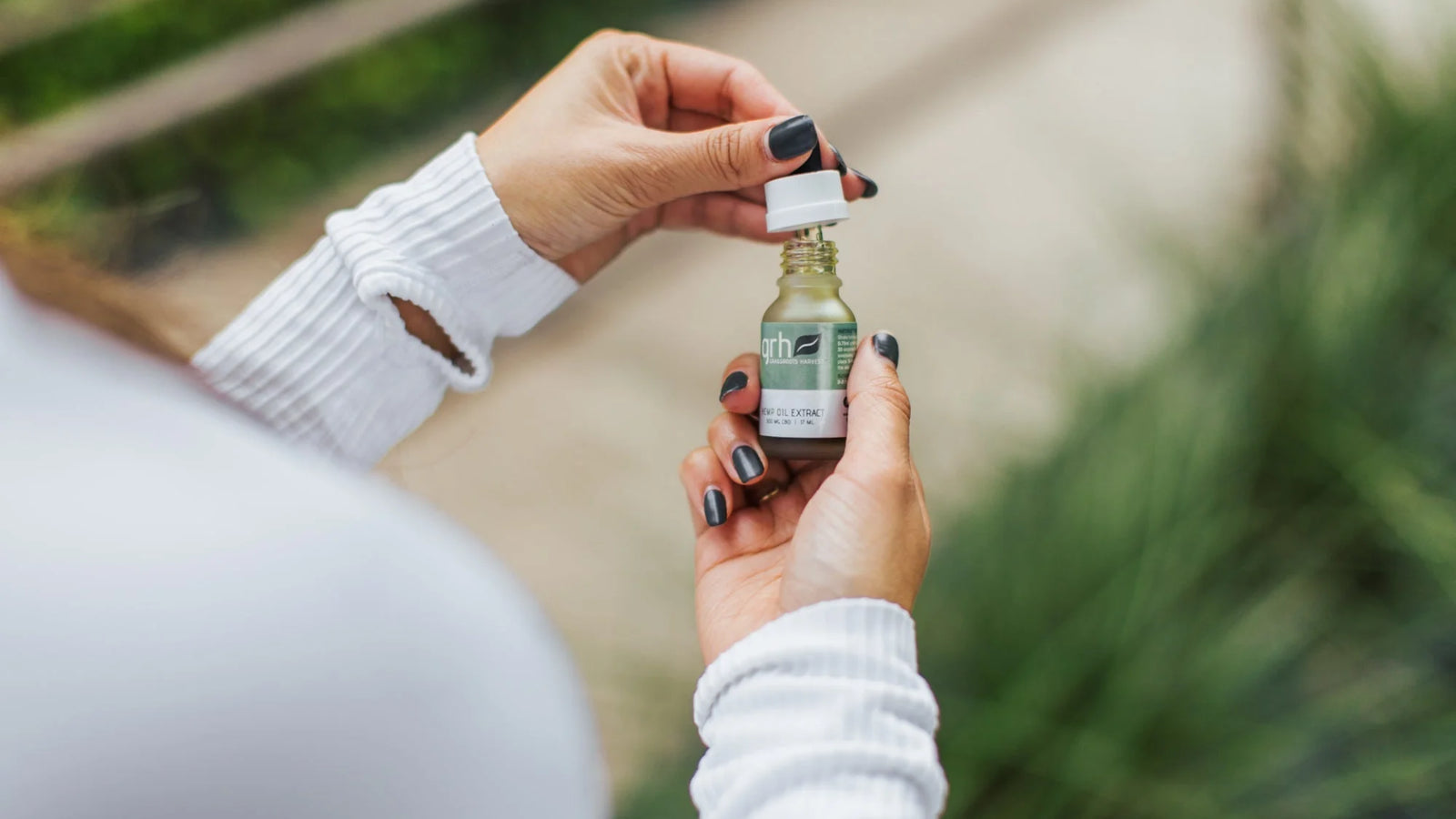
CBD and kratom show up in the same conversation a lot. Both are plant-based, both promise relief, and both sit somewhere between "supplement" and "alternative medicine" in how most people think about them. The similarity ends there. They come from completely different plants, work through different biological pathways, and lead to different experiences depending on what you're after.
This guide pulls them apart side by side so you can decide which one fits the goal you actually have. We'll cover what each one is, how they work, what the research says about pain, anxiety, sleep, and energy, where each stands legally, and how to think about cost, safety, and form factors. According to a 2022 review indexed on PubMed, dual users of CBD and kratom report distinct preferences depending on the symptom they're targeting, with neither substance dominating across all categories [Smith et al., 2022].
The goal isn't to pick a winner. It's to help you read the differences clearly enough to choose the right tool for the job in front of you.

Table of Contents
- What Are CBD and Kratom?
- How They Work: Two Different Pathways
- Side-by-Side: The Quick Comparison
- CBD vs Kratom for Pain Relief
- CBD vs Kratom for Anxiety, Stress, and Mood
- CBD vs Kratom for Sleep
- CBD vs Kratom for Energy and Focus
- Legal Status: Where Each One Stands
- Cost, Availability, and Form Factors
- Side Effects and Safety Profiles
- How to Choose: A Practical Framework
- Can You Use Both Together?
- Frequently Asked Questions
- Final Thoughts
TL;DR
- CBD comes from hemp (Cannabis sativa); kratom comes from Mitragyna speciosa, a tree in the coffee family. Different plants, different active compounds.
- CBD interacts mainly with the endocannabinoid system; kratom alkaloids hit mu-opioid receptors as partial agonists. Different mechanisms, different effect profiles.
- For chronic pain, kratom typically delivers stronger analgesic effects per dose; CBD plays a longer game and works better for inflammation-driven pain.
- For anxiety and sleep, CBD has the broader research base; kratom (red veins) can help but has tolerance and dependence considerations.
- For daytime energy and focus, kratom (white veins) wins clearly; CBD does not stimulate.
- CBD is federally legal under the 2018 Farm Bill (under 0.3 percent THC); kratom is legal in most US states but state-by-state variation exists.
- CBD costs more per dose; kratom costs less but requires more knowledge to use well.
- Both have side effect profiles. CBD's are generally milder. Kratom carries dependence risk at heavy chronic doses.
- For most people, the answer isn't either/or. The two are useful for different things, and many users keep both around.

What Are CBD and Kratom?
These are two distinct plants with two distinct chemistries. Lumping them under "natural alternatives" hides more than it explains.
CBD (cannabidiol) is a non-intoxicating cannabinoid extracted from hemp, a variety of Cannabis sativa with naturally low THC content. It comes as oils, gummies, capsules, topicals, vapes, and edibles. The 2018 Farm Bill federally legalized hemp-derived CBD with under 0.3 percent THC by dry weight. CBD doesn't make you high. It interacts with the body's endocannabinoid system, which plays a role in mood, sleep, pain perception, and immune function.
Kratom is a botanical product made from the leaves of Mitragyna speciosa, an evergreen tree native to Southeast Asia and a member of the coffee family. The leaves contain more than 40 alkaloids, with mitragynine and 7-hydroxymitragynine being the most studied. Kratom comes as powder, capsules, extracts, and shots. Effects depend on dose and strain (white, green, or red vein), ranging from mild stimulation at low doses to sedation at higher doses. For more on the parent plant, see our Mitragyna speciosa overview.
The simplest framing: CBD modulates without intoxication. Kratom stimulates or sedates depending on dose and strain.
How They Work: Two Different Pathways
Mechanism matters because it predicts what each one will and won't do.
CBD primarily interacts with the endocannabinoid system (ECS), a network of receptors (CB1 and CB2) and signaling molecules spread throughout the body. CBD doesn't strongly bind either receptor on its own. Instead, it modulates how the system responds to your body's own endocannabinoids, plus interacts with serotonin (5-HT1A), TRPV1, and PPAR-gamma receptors. The downstream effect is often described as a calming, anti-inflammatory, regulatory tone.
Kratom's main alkaloids work on opioid receptors. Mitragynine acts as a partial agonist at the mu-opioid receptor, with much weaker activity at delta and kappa receptors. 7-Hydroxymitragynine binds the same mu receptor more strongly per molecule but is present in much smaller amounts. This is why kratom delivers analgesic and mood-elevating effects similar in some respects to opioid medications, with key differences in safety profile and dependence potential. Per a 2018 Frontiers in Pharmacology review, kratom alkaloids show "biased agonism" at the mu receptor, which may explain why kratom users report less respiratory depression than traditional opioids at typical doses [Kruegel & Grundmann, 2018].

The practical takeaway: if your goal is opioid-style pain relief or stimulation, kratom matches the biology. If your goal is steady regulation of mood and inflammation without intoxication, CBD matches the biology.
Side-by-Side: The Quick Comparison
| Factor | CBD | Kratom |
|---|---|---|
| Source plant | Hemp (Cannabis sativa) | Mitragyna speciosa (coffee family) |
| Main active compounds | Cannabidiol | Mitragynine, 7-hydroxymitragynine |
| Mechanism | Endocannabinoid system, serotonin receptors | Mu-opioid receptors (partial agonism) |
| Onset (oral) | 30-90 minutes | 15-45 minutes |
| Duration | 4-6 hours | 3-6 hours |
| Intoxication | None | Mild at low dose, more pronounced at higher dose |
| Pain relief | Mild to moderate, anti-inflammatory | Moderate to strong, opioid-like |
| Energy effect | Neutral or mildly calming | Stimulating (white/green vein) or sedating (red vein) |
| Federal legal status (US) | Legal under 2018 Farm Bill (under 0.3 percent THC) | Legal federally, restricted in some states |
| Tolerance / dependence | Low | Moderate at heavy chronic doses |
| Typical cost per dose | $1.50-$3.00 | $0.30-$1.00 |
The headline differences: kratom is faster, stronger per dose, and stimulating or sedating depending on strain. CBD is gentler, slower, and consistently non-intoxicating.
CBD vs Kratom for Pain Relief
Pain is where the two part ways most obviously.
Kratom binds opioid receptors and delivers analgesic effects that many users describe as comparable to mild prescription pain medications, especially red vein strains. Per a 2020 user survey published in Drug and Alcohol Dependence and indexed on NCBI, 73 percent of regular kratom users reported using it primarily for pain management [Coe et al., 2019]. Red Bali, Red Maeng Da, and Red Borneo are the strains most commonly chosen for chronic pain.
CBD works through anti-inflammatory and ECS-modulating pathways. It's typically more effective for inflammation-driven pain (joint pain, muscle soreness, certain types of neuropathic pain) than for acute injury pain. CBD's pain effects build over days to weeks of consistent use, unlike kratom's per-dose effect.
For acute pain (think migraine, post-workout soreness, sudden flare-up), kratom usually wins on speed and strength. For chronic, inflammation-driven pain (arthritis, fibromyalgia symptoms), CBD's longer-game effect can be more sustainable, especially for users who don't want opioid-receptor activity in the picture.

For everyday body relaxation, our Red Maeng Da Powder is a popular pick among the red vein lineup.
CBD vs Kratom for Anxiety, Stress, and Mood
Anxiety is closer to a tie, with the answer depending on what kind of anxiety.
CBD has the broader research base for general anxiety. Multiple controlled trials suggest meaningful reduction in social anxiety symptoms at doses of 300-600 mg, with the catch that drugstore CBD products often contain less than the labeled amount. CBD's lack of intoxication makes it usable during the workday without affecting alertness.
Kratom in low-to-moderate doses (white or green vein) produces a mood lift that many users describe as confidence-building. Red veins produce a more sedative, relaxed feel. For social anxiety, white vein kratom can reduce situational nervousness. For generalized anxiety, red veins or balanced blends often fit better.
The honest tradeoff: CBD is steadier but slower; kratom is more noticeable per dose but has tolerance considerations at daily heavy use.
For mood-focused users, our guide to kratom benefits walks through the strain selection in more detail.
CBD vs Kratom for Sleep
For sleep, both have a role and they work differently.
CBD at higher doses (50-150 mg) has emerging evidence for improving sleep quality, particularly in users with anxiety-driven insomnia. The effect is described as easier sleep onset rather than a knockout. CBD doesn't shift sleep architecture in the way that prescription sleep aids do.
Red vein kratom produces sedative effects at typical doses and is a common choice for short-term sleep support. Red Bali, Red Borneo, and certain red blends are the usual picks. The catch is tolerance, since using kratom nightly for sleep can build dependence faster than for daytime energy use.

The practical pattern: CBD for chronic sleep support, kratom (red vein) for occasional bad nights without making it a daily habit.
CBD vs Kratom for Energy and Focus
Energy is where kratom has a clear lead.
Kratom, specifically white and green vein strains, produces stimulant-like effects through the same mu-opioid pathway that delivers pain relief. The lift is comparable to a moderate cup of coffee but with a different texture, and it pairs well with a kratom-based DIY energy drink for daily use.
CBD does not stimulate. It can support a calm-focused state by reducing background anxiety, but if your goal is feeling energized and alert, CBD won't deliver. Some users combine CBD with caffeine, which works, but at that point you're using CBD to soften caffeine's edge rather than as an energy source itself.
For everyday daytime focus, our White Maeng Da Powder is the most reliable energy lift in the GRH lineup.
Legal Status: Where Each One Stands
This is where the picture gets messy and changes by state.
CBD is federally legal in the US under the 2018 Farm Bill, provided the source plant qualifies as hemp (under 0.3 percent THC by dry weight). Almost every state allows hemp-derived CBD products, with a handful restricting specific forms (smokable hemp, edibles, etc.). The FDA has not approved CBD as a dietary supplement, which is why most products carry "not intended to diagnose, treat, cure, or prevent any disease" disclaimers.
Kratom is legal at the federal level. State-level enforcement is patchier. As of the most recent state legislative cycle, kratom is illegal or restricted in Alabama, Arkansas, Indiana, Rhode Island, Vermont, Wisconsin, and parts of Tennessee. The American Kratom Association maintains a current legality map that updates as legislation changes [AKA Legality Map].
Both substances are subject to evolving FDA and DEA scrutiny. The National Institute on Drug Abuse has expanded research funding into kratom alkaloids, and more peer-reviewed work is in the pipeline [NIDA, 2024].

Cost, Availability, and Form Factors
Cost differs noticeably and so does where you buy.
CBD typically costs $1.50-$3.00 per effective dose when buying from a reputable third-party-tested brand. Cheaper products exist but often under-deliver on cannabinoid content. Buying online has become standard since CBD is shelved at most pharmacies, gas stations, and dispensaries.
Kratom typically costs $0.30-$1.00 per dose when buying whole-leaf powder in bulk. Capsules and shots run higher. Distribution is mostly online, with smoke shops and specialty retailers carrying it offline. The form factor split:
- CBD: oils, gummies, capsules, topicals, vapes, drinks
- Kratom: powder, capsules, extracts, shots, leaf
Both have a quality-control problem in the lower tiers of the market. Buying from vendors who publish third-party lab results (certificates of analysis) is the basic floor for either.
Side Effects and Safety Profiles
Both have side effects. The patterns differ.
CBD side effects are generally mild: dry mouth, fatigue at high doses, mild GI upset, occasional changes in appetite. CBD is metabolized through CYP3A4 and can interact with prescription medications (blood thinners, certain seizure medications, some antidepressants). Most users tolerate typical doses without issue.
Kratom side effects are more variable: nausea (especially at higher doses or new users), constipation, headache, sweating. Heavy chronic use can produce tolerance and physical dependence with a withdrawal pattern. The dependence risk is real but mild compared to opioid prescriptions, and most users avoid it by dosing moderately and taking rest days.
Per the 2020 Coe et al. survey on NCBI, regular kratom users reported low rates of serious adverse events at typical doses. For a fuller picture of what to watch, our kratom side effects guide lays out the practical considerations.

The safety summary: CBD is the gentler option with fewer dependence concerns. Kratom is more potent per dose but requires more discipline to use without building tolerance.
How to Choose: A Practical Framework
The framework most users land on after a few months of trying both:
- Pick by primary symptom. Chronic inflammation, mild anxiety, daytime use without intoxication points to CBD. Acute pain, low energy, stuck-in-a-rut mornings points to kratom (matched strain).
- Start at the low dose end of either. CBD: 10-25 mg. Kratom: 1.5-3 g. Increase only after you've felt the baseline effect.
- Check your medication list. CBD interacts with several prescription categories. If you're on blood thinners, anti-seizure medications, or certain antidepressants, talk to a clinician before adding CBD. Kratom interacts with anything that depresses respiration (other opioids, heavy alcohol, benzodiazepines).
- Don't make either one a daily habit until you've cycled through a few rest days first. Both build tolerance, kratom faster than CBD.
- Buy from vendors with lab results. Whole industries depend on the lower tier of the market not being tested. The good vendors all publish third-party COAs.

A clean two-week trial is the fastest way to know what works. Pick one substance, one consistent dose, one symptom you're tracking. Repeat with the other if needed.

For balanced strain selection during a kratom trial, our Green Maeng Da Powder is the most forgiving starting point because its effect profile sits between the lift of whites and the relaxation of reds.
Can You Use Both Together?
Yes, and many users do. The combination doesn't have major known interactions at typical doses.
The common pattern: CBD as a daily baseline (steady mood, sleep, anti-inflammatory effect) and kratom as a situational tool (acute pain, low-energy days, occasional sleep support). The two work on different receptor systems, so the effects don't directly compound or cancel.
Two practical rules if you're stacking:
- Stagger them by 30-60 minutes if you're new. This helps you tell which one is producing what effect.
- Stick with whole-leaf kratom and broad-spectrum or full-spectrum CBD rather than isolates plus extracts. The natural alkaloid and cannabinoid profiles tend to play nicer together than concentrated singles.
The combination doesn't work miracles, but it covers a wider symptom range than either alone.
Frequently Asked Questions
Is CBD or kratom stronger?
Stronger at what? Kratom delivers stronger pain relief and energy effects per dose. CBD delivers stronger anti-inflammatory and anxiety regulation effects over time. Strength depends on the goal.
Which one shows up on a drug test?
CBD products labeled THC-free generally don't trigger tests, but full-spectrum CBD with trace THC can occasionally produce positive results on sensitive tests. Kratom is not screened on standard drug tests. Standard panels (5-panel, 10-panel) do not include kratom alkaloids, though specialty tests can detect them.
Can I take CBD and kratom on the same day?
Yes. They work through different receptor systems and don't directly interact. Most users who combine them dose CBD on a regular schedule and kratom situationally.
Which is safer for daily use?
CBD is generally considered the lower-risk option for daily use because it doesn't build the same tolerance and dependence patterns. Kratom can be used daily but most experienced users rotate strains and take rest days.
Does kratom feel like CBD?
Not really. CBD produces a subtle, non-intoxicating shift that some users barely notice. Kratom produces a more clearly felt effect, ranging from stimulant-like to sedative-like depending on strain and dose. Different categories of experience.
Which one is cheaper?
Kratom is typically cheaper per dose, especially when buying whole-leaf powder in bulk. CBD costs more per effective dose because the manufacturing and extraction are more involved.
Are both legal?
CBD is federally legal under the 2018 Farm Bill. Kratom is federally legal but restricted in some states. Check the AKA legality map for current state-by-state status before traveling with kratom.
Can I cook with either?
CBD can be used in cooking but degrades at high heat. Kratom can be cooked but extraction at higher temperatures destroys some alkaloids. Both work better in lower-heat or no-heat applications.
Do they help with addiction recovery?
This is an active research area for both. Some studies suggest kratom may help with opioid withdrawal symptoms, though it's not FDA-approved for this use. CBD has shown promise for reducing cravings in alcohol and tobacco use disorders. Anyone considering either for addiction recovery should work with a clinician.

Final Thoughts
CBD and kratom both come from plants, both promise some form of relief, and both occupy a similar shelf space in the wellness market. That's about where the similarity ends. CBD is the steadier, gentler tool for chronic regulation: anxiety, sleep, inflammation. Kratom is the more potent, faster-acting tool for acute pain, energy, and mood lift, with more careful dosing required to avoid tolerance.
The practical takeaway most users land on: the question isn't which one is better. The question is which one matches the symptom and the moment you're in. CBD for the daily baseline, kratom for the targeted lift or wind-down.
If you're starting on the kratom side and want to keep it simple, pair our Green Maeng Da Powder with a clear two-week trial focused on one symptom you can measure. Track what shifts. The clarity from a single deliberate trial beats months of mixing both substances without a baseline.


