



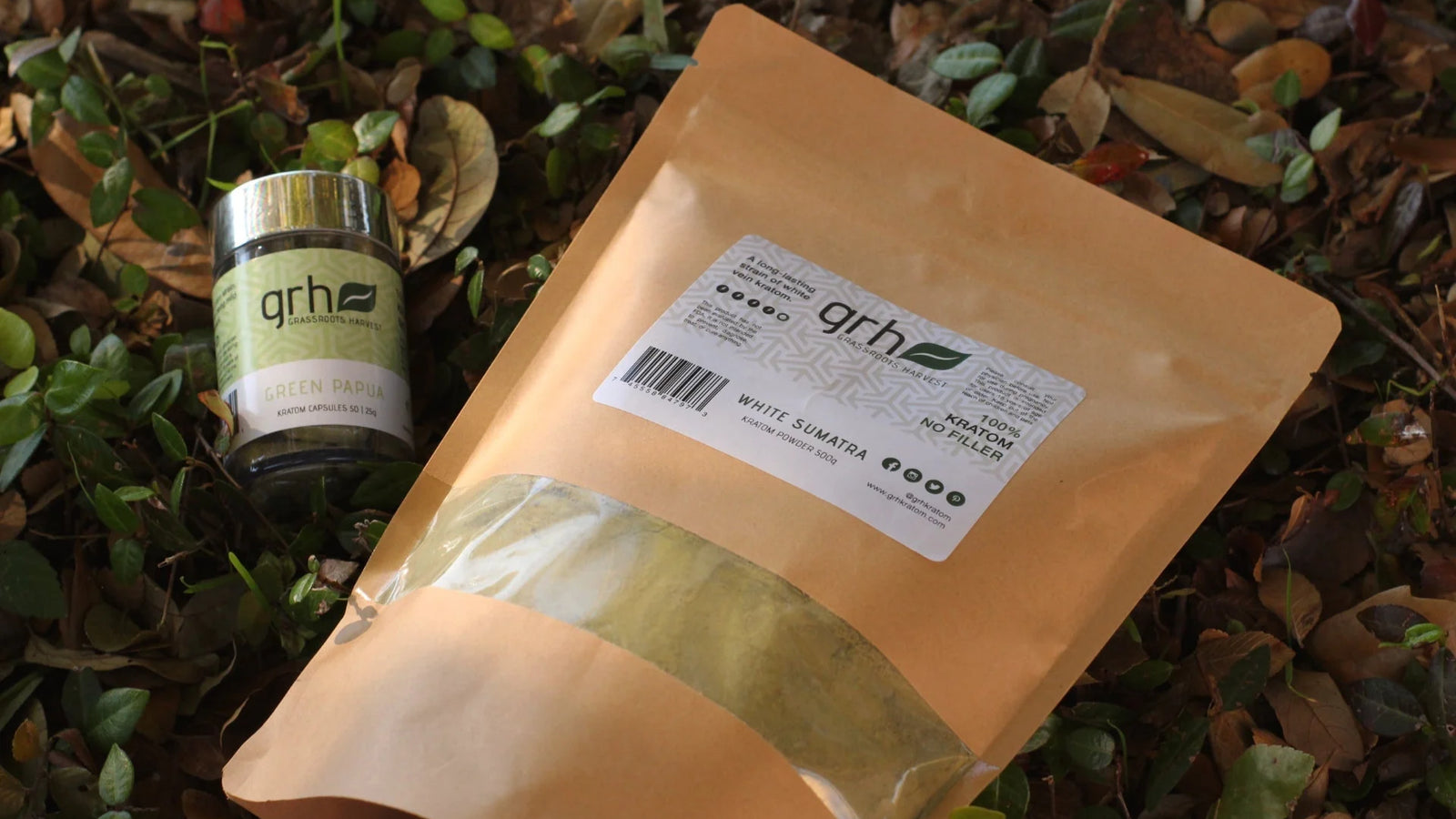
Kratom benefits used to be a niche conversation between Southeast Asian workers and a small slice of U.S. enthusiasts. That changed in the past decade. Lifetime kratom use among Americans rose from roughly 4 million to 5 million between 2019 and 2023, per SAMHSA's National Survey on Drug Use and Health, and the U.S. retail market for mainstream kratom hit $441.4 million for the 52-week period ending October 2024 per Super Speciosa's industry roundup. People aren't picking up kratom because of marketing copy. They're picking it up because of what real users say it does for mood, energy, focus, and end-of-day wind-down. We'll walk through the kratom benefits most users report, the strain-by-goal logic, what to look for on a Certificate of Analysis, and where the honest limits sit.
Table of Contents
- Why Interest in Kratom Is Climbing in 2026
- What Kratom Actually Is
- Mood Lift and Stress Comfort
- Daytime Energy and Mental Focus
- Body Comfort and Discomfort Relief
- Evening Sleep Support and Wind-Down
- Picking the Right Strain for Your Goal
- Quality Markers, COA, and Sourcing
- Honest Limits, Side Effects, and Skip Profiles
- Where GRH Kratom Fits
- Final Thoughts
TL;DR
- Kratom benefits most often reported: mood lift, stress comfort, daytime energy, mental focus, body comfort, and evening sleep support.
- Strain color shifts the experience: white leans energy and alertness, green sits balanced, red leans relaxation and sleep, yellow leans smooth and long.
- The kratom benefits a user feels depend on dose, strain, sourcing, and the goal they're using it for.
- A current Certificate of Analysis from an independent lab is the single most reliable quality signal. No COA, no trust.
- Kratom isn't right for everyone. Pregnancy, liver disease, prescription opioid or SSRI use, drug-tested employment, and history of substance dependency all mean skip.
- Single-source Indonesian leaf in the 1.0% to 1.6% mitragynine range is the cleanest entry point for most users.

Why Interest in Kratom Is Climbing in 2026
The kratom benefits conversation in 2026 sits inside a bigger shift in how Americans think about wind-down, focus, and alcohol alternatives. The same forces growing the kava bar category are growing the kratom shelf next to it: people want something that produces a real effect without the morning cost of alcohol, and they want to know what they're putting in their body.
The Schimmel et al. nationally representative U.S. survey published on ScienceDirect found pain management was the most common reason participants reported using kratom, with mood and stress relief close behind. The reasons users actually give line up with what alkaloid science would predict from mitragynine's receptor activity, which is part of why kratom benefits reports tend to cluster around the same handful of categories instead of being all over the map.

The Sober-Curious Connection
Younger consumers drink less alcohol than previous generations at the same age. Cities have responded with non-alcoholic bottle shops, mocktail menus, kava bars, and zero-proof options. Kratom fits that shift because it produces real effects rather than just flavor. The relaxation, the focus support, the mild mood lift, the lack of next-day cost lines up with what people seek in a non-alcoholic third place. The benefits of kratom in this context aren't medical claims, they're routine descriptions: a quieter wind-down, a softer morning, a workday that didn't need a second cup of coffee. That framing matters because the FDA continues to make a clear distinction between traditional kratom leaf and the concentrated synthetic 7-hydroxymitragynine products it has scheduled, and most credible kratom benefits discussions stay focused on the leaf rather than the extracts.
What Kratom Actually Is
Kratom (Mitragyna speciosa) is a flowering tropical tree in the coffee family, native to Indonesia, Thailand, Malaysia, Papua New Guinea, and the southern Philippines. The leaves contain over 40 alkaloids, with mitragynine and 7-hydroxymitragynine doing most of the work users describe. Quality kratom leaf typically tests at 1.0% to 1.6% mitragynine and under 0.05% 7-hydroxymitragynine, with the rest of the alkaloid profile contributing to the differences between strains.
Most U.S. kratom is sourced from Indonesian growers because the climate, infrastructure, and regulatory framework all line up there. Workers in those regions have chewed fresh leaves or brewed them into tea for energy on long fishing days, focus through repetitive labor, and mild discomfort relief from the kind of joint and muscle wear that comes with manual work. The traditional use was mostly daytime, mostly low-dose, integrated into a daily rhythm rather than treated as a supplement or drug.

Why Single-Source Indonesian Leaf Matters
Kratom genetics, soil, altitude, and rainfall all shape the alkaloid expression of the final leaf. A vendor sourcing from one farm or one region produces a more consistent product batch to batch than a vendor blending leaf from anywhere it's cheap. That's why "single-source" claims matter on a Certificate of Analysis, and why we publish region of origin on every batch we ship.
Kratom Tea Benefits and Other Preparation Notes
Kratom tea benefits show up most in the discomfort and wind-down categories because the simmered leaf releases the alkaloids gradually and produces a softer, slower-onset experience than weighed-and-toss-and-wash powder. Kratom tea is the closest modern preparation to traditional Southeast Asian use. Capsules, tinctures, and extracts each shift the same alkaloid profile in different directions: capsules slow onset, tinctures speed it up, extracts concentrate it. The kratom plant benefits people describe stay tied to the same alkaloid set; the preparation just changes how fast and how strong the experience comes on.
Mood Lift and Stress Comfort
The mood and stress comfort angle is one of the most common kratom benefits in user surveys. People describe a settling of mental chatter, a softer outlook, easier conversations, and a general sense of being more at home in their own day. The effect is reliably described as gentle rather than intoxicating at moderate doses.
A green-vein Maeng Da at 2 to 3 grams in the morning is the most-mentioned routine for daytime mood lift in user reports. Users who want a more relaxing afternoon profile lean toward green Bali or a soft red strain. The kratom benefits for stress are most consistent at lower doses; chasing a stronger feel at higher doses tends to backfire into sedation or nausea rather than producing more mood lift.

A reader emailed us about her morning routine. She had been using a glass of wine in the evening to take the edge off a high-pressure job, then started waking up tired. She tried 2 grams of green Maeng Da kratom in the morning, kept the dose conservative, and after three weeks said her shoulder tension was lower across the day and she was sleeping better at night. Same person, different tool, similar mood support, no morning grogginess.
Daytime Energy and Mental Focus
White-vein and green-vein kratom show up most often in user reports about daytime energy and focus. The effect is closer to a soft, steady coffee than to a stimulant rush. People describe a clearer head, less brain fog, and an easier time settling into work. Onset is 30 to 60 minutes for powder, 45 to 75 for capsules. Effects last 4 to 6 hours.
A solid daytime kratom routine for someone testing energy and focus benefits looks like this:
- Start with 2 grams of white or green-vein leaf, weighed on a kitchen scale.
- Take it on an empty or near-empty stomach for cleaner onset.
- Drink water alongside; kratom is mildly dehydrating.
- Wait 90 minutes before deciding to add 0.5 to 1 gram more.
- Track strain, dose, and effect in a notebook for the first month.

A construction foreman we hear from regularly takes 3 grams of green Maeng Da on workday mornings, swaps to 3 grams of red Maeng Da two evenings a week for sleep, and skips kratom entirely on Wednesdays and the weekend. Same dose has worked for him for two years because the rotation prevents tolerance from climbing. He buys from one vendor and reads every batch's COA.
Body Comfort and Discomfort Relief
Body comfort is one of the most-cited kratom benefits in U.S. user surveys, and it's the angle the Schimmel research called out as the most common reason participants reported using the plant. We frame this as comfort and routine support rather than a medical claim, because that's what the user reports actually describe and what the science currently supports. Kratom isn't a medication, isn't a treatment, and shouldn't replace a conversation with your doctor about anything serious.
Most users describing comfort benefits use red-vein leaf, often Red Bali or Red Maeng Da, in the 2 to 4 gram range. Onset is 30 to 60 minutes for powder. Heavy daily use can produce dependence and a withdrawal pattern resembling a strong caffeine withdrawal, so most experienced users keep doses moderate and rotate strains rather than climbing the dose ladder.

The most important rule we hear from long-term users in this category is the rotation rule: use red-vein for body comfort two or three days a week, take rest days, and swap strains every few weeks. The kratom benefits stay consistent at the same dose for years if the rotation holds. Users who climb the dose ladder chasing tolerance hit dependence and disappointing returns.
Evening Sleep Support and Wind-Down
Sleep support is where red-vein kratom shines in user reports. People describe an easier time falling asleep, less mental loop-running at bedtime, and waking with less grogginess than alcohol or sedating prescriptions produce. Onset is 30 to 60 minutes, so the routine usually starts about an hour before lights-out.
Red Bali, Red Borneo, and Red Maeng Da are the three strains most often mentioned for evening wind-down. Users typically start at 2 to 3 grams and increase only if needed. Pairing kratom with a wind-down ritual (low light, no screens, a warm drink) tends to produce more reliable sleep benefits than chasing higher doses.

A reader switched from a glass of wine before bed to 2.5 grams of Red Bali in warm water, kept the dose conservative, and after a month said her sleep onset dropped from 45 minutes to about 15. She also said she felt sharper in the morning. Different routine, similar wind-down result, no alcohol cost. The benefits of red kratom in evening contexts are reasonably consistent across the user reports we hear, with the same caveats: source from a vendor with a current COA, start conservative, and rotate strains rather than climbing the dose ladder.
Picking the Right Strain for Your Goal
Strain color is the cleanest first filter for matching kratom to a goal. White is harvested earliest and leans more toward energetic and stimulating compounds. Green sits in the middle and is the daily-driver category. Red comes from mature leaf and tends toward relaxation, sleep, and discomfort relief. Yellow is usually green or white leaf processed through a fermentation step that produces something smoother and longer-lasting.
| Strain | Typical Lean | Starting Dose | Best Goal Match | Time of Day |
|---|---|---|---|---|
| White | Energy and focus | 2-3 g | Daytime focus, mornings | Morning |
| Green | Balanced | 2-3 g | Mood lift, daily use | Morning or afternoon |
| Red | Relaxation, sleep | 2-3 g | Discomfort relief, sleep | Evening |
| Yellow | Smooth and long | 2-3 g | All-day balance | Anytime |
| Maeng Da (any color) | Higher potency | 1.5-2.5 g | Same as base color | Same as base color |

Maeng Da deserves a separate note. The name translates roughly as "pimp grade" in Thai slang and describes higher-potency leaf typically harvested from larger, more mature trees. Maeng Da isn't a separate species or strain in the genetic sense; it's a quality designation on top of any vein color. White Maeng Da is still a white-leaning experience, just at higher alkaloid density. The benefits of kratom Maeng Da products are the same as the underlying vein color, with a tighter dose curve because the leaf is more potent. Most users running Maeng Da start at 1.5 to 2 grams instead of 2 to 3, and increase only slowly. A reader who jumped straight to a 3-gram Red Maeng Da dose without a scale, expecting it to feel like generic Red Bali, ended up sedated for the rest of the evening. The strain wasn't the problem. The dose was.
Quality Markers, COA, and Sourcing
The single most reliable signal of whether kratom benefits will show up in your routine is whether your vendor sells clean, lab-tested leaf. The kratom market in 2026 has cleaned up considerably, but the gap between best-in-class and gas-station-tier is still wide. A current Certificate of Analysis from an independent lab is the test.
A solid kratom COA should report on:
- Mitragynine percentage: typically 1.0% to 1.6% in quality leaf
- 7-hydroxymitragynine percentage: typically under 0.05% in unadulterated leaf
- Heavy metals: lead, arsenic, cadmium, mercury, all at or below detection limits
- Microbial screen: salmonella, E. coli, yeast, mold, all under regulatory thresholds
- Pesticide screen: confirms no banned ag chemicals
- Batch and date: dated within the last 12 months on the exact lot you're buying
If a vendor can't show a current COA from an independent lab, walk. The category has cleaned up considerably in the past decade, but the cleanup happened because consumers started asking these exact questions. Quality vendors expect them now.

Honest Limits, Side Effects, and Skip Profiles
Kratom isn't right for everyone, and the kratom benefits we've described don't override pharmacology. Common short-term side effects include nausea (especially at higher doses or on an empty stomach), constipation with regular daily use, dry mouth, mild headache, and dehydration. Heavy daily use can produce dependence. The CDC reported in March 2026 that hospitalizations and poisonings involving kratom rose more than 1,200% over the past decade, with the bulk of severe cases tied to concentrated extracts and synthetic 7-hydroxymitragynine rather than traditional leaf.
Skip kratom entirely if any of these apply:
- Pregnancy or nursing
- Prescription medications interacting with opioid receptors or serotonin (SSRIs, MAOIs, certain pain medications)
- Liver disease or hepatotoxic medications
- History of substance dependency
- Drug-tested employment or athletics
- Under 21
- Mixing with alcohol, benzodiazepines, or sedating prescription drugs
The kratom benefits a careful user describes after a year of moderate use rarely show up for a user who climbs the dose ladder chasing tolerance. The plant rewards patience and rotation. It punishes daily heavy use. The honest version of "is kratom safe for me" is "depends on the product, the user, and the dose," and the answer requires you to be specific about all three.

Where GRH Kratom Fits
If you've worked through the kratom benefits framing and want a clean source, our shelf at GRH Kratom carries single-source Indonesian leaf in powder, capsule, and extract form. Every batch ships with a current Certificate of Analysis. Our Effects shelves sort the catalog by what people actually want: Energy, Focus, Mood, Relaxation, Sleep, and Euphoria, so you can pick by goal rather than by strain marketing copy. We also sell GÜD Tonics, our ready-to-drink kava line in two flavors (Pink Sunset for evenings and Baja Bliss for lighter daytime moments), for users who want a non-alcoholic relaxation option that isn't kratom. Browse the catalog at grhkratom.com.
Final Thoughts
The kratom benefits most users describe (mood lift, focus, energy, body comfort, sleep support) line up with what alkaloid science would predict from the leaf's compound profile, and they line up across user surveys, anecdotal reports, and what we hear from our customers after a year or more of moderate use. The plant rewards three habits more than any others: source from a vendor with a current independent COA, match strain to goal, and rotate. Skip the dose-ladder chase and the chasing of stronger extracts past what the leaf naturally produces. Kratom isn't a cure for anything and shouldn't replace a conversation with your doctor about anything serious. It's a botanical with real effects, real limits, and a long-enough cultural history to be worth taking seriously rather than either dismissing or oversold.


