



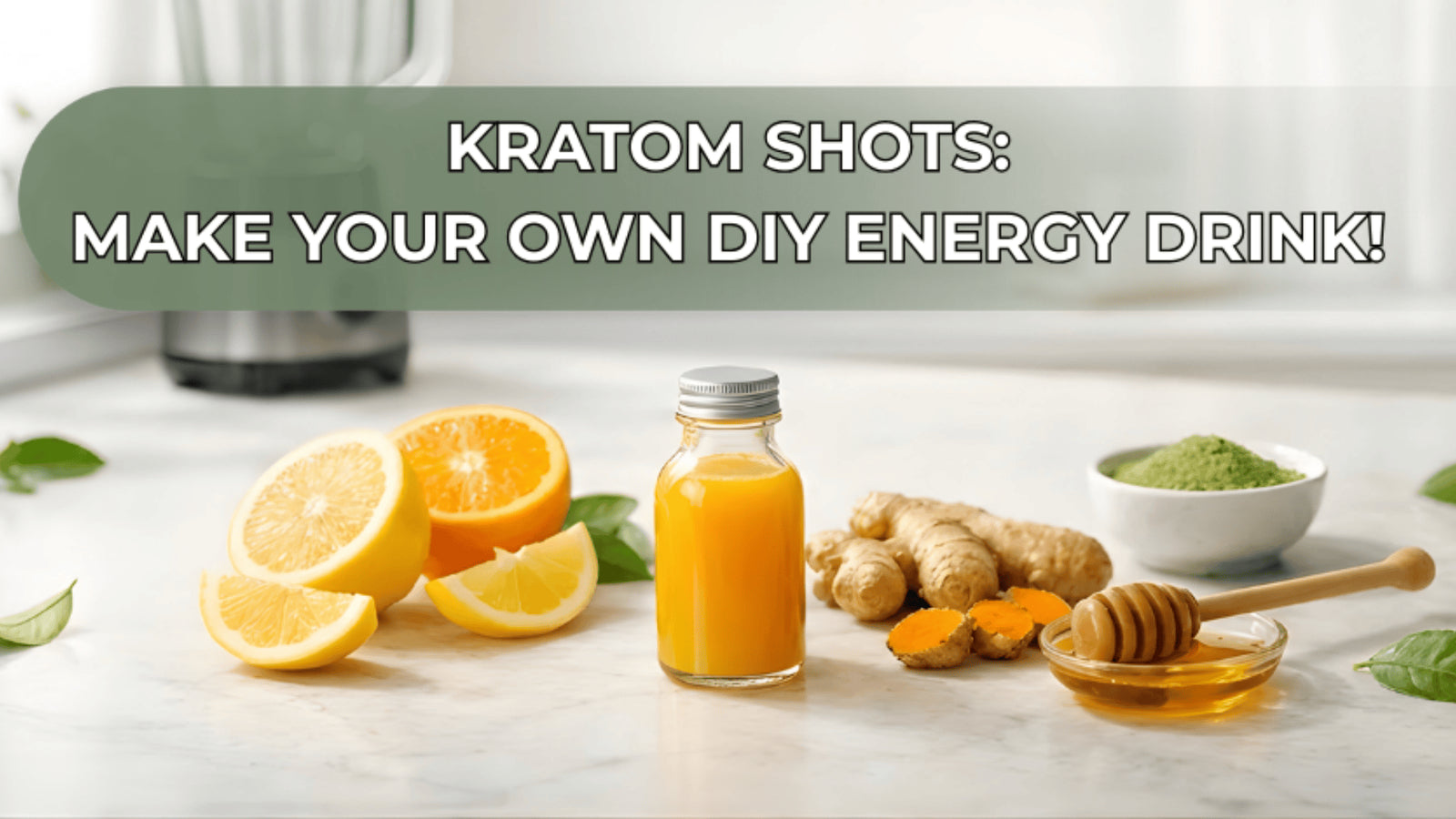
If you've walked into a smoke shop, gas station, or even a hip "dry bar" lately, you've probably noticed a wall of brightly labeled bottles and cans promising calm energy, focus, or a "feel-free" kind of buzz. Most of those are kratom drinks. The category went from a fringe DIY tea brewed by long-time enthusiasts into a $1.5B retail beverage shelf practically overnight, and the rules, what to buy, how to make your own, how much to drink, are still catching up.
This guide is the version we wish existed when we first started experimenting with kratom drinks at home. We'll cover what a kratom drink actually is, the difference between commercial bottles and DIY brews, three recipes worth saving, brand comparisons, dose math, and the safety conversation that the labels skip.
Table of contents
- What is a kratom drink?
- DIY vs. pre-made: which one is right for you?
- Three kratom drink recipes you can actually make tonight
- Pre-made kratom drink brands compared
- Dosing: how much kratom is in a single drink?
- Safety, interactions, and what the labels skip
- Storage, prep, and pro tips
- FAQ
- Final thoughts
TL;DR
A kratom drink is any beverage made with the leaf of Mitragyna speciosa, usually as a tea, a tincture-style "shot," or a flavored extract bottle. DIY drinks brewed from straight powder give you full dose control and cost roughly $0.40-$1.00 per serving. Pre-made bottles like Feel Free or Mitra-9 are convenient but often run $8-$12 per drink and obscure the actual mitragynine content. For most people, the answer is somewhere in the middle: learn one or two DIY recipes for everyday use, keep a bottle on hand for travel, and treat any kratom drink, homemade or not, as a 1-2 portion ceiling rather than a chug-it beverage.
What is a kratom drink?
At its simplest, a kratom drink is any liquid that delivers the alkaloids of the kratom leaf, primarily mitragynine and 7-hydroxymitragynine, through the mouth. The leaf has been chewed, brewed as tea, and steeped in cold water across Southeast Asia for at least 200 years. What's new is the format. In the last three years, the U.S. retail market has split kratom drinks into roughly four buckets:
- Brewed tea, hot or cold, made from loose powder or crushed leaf
- Extract shots, small (2-5 oz) bottles concentrated with full-spectrum extract
- Flavored seltzers and "feel-good" beverages, 12-16 oz cans positioned as alcohol alternatives
- Drink mixes and powders, single-serve packets you stir into water

The American Kratom Association estimates roughly 16 million U.S. adults use kratom in some form, and beverages are now the fastest-growing segment of that user base. The category caught a tailwind from the post-pandemic "sober curious" movement and the rise of non-alcoholic bar culture, where guests still want a little something in the glass. A 2024 review in PubMed Central on the unregulated rise of kratom drinks describes the speed of that retail shift in detail.
If you're brand new to the leaf, our kratom for dummies guide walks through what mitragynine actually does in the body before you start mixing it into anything.
DIY vs. pre-made: which one is right for you?
There's no universally correct answer here, both formats have a place, but they trade off on three axes that matter: cost, dose precision, and time.
DIY (home-brewed kratom drinks)
You start with a measured scoop of kratom powder and either steep it in hot water with citrus, blend it cold, or shake it into a tonic. The upside is full control. You know exactly how many grams went into the cup, which strain it is, and what the lab results said. You also pay 80-90% less per serving than the bottled equivalents.
The downside is the learning curve. Kratom powder is genuinely bitter, closer to matcha mixed with tannic black tea than anything you'd voluntarily drink straight. The first DIY attempt without a flavor strategy will probably end up in the sink.
Pre-made (bottled kratom drinks)
Pre-made drinks solve the bitterness problem with sweeteners and natural flavoring, and they solve the prep problem because you just twist the cap. They're useful for travel, for nights out where you're skipping alcohol, and for situations where measuring powder is impractical. The cost is real, most premium shots run $7-$12, and the labels often advertise "blend" totals (like "750 mg full-spectrum extract") without telling you the mitragynine milligrams that actually drive the effect.

A practical hybrid most regulars settle on: keep a bag of powder at home for daily use, and stash one or two bottles in a bag for travel and unexpected nights out.
Three kratom drink recipes you can actually make tonight
These three recipes cover the spectrum: a hot brew for slow mornings, a cold sparkler for afternoons, and a recovery-style blend for after a long day. All three assume you've measured your dose ahead of time, see the dosing section below if you're new to this.
Recipe 1: Classic citrus kratom tea
You'll need:
- 2-4 g kratom powder (one rounded teaspoon)
- 12 oz water
- Juice of half a lemon
- 1 tsp honey or maple syrup
- A small piece of fresh ginger (optional, but recommended)
Method: Bring water to a near-boil, then take it off the heat for 30 seconds (boiling water can degrade the alkaloids). Whisk in the powder, lemon juice, and ginger. Steep for 8-10 minutes, stirring occasionally so the powder doesn't settle. Strain through a fine mesh sieve into your cup. Stir in honey to taste. The lemon juice does double duty, it cuts the bitterness and slightly improves alkaloid extraction thanks to the acid environment.

Recipe 2: Cold-brew kratom seltzer
You'll need:
- 2-4 g kratom powder
- 8 oz cold filtered water
- 4 oz unflavored sparkling water
- 1 oz fresh lime juice
- 1 tsp simple syrup or agave
- Fresh mint leaves
- Ice
Method: Whisk the powder into cold water in a small jar with a tight lid. Shake hard for 30 seconds, then refrigerate for at least 4 hours (overnight is better). Strain through a coffee filter or a fine sieve lined with cheesecloth into a tall glass over ice. Top with sparkling water, lime, syrup, and a few muddled mint leaves. This is the recipe that converted three of our friends who said they "couldn't do" kratom tea.
Recipe 3: Coconut-ginger evening tonic
You'll need:
- 2-4 g red vein kratom (red strains tend to feel mellower in the evening)
- 6 oz unsweetened coconut milk
- 6 oz hot water
- 1 tsp turmeric
- ½ tsp ground ginger
- 1 tsp honey
- Pinch of black pepper
Method: Heat coconut milk and water together until steaming. Whisk in kratom powder, turmeric, ginger, and pepper. Steep 5-7 minutes, then strain into a mug and stir in honey. The fat in coconut milk wraps the bitterness in a way water alone never quite manages, and the turmeric-pepper combo is a small nod to the "golden milk" tradition.
Pre-made kratom drink brands compared
If you're shopping the bottled side of the aisle, here's how four of the most-discussed brands stack up. Note that potency disclosures vary widely; we've used the most transparent number each brand publishes.

| Brand | Format | Stated potency | Approx. price | Notable detail |
|---|---|---|---|---|
| Feel Free Classic | 2 oz shot | Kratom + kava blend (no mg disclosed) | $9-$12 | Owned by Botanic Tonics; the most widely available retail kratom shot |
| Mitra-9 Seltzer | 12 oz can | 45 mg mitragynine per can | $5-$7 | One of the few brands that publishes mg of mitragynine on the label |
| Rapture | 4 oz bottle | "Full-spectrum", total extract not always disclosed | $14-$18 | Sold mostly online; high price reflects extract concentration |
| New Brew | 12 oz can | 45 mg mitragynine | $5-$7 | Markets as a kratom-only social beverage; no kava added |
Two important caveats. First, the FDA has not approved kratom for use in beverages, and a 2024 review in the American Journal of Drug and Alcohol Abuse flagged inconsistent mitragynine content in tested commercial samples, sometimes 2-3x what the label claimed. Second, the FDA's import alert on adulterated kratom products is worth a read for context on how the agency views unregulated extract beverages right now. Both pieces are worth reading before you become a regular.
If kava is part of the conversation for you, our plain-language kava guide breaks down what kava actually does and why the blended kratom-kava drinks are sometimes harder on the body than either single-ingredient version.
Dosing: how much kratom is in a single drink?
This is the question that gets glossed over most often, so it gets a real answer.
A "standard" DIY kratom drink uses 2-4 grams of powder, which delivers roughly 25-60 mg of mitragynine, depending on the strain and the lot. That's a moderate dose for a regular user and a meaningful dose for a beginner.

A few rules that hold up well in practice:
- First time? Stay at 1-2 g and make one drink. Wait at least 90 minutes before considering a second.
- Daily user? A single 3-4 g serving is plenty; more than 6 g per drink is where unwanted side effects (nausea, dizziness, jitteriness) start showing up consistently.
- Pre-made bottles? Treat one bottle as one full dose, even if it's marketed as "drinkable all night." A 45 mg mitragynine can is roughly the equivalent of 3 g of standard powder.
- Stacked drinks? Don't. Kratom is not alcohol. Drinking three "social" cans in two hours stacks alkaloids in a way that crosses from pleasant into rough territory fast.
For a deeper walk-through of strain-by-strain dose ranges, our kratom dosage guide covers the math in detail.
Safety, interactions, and what the labels skip
The single most useful thing you can know about kratom drinks: they don't mix well with depressants. Alcohol, benzodiazepines, opioid pain medication, and even high doses of OTC sleep aids all combine with mitragynine in ways that can flatten breathing and amplify drowsiness more than either substance alone. The CDC's 2019 review of kratom-involved overdoses found that the vast majority involved at least one other substance, with fentanyl, benzodiazepines, and alcohol topping the list.
A few other things worth knowing before you pour:

- Caffeine stacks. A kratom drink plus a large coffee plus an energy drink in the same morning is enough to give most people a noticeable jitter and a racing heart. Pick one stimulant or the other, not both.
- SSRIs and MAOIs. Mitragynine has weak serotonergic activity, and case reports have flagged interactions with serotonin-affecting antidepressants. If you're on an SSRI, talk to a prescriber before adding regular kratom drinks.
- Liver and kidney disease. Both organs are involved in clearing mitragynine, and chronic high-dose use has been linked in case reports to elevated liver enzymes. If you have a known liver issue, this is a "talk to your doctor first" category.
- Pregnancy. There is essentially no safety data on kratom in pregnancy, and the leaf does cross the placenta. The honest answer is: skip kratom drinks if you're pregnant or breastfeeding.
The Mayo Clinic's overview of kratom safety is, unsurprisingly, more cautious than this guide. It's still worth reading, it represents the institutional medical view, and the warnings about dependence with daily heavy use are accurate.
Storage, prep, and pro tips
A few small habits make the difference between a kratom drink routine that works for years and one that gets abandoned after the second batch tastes like wet cardboard.
- Store powder in an airtight jar in a cool, dark cabinet. Kratom alkaloids are sensitive to heat, light, and oxygen. A glass jar with a tight gasket lid is dramatically better than the original resealable bag after the first opening. Powder stored well stays good for 12-18 months; powder stored badly degrades noticeably within 2-3 months.
- Pre-portion your doses. A small kitchen scale ($15 on Amazon) ends the eyeball-the-teaspoon era forever. Weigh out a week of doses into individual snack bags and you'll never wonder whether today's drink is heavier or lighter than yesterday's.
- Cold-brew always wins on flavor. If you have the patience to make tomorrow's drink tonight, you'll get a smoother, less bitter result than any hot-brewed version.
- Citrus is your friend. Lemon, lime, grapefruit, even a splash of orange juice, the acid both improves the taste and slightly improves bioavailability. There's no good reason to brew kratom in plain water if you have a lemon in the fridge.
- Rotate strains. Drinking the same strain at the same dose every single day is the fastest way to build kratom tolerance. Cycling between two or three strains weekly keeps the experience consistent and the doses honest.

FAQ
How long does a kratom drink take to kick in?
Most people feel onset 20-40 minutes after finishing a hot tea, and 30-60 minutes after a cold brew or seltzer (food in the stomach slows it down). Effects typically peak around 90 minutes and taper over 3-5 hours.
Can I make a kratom drink with extract instead of powder?
Yes, but the dosing math is completely different. A 1 g serving of plain powder might contain 12-15 mg of mitragynine, while a 1 g extract can contain 100-200+ mg. If you're switching from powder to extract, start with a fraction of your usual scoop and work up.
Can I drink kratom every day?
You can, but daily use builds tolerance and dependence faster than most people expect. Many regulars settle on a 4-5 day per week schedule with two days off, which keeps tolerance from creeping up.
Are kratom drinks legal?
Kratom is federally legal in the U.S. but banned in six states (Alabama, Arkansas, Indiana, Rhode Island, Vermont, Wisconsin) and several cities. A handful of states have passed Kratom Consumer Protection Acts that regulate purity and labeling. Check our state-by-state kratom legality guide before traveling.
Do kratom drinks show up on a drug test?
Standard 5 and 10-panel drug tests do not screen for kratom alkaloids. Specialized kratom panels exist but are rarely used outside of clinical research and some forensic settings.
Why does my kratom drink taste so much worse some days?
Oxidation. Powder that's been open for two months in a humid kitchen tastes noticeably worse than fresh powder from a sealed bag. Storage matters more than most people realize.

Final thoughts
The kratom drink category is at an interesting moment. The bottled brands are forcing a public conversation about labeling and dosing that the powder-only side of the industry mostly avoided for a decade. Some of that scrutiny is overdue. Some of it is overheated, especially when it lumps responsibly-brewed home tea in with the worst of the gas-station shot displays.
What we'd suggest, if you're somewhere on the curiosity-to-regular spectrum: learn one DIY recipe well, buy your powder from a vendor that publishes lab results on every batch, weigh your doses, and treat kratom drinks like a tool rather than a lifestyle. A 4 g cup of citrus tea on a slow Saturday morning is a fundamentally different thing than three energy-drink cans in a frat-house cooler, and the kratom drink conversation, in 2026, deserves to keep telling those two stories apart.

If you want a starting point, our single-strain green vein is the strain we usually recommend for first DIY drinks, balanced, less bitter than most reds, and forgiving of beginner dose mistakes.


