



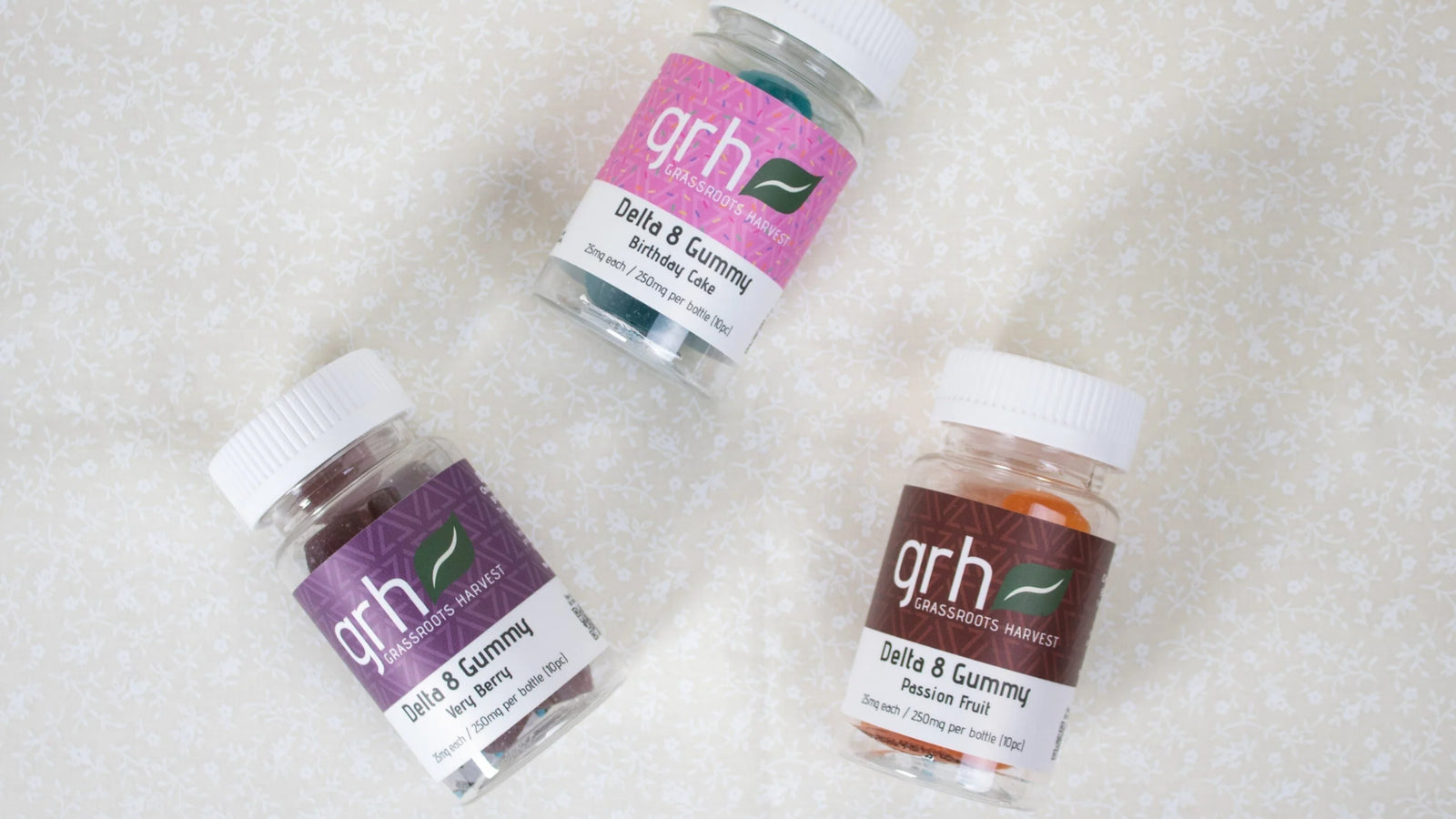
If you've been following delta-8 for any length of time, you already know the legal map looks like a patchwork quilt. Federally legal, sort of. Banned in some states, legal in others, "regulated like marijuana" in a few. And as of late 2026, the rules underneath the whole map are about to change. This guide walks you through where things actually stand in 2026, what triggered the shift, which states fall on which side of the line, and what the November 12, 2026 federal hemp redefinition means for the products on the shelf today.
This isn't legal advice (we're not lawyers, and the laws move fast), but the framework here is built on direct citations to Congressional Research Service briefs, FDA consumer updates, and peer-reviewed legal analyses. If you read all the way through, you'll understand the loophole that created delta-8, the loophole that's about to close, and what the closure means for users who liked the gray-area product.
According to the Congressional Research Service, the amended federal hemp definition takes effect November 12, 2026, and the new threshold is based on "total THC" (including delta-8, delta-10, and synthesized THCO compounds), not just delta-9. That single change is going to reshape the entire delta-8 marketplace. Here's how it got built, where it lives now, and where it's going.

Table of Contents
- The Loophole That Created Delta 8
- Federal Status in 2026 (Until November 12)
- The November 12, 2026 Hemp Redefinition
- State-by-State Snapshot
- FDA's Position (And Why It Matters)
- DEA, Synthesis, and the "Naturally Produced" Question
- What This Means for Buyers
- Frequently Asked Questions
- Final Thoughts
TL;DR
- Delta 8 THC exists in legal gray space because the 2018 Farm Bill defined hemp by delta-9 THC content (under 0.3 percent), saying nothing about delta-8.
- As of mid-2026, delta-8 is still federally legal under the 2018 framework, but a new federal definition takes effect November 12, 2026.
- The 2026 redefinition uses total THC (including delta-8, delta-10, THCO) at the 0.3 percent threshold, which will pull most current delta-8 products out of the "hemp" category.
- After November 12, 2026, products that exceed the new total-THC threshold will be regulated like marijuana, meaning Schedule I federally and subject to state cannabis rules.
- States are split. Some banned delta-8 outright, some regulate it like cannabis, some leave it alone, a few have lawsuits in motion.
- FDA has issued multiple warning letters and a public consumer alert citing adverse events, particularly from copycat candy and food products.
- Most "synthesized" delta-8 (made from CBD via isomerization) faces the strongest legal challenges because it's not naturally produced by the cannabis plant.
- If your state allows delta-8 today, the practical horizon is the rest of 2026 plus whatever transition rules each state adopts after the federal change.

The Loophole That Created Delta 8
Delta 8 THC exists as a commercial product because of one specific provision in the 2018 Farm Bill. That law defined "hemp" as Cannabis sativa with no more than 0.3 percent delta-9 THC by dry weight. Hemp got pulled out of the Controlled Substances Act. Anything derived from hemp, including cannabinoids, was implied to share that legal status.
Delta-8 THC occurs naturally in cannabis at very small concentrations (much smaller than delta-9), so harvesting it directly isn't economical. What changed the market was the realization that CBD (which is abundant and cheap from hemp) can be chemically converted into delta-8 through a process called isomerization. Suddenly there was a way to produce intoxicating delta-8 products that, on paper, qualified as "hemp-derived."
The Legal Argument
The argument went like this: hemp is legal under federal law. Delta-8 derived from hemp is therefore legal under federal law. Products containing delta-8 are therefore legal to manufacture, sell, and possess.
The counter-argument: delta-8 is a Schedule I controlled substance under the Controlled Substances Act. The Farm Bill's hemp carve-out only addresses naturally occurring delta-9 THC concentrations. Synthesized delta-8 is a different question.
The Legal Reality
Both arguments have legs. Federal courts have largely sided with the "hemp-derived equals legal" position so far, most prominently in the Ninth Circuit's 2022 ruling in AK Futures v. Boyd Street Distro. State courts and state legislatures, however, have gone in many different directions, which is why the map looks the way it does.
For a deeper dive into the cannabinoid landscape and how delta-8 compares to other compounds, our CBD vs kratom comparison walks through related receptor pharmacology, although the legality questions there are different.
Federal Status in 2026 (Until November 12)
As of this writing in May 2026, delta-8 THC remains federally legal under the existing 2018 Farm Bill framework, with significant qualifications.
What Federal Law Currently Says
Hemp is legal. Hemp-derived delta-8, in the dominant legal interpretation, is also legal. Products must contain less than 0.3 percent delta-9 THC by dry weight. The DEA has not formally scheduled delta-8 as a separate controlled substance. The FDA has not approved any delta-8 product, but FDA non-approval is not the same thing as illegality (most cannabis products lack FDA approval).
What That Means in Practice
You can buy delta-8 in many states from gas stations, vape shops, and online retailers. Shipping is unrestricted by federal law, although individual carriers (USPS, FedEx) have their own policies. Banking and payment processing for delta-8 businesses remains complicated because financial institutions still treat the category as gray-area.
The 2024-2026 Trajectory
Federal regulators have grown noticeably less tolerant of the loophole. According to the FDA's consumer update on delta-8 THC, the agency has issued warning letters to companies marketing delta-8 in forms (candies, chips, cereals) that appeal to children, and has cited adverse event reports involving these products. The FDA hasn't banned delta-8, but the regulatory pressure has steadily climbed.

The November 12, 2026 Hemp Redefinition
This is the most consequential change in the delta-8 story since the 2018 Farm Bill itself.
What Changes
The amended federal hemp definition (per CRS Legal Sidebar LSB11381) replaces the 0.3 percent delta-9 threshold with a 0.3 percent total THC threshold. Total THC explicitly includes delta-8, delta-10, and synthesized variants like THCO. The new definition also excludes cannabinoids that aren't naturally produced by the cannabis plant or that are synthesized outside the plant.
What That Means for Delta 8
Most current delta-8 products are produced by isomerization of CBD. Under the new definition, those products are no longer "hemp" because the delta-8 was synthesized outside the natural plant pathway. They become Schedule I controlled substances at the federal level, the same legal status as marijuana.
Transition Period and State Lag
The federal redefinition takes effect on a single date (November 12, 2026), but state laws adapt at different speeds. Some states will follow federal lead immediately. Others will keep their existing rules and create a confusing federal-vs-state mismatch. A few states with broader cannabis programs may absorb delta-8 into their regulated marijuana frameworks.
What Manufacturers Are Doing
The industry has been preparing. Some retailers are already pivoting to non-THC hemp products (CBD, CBG, CBN). Some are focusing on minor cannabinoids that survive the redefinition. A small number are attempting to produce delta-8 from cannabis directly (without isomerization) to maintain the "naturally produced" qualifier, although the economics are challenging.

State-by-State Snapshot
State law adds another layer on top of the federal picture. Even before the November 2026 federal change, many states have taken their own positions.
States Where Delta 8 Is Banned or Heavily Restricted
A growing list. Alaska, Arizona, Arkansas, Colorado, Delaware, Idaho, Iowa, Mississippi, Montana, Nevada, New York, North Dakota, Oregon, Rhode Island, Utah, Vermont, Virginia, and Washington have either fully banned delta-8 or restricted it to licensed cannabis programs. Each ban has its own quirks, but the practical effect for consumers is that retail delta-8 isn't legally available.
States Where Delta 8 Is Legal With Regulation
Connecticut, Michigan, Minnesota, and several others allow delta-8 but require it to be sold through licensed dispensaries or under specific labeling and lab-testing rules. The product is legal, the marketplace is just tighter.
States Where Delta 8 Is Legal With Minimal Regulation
A large group, including Florida, Georgia, North Carolina, South Carolina, Texas (with active legal challenges), Tennessee, and many others, allow delta-8 sales largely under the federal hemp framework. Vape shops, smoke shops, and online retailers operate openly. Lab testing requirements vary widely.
A Quick State Tier Table
| Tier | What it means | Examples |
|---|---|---|
| Banned/restricted | Not legal for retail purchase | NY, CO, VT, UT, AK, ID |
| Regulated | Legal through licensed channels | CT, MI, MN |
| Open market | Legal under federal framework | FL, NC, SC, TX, TN, GA |
| In litigation | Status actively contested | TX, VA |
How Things Will Likely Shift After November 2026
States that already banned delta-8 will see no change. States that regulated it will likely fold delta-8 into existing cannabis programs. Open-market states will face a choice: either align with the federal Schedule I status, create their own state-level hemp definition that preserves delta-8 commerce, or let the market collapse. Expect significant variance.

FDA's Position (And Why It Matters)
The FDA's stance on delta-8 is informational rather than regulatory in the formal sense, but it influences enforcement priorities and consumer expectations.
The Five-Part Consumer Alert
The FDA's published five-things-to-know consumer update flags: delta-8 has not been evaluated or approved by FDA for safe use; the agency has received adverse event reports; delta-8 has psychoactive and intoxicating effects; the manufacturing processes used to concentrate delta-8 raise safety concerns; and packaging that appeals to children is a particular worry.
Adverse Events Reported
A 2021 review in the FDA's CFSAN Adverse Event Reporting System logged hospitalizations and intensive care admissions tied to delta-8 products, particularly from edible forms with imprecise dosing. A separate peer-reviewed analysis (LaVigne et al, 2021) on delta-8's legal status, availability, and safety profile reached similar conclusions: real safety questions, particularly around manufacturing controls and product variability. The numbers are small relative to total user counts but non-trivial.
Why It Matters Even Though FDA Hasn't Banned It
FDA warning letters are public records and create reputational pressure on retailers and payment processors. Many large platforms have used FDA's stance to justify removing delta-8 listings independent of legal requirement. The agency's posture also shapes how state attorneys general approach enforcement.

DEA, Synthesis, and the "Naturally Produced" Question
The Drug Enforcement Administration has weighed in on delta-8 several times, with shifting clarity.
The Synthesis Argument
DEA has stated, most clearly in 2020 and 2021 interim rules, that synthetic THCs (including isomerized delta-8) remain Schedule I controlled substances regardless of source. The agency hasn't backed up that position with aggressive federal prosecutions of delta-8 retailers, but the legal posture is on record.
The Court Pushback
The Ninth Circuit's 2022 ruling in AK Futures essentially said: if it's hemp-derived and falls within the Farm Bill's hemp definition, the trademark protection (and by implication, legal status) applies. That ruling is non-binding outside the Ninth Circuit, but it became the dominant legal interpretation industry-wide.
The 2026 Reset
The November 2026 hemp redefinition explicitly addresses the synthesis question. Cannabinoids "synthesized or manufactured outside the plant" are excluded from the hemp definition. That's a direct response to the isomerization workaround. A 2021 paper in the Cannabis and Cannabinoid Research journal walked through the hemp-loophole question and predicted exactly this kind of regulatory clarification.

What This Means for Buyers
If you've been buying delta-8 in 2026, here's how to think about the landscape practically.
Through the End of 2026
In states where delta-8 is currently legal, retail purchasing is unchanged through November 11, 2026. Inventories may shift after that as retailers respond to the federal redefinition. Expect prices to fluctuate as supply patterns shake out.
Watching State Laws
Your state's response to the federal change is the more important signal. Track your state's Department of Agriculture (which usually handles hemp regulation) and state Attorney General announcements. The most-cited consumer resource for cannabis legality remains the National Cannabis Industry Association's state map, but state government sites are more authoritative.
If Your State Is Banning Delta 8
The most-asked question users have is "what's a legal alternative?" The honest answer depends on what you were using delta-8 for. For mood and relaxation, kratom (which operates on completely different receptors) is federally legal in most states. GRH Kratom carries lab-tested Red Maeng Da for a calmer profile, Green Maeng Da for a balanced daytime option, and White Maeng Da for a more energetic experience. For state-by-state kratom rules, our South Carolina kratom legal guide walks through the federal-state-county-city framework that applies in most other states too. And for managing tolerance with any receptor-active compound, the kratom tolerance guide is a good companion read.

Buyer Checklist Right Now
| Action | Why it matters |
|---|---|
| Check your state's status this month | Laws move quickly |
| Buy from retailers with current COAs | Lab transparency is the cheapest indicator of quality |
| Avoid candy-form delta-8 | FDA flagged these specifically |
| Watch the November 12, 2026 deadline | Federal definition shifts that day |
| Have a backup plan | Legal alternatives exist if your state restricts further |


Frequently Asked Questions
Is delta 8 THC federally legal in 2026?
Yes, until November 12, 2026, under the 2018 Farm Bill's hemp framework. After that date, the amended federal definition will pull most current delta-8 products (those produced by CBD isomerization) out of the hemp category and into Schedule I status.
Will delta 8 be illegal everywhere after November 2026?
Not exactly. The federal redefinition makes most current delta-8 products federally controlled, but state laws don't automatically follow. Some states with broader cannabis programs may absorb delta-8 into their regulated marketplace.
What states have banned delta 8 THC?
As of early 2026, the banned list includes Alaska, Arizona, Arkansas, Colorado, Delaware, Idaho, Iowa, Mississippi, Montana, Nevada, New York, North Dakota, Oregon, Rhode Island, Utah, Vermont, Virginia, and Washington. Verify with your state government before purchasing.
Is delta 8 the same as marijuana?
Legally, no (until November 12, 2026 under federal law). Pharmacologically, both are tetrahydrocannabinol compounds, but they're different molecules with somewhat different effects. Delta-8 is generally reported as milder than delta-9 THC, although the comparison varies by user and product.
Can the FDA approve delta 8?
Theoretically, but no delta-8 product currently has FDA approval, and the agency has signaled significant concerns. Approval would require clinical safety data the industry hasn't generated.
What's a legal alternative to delta 8 in restricted states?
Depends on the use case. For mood and relaxation, kratom is legal in most states (different mechanism, different effects). For pain management, CBD remains broadly legal. State-licensed cannabis dispensaries (where they exist) offer regulated delta-9 products. None of these are direct substitutes; they're alternatives that work through different pathways.
Will delta 8 still be sold online after November 12, 2026?
Some retailers in states that maintain delta-8 access will continue selling, but federal carriers may impose stricter rules. Expect a much smaller, more state-fragmented online marketplace.
How do I know if my delta 8 product is legal in my state right now?
Two checks. First, the FDA's warning letter list shows companies that have received federal compliance pressure. Second, your state's Department of Agriculture or Attorney General website usually publishes the current hemp-cannabinoid regulatory framework. State government sites are more authoritative than retailer claims.
Final Thoughts
Delta 8 has spent six years in a legal gray zone created by a single ambiguity in the 2018 Farm Bill. November 12, 2026 closes most of that gray zone at the federal level. What follows is going to look like the cannabis legalization map of the early 2010s: federal one rule, fifty states with their own variations, retailers and consumers navigating both at once.
If you've been a delta-8 user, the realistic horizon is the rest of 2026 plus whatever transition your state adopts after. If you live somewhere that's already restricted delta-8, the legal-alternative conversation is more practical than the will-it-stay-legal conversation. Either way, this is a moment to watch state government channels rather than retailer marketing copy. The retailers will tell you what they want to sell. The state government will tell you what's actually legal where you live.


