



If this question is urgent for you, these come before the rest of the page.
If someone is difficult to wake, is not breathing normally, is having a seizure, or is unresponsive, call 911.
1-800-222-1222. Poison Control, around the clock, for a reaction that worries you or a question about a product you are holding.
988. The crisis lifeline, anywhere in the United States, by call or text.
Treatment. The federal treatment locator, findtreatment.gov.
Two things stated once. Kratom is not a treatment for opioid use disorder or for opioid or kratom withdrawal; the medicines with an evidence base for opioid use disorder are buprenorphine, methadone and naltrexone. And every clinical question this page raises belongs with a clinician rather than with us.
Listen to this page
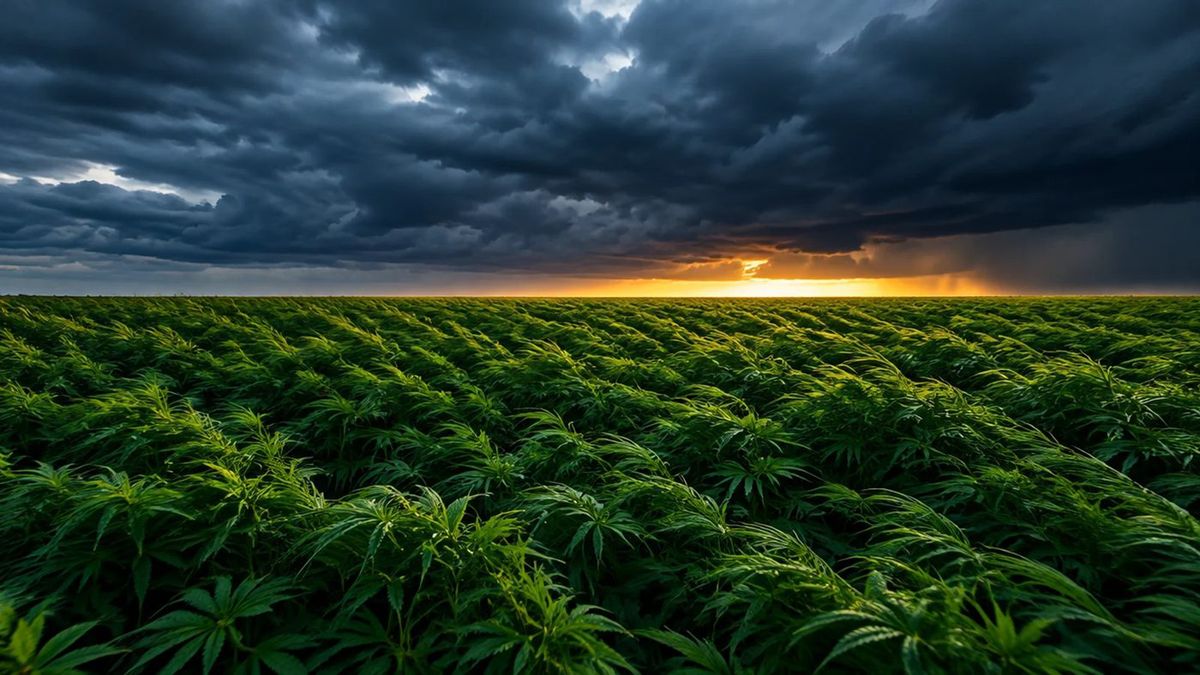
Read by an AI voice. The full article is read aloud, top to bottom. Every helpline in the box above is read aloud near the start, and so is the status note below. The three tables and the two images are on the page, and the bill numbers and citations inside them are not spoken.
Checked November 3, 2026 against the statute, the Congressional Research Service, DEA, FDA, USDA and two state agencies. From November 12, 2026, the new definition reaches only products containing cannabinoids the cannabis plant cannot produce naturally. From December 11, 2026, under current law, the rest applies: total THC, including THCA, at not more than 0.3 percent on a dry weight basis; the exclusion of cannabinoids synthesized or manufactured outside the plant; a 0.3 percent combined limit for intermediate products; and a cap of 0.4 milligrams of total THC per container for final products. Bills to change it were all in committee on November 3, 2026: proposals, not law. Congress has moved this start once, so re-check it before relying on it.
Who wrote it, and what we sell. GRH Kratom, which sells kratom and kava products. On November 3, 2026 none of our 36 listed products was a hemp, THC, delta-8 or CBD product; the kratom rules near the end do touch us. We sold hemp THC and CBD products from at least 2020 to 2022, by our own posts, and some older posts on this site still describe them as legal and available from us. No product links, no affiliate links. To correct a line, use the contact page on this site.
Next review February 3, 2027, or sooner if the federal dates move, FDA publishes its cannabinoid lists, or DEA publishes a kratom order.
The federal hemp ban, as news coverage calls it, is not a separate ban. It is a new legal definition of hemp, written into section 781 of Public Law 119-37 and approved on November 12, 2025, and under current law it takes effect in two steps. From November 12, 2026 it reaches only products containing cannabinoids the cannabis plant cannot produce naturally; the Congressional Research Service (CRS) gives THC-O as an example. From December 11, 2026 the rest applies: hemp is measured by total THC, THCA included, cannabinoids synthesized outside the plant are excluded, and a finished product may hold no more than 0.4 milligrams of total THC per container.
By product, under current law: flower above 0.3 percent total THC, counting THCA, is not hemp from December 11, 2026. One gummy labeled 5 or 10 milligrams of delta-9 THC is over the container cap by itself (our arithmetic). A December 2025 executive order says "some full-spectrum CBD products" will be controlled as marijuana. Delta-8 made from CBD has no settled date. HHC did not wait for either step: DEA gave it its own Schedule I listing on May 4, 2026.
Section 781: what the "THC ban" actually is
The statute never uses the word "ban". Section 781 sits in the agriculture division of Public Law 119-37, a funding law for fiscal year 2026, and replaces the federal definition of hemp, "Effective 365 days after the enactment of this Act".
The old definition, as DEA quotes it, covered the plant "with a delta-9 tetrahydrocannabinol concentration of not more than 0.3 percent on a dry weight basis." The new one keeps the plant and its derivatives and changes what is counted, to "a total tetrahydrocannabinols concentration (including tetrahydrocannabinolic acid) of not more than 0.3 percent on a dry weight basis."
Then come the exclusions, the part news reports call a ban. Excluded products, in CRS's words, "are not to be deemed hemp products and would instead be subject to regulation under the CSA as marijuana", the CSA being the Controlled Substances Act.
Hemp ban 2026: the two dates, and what applies on each
Section 781 was written to start on one day, November 12, 2026. Section 2019 of Public Law 119-103, approved September 2, 2026 under the heading "SECTION 781 EXTENSION.", split it:
"Until December 11, 2026, the amendments made by section 781 [...] shall only apply with respect to products described in paragraphs (1)(C)(ii)(I) and (1)(C)(iv)(I)". Those two paragraphs exclude products containing "cannabinoids that are not capable of being naturally produced by a Cannabis sativa L. plant".
| Date | What applies | Source |
|---|---|---|
| November 12, 2025 | Section 781 approved, to start "365 days after the enactment". | Public Law 119-37 |
| September 2, 2026 | Section 2019 approved. The start is split in two. | Public Law 119-103 |
| From November 12, 2026 | Products with cannabinoids the plant cannot produce naturally are no longer hemp. CRS's example: THC-O. | Section 781, (1)(C)(ii)(I) and (iv)(I); CRS IF13136 and LSB11496 |
| From December 11, 2026, under current law | The rest: total THC including THCA; the exclusion of natural cannabinoids made outside the plant; the 0.3 percent limit for intermediate products; the 0.4 milligram per container cap for final products. | Section 781; CRS IF13136 and LSB11496 |
An Associated Press story published by PBS on October 3, 2026 said the stopgap law had delayed what it called the "hemp THC ban" to December 11. The law moved most of the change, not all of it: the first step stayed on November 12. Older documents, including DEA's April 2026 marijuana rule, still give November 12 as the only date; they predate the split.
What counts as hemp from December 11, 2026
From December 11, 2026, under current law, a product is not hemp if any row below describes it (paragraph numbers are the statute's).
| Product | Not hemp if | Paragraph |
|---|---|---|
| The plant and anything made from it | its total THC, THCA included, is above 0.3 percent on a dry weight basis | (1)(A) |
| Intermediate products, not yet in final form or meant to be mixed into something else | it contains cannabinoids "synthesized or manufactured outside the plant", or more than 0.3 percent combined total THC and similar cannabinoids, or it is marketed or sold as a final product or directly to consumers | (1)(C)(ii) and (iii) |
| Final products | it contains cannabinoids synthesized or manufactured outside the plant, or "greater than 0.4 milligrams combined total per container" of total THC and similar cannabinoids | (1)(C)(iv) |
| Any intermediate or final product, from November 12, 2026 | it contains cannabinoids the plant cannot produce naturally | (1)(C)(ii)(I) and (iv)(I) |
Per container, not per serving. A container is "the innermost wrapping, packaging, or vessel in direct contact with" the product as sold to consumers, "such as a jar, bottle, bag, box, packet, can, carton, or cartridge." Bulk shipping containers and outer wrappings not essential to the retail sale do not count.
What counts toward the product limits. Total THC, THCA included, plus "any other cannabinoids that have similar effects (or are marketed to have similar effects) on humans or animals as a tetrahydrocannabinol (as determined by the Secretary of Health and Human Services)". We found no such determination by November 3, 2026, so we do not guess which others count. Products for "human or animal use" are covered, by any means "such as inhalation, ingestion, or topical application".

How the federal hemp ban treats THCA, delta-8, delta-9 and CBD
THCA flower and the "THCA ban". From December 11, 2026, under current law, flower is hemp only if its total THC, THCA included, is not more than 0.3 percent on a dry weight basis; CRS says products that no longer fit "will instead be classified as marijuana or CSA-regulated THC."
Delta-8 made from CBD. FDA says concentrated delta-8 is "typically manufactured from hemp-derived cannabidiol (CBD)" by "synthetic conversion"; CRS says delta-8 occurs in the plant "in small amounts" and "can also be synthesized from other cannabinoids." So is converted delta-8 a cannabinoid the plant cannot produce, caught on November 12, or a natural one made "outside the plant", caught on December 11? The answer depends on lists FDA was told to publish, and FDA had published none when CRS wrote on October 28, 2026. MJBizDaily reported on October 5, 2026 that converted delta-8's date "is unsettled". We give it no date. Meanwhile DEA's position, in its May 2026 HHC rule, is that THC "produced through chemical conversion, even when hemp derived" counts as synthetic under the CSA, and Texas already controls delta-8.
Hemp delta-9 gummies and edibles. These are final products, so the 0.4 milligram per container cap applies from December 11, 2026, under current law.
Hemp THC drinks are final products too, and the statute's list of containers includes a "bottle" and a "can", so the same 0.4 milligram cap per container applies to them from December 11, 2026, under current law.
Full-spectrum CBD. Executive Order 14370, signed December 18, 2025, says "some full-spectrum CBD products will once again be controlled as marijuana under the CSA when section 781 of Public Law 119-37 goes into effect because they contain THC levels above the per-container threshold set by that law." Some, not all; that threshold applies from December 11, 2026, under current law, and the order changed no statute. Hemp status was never FDA approval, either: FDA's Q&A, current as of July 16, 2024, says THC and CBD products "are excluded from the dietary supplement definition" and that adding either to food sold across state lines is "a prohibited act".
HHC and THC-O. DEA gave hexahydrocannabinol its own Schedule I listing effective May 4, 2026 (FR Doc 2026-08595), calling it "a synthetic substance". THC-O, which "does not occur naturally in cannabis", is CRS's example of what the November 12 step reaches.
What happens to a product that is no longer hemp
It falls back under the Controlled Substances Act. CRS says the products caught on November 12 "will be treated as controlled substances to the extent they fall within the CSA's definition of marijuana or THC." The words "to the extent" matter. The documents do not say everything outside the definition becomes Schedule I, and neither do we.
Under a DOJ and DEA final rule in force since April 28, 2026 (FR Doc 2026-08176), marijuana in FDA-approved drug products, and marijuana "subject to a state medical marijuana license", are in Schedule III. Any other form "remains a schedule I controlled substance".
USDA's Agricultural Marketing Service says "The USDA only has regulatory authority over hemp production"; once hemp is made into products for people or animals, "the FDA and local governments regulate those products." On enforcement, CRS wrote in December 2025 that "it remains unclear if and how federal law enforcement will enforce the new prohibitions". We make no prediction about raids or prosecutions.
States run on their own clocks: Texas and California
Both of these states moved before either federal step, under their own instruments. The law firm Foley Hoag warned on September 15, 2026 that operators "must not assume that state-level restrictions will automatically follow suit".
Texas, where we are based. The Department of State Health Services (DSHS) says the Supreme Court of Texas confirmed in the Sky Marketing case "that delta-8 tetrahydrocannabinol (THC) is a controlled substance and only naturally occurring trace amounts in a hemp plant are exempt from controlled status," and that "The Texas schedule affecting delta-8 THC becomes effective July 31, 2026." We have a stake in that history: our own news post on the lawsuit says GRH Kratom "was among the Texas businesses that supported the broader challenge." The court ruled against that side.
DSHS rules in force since March 31, 2026 bar sales to anyone under 21 and require an ID check. In July 2026 DSHS told a Texas Senate committee it was enforcing "Inclusion of THC-A in the total delta-9 THC amount", and that "The new federal definition aligns with the total THC definition in current DSHS rules per GA-56." Neither the rule text nor the DSHS pages we read adopt the federal 0.4 milligram cap, and the age limit and THCA count are agency rules, not a statute. Whether Texas bars retail sale of hemp flower we could not settle from those documents, so we make no claim.
California. The California Department of Public Health (CDPH), in its frequently asked questions on AB 8, says the law, which applies from January 1, 2026, "generally treats intoxicating hemp products as cannabis." Hemp extract in food, beverages, dietary supplements or processed pet food "cannot contain tetrahydrocannabinol (THC) or any synthetic cannabinoids", and hemp flower, pre-rolls and inhalable products with hemp-derived THC "cannot be sold, offered, or provided in California." It is not a ban on all hemp: hemp extract in topically applied cosmetics may contain total THC up to 0.3 percent on a dry weight basis.

Hemp ban extension and update: what could still change
As of November 3, 2026 we found nothing that changed the dates after September 2, 2026. None of the 33 public laws approved from September 10 to October 22, 2026 mentions hemp, cannabinoids or section 781, later laws were not yet published, and every bill below was still in committee, with no action after September 2, 2026.
| Bill | What it would do, in CRS's description |
|---|---|
| H.R. 7024, H.R. 7010, S. 3686 | delay the new definition "for an additional two years" |
| H.R. 6209 | "repeal the changes to the definition" |
| S. 2112 | allow "up to a 1% delta-9 THC concentration" |
| H.R. 9830 | a revised definition "allowing for up to 1% total THC" |
| S. 4315 | "defer to state definitions of hemp" |
| H.R. 7212, H.R. 9830, H.R. 10079, S. 3474 | "regulatory frameworks for hemp-derived cannabinoid products through federal agencies such as FDA" |
News is not law. Cannabis Business Times reported on October 27, 2026 that the House sponsor of H.R. 7212 planned to attach legislation that would "regulate, not prohibit," hemp cannabinoid products to "an anticipated reconciliation package during the lame-duck session after the November midterms". That is a reported plan, and this page was checked on Election Day, November 3, 2026, so it makes no forecast. CRS notes that "Congress may also allow the new hemp definition to take effect."
Two more dates. FDA's cannabinoid lists were due "Within 90 days of the enactment of this act", which on our arithmetic was February 10, 2026; CRS reported on October 28, 2026 that none had been published. And the stopgap funding in Public Law 119-103 ends on December 11, 2026 at the latest, the same day as the second hemp step. We do not guess what the next funding law will carry.
What the hemp law does not cover
The definition is built on "the plant Cannabis sativa L." and its cannabinoids, and it keeps industrial hemp: hemp grown for stalk and fiber, for "the whole grain, oil, cake, nut, hull", for microgreens and for research. CRS notes that hulled hemp seeds, hemp seed protein powder and hemp seed oil "have been approved as food additives by FDA". Hemp is not becoming illegal; the change reaches cannabinoid products and plants over the total-THC limit.
Kratom and kava are not in it. Neither law contains the words "kratom", "kava" or "mitragynine". As of November 3, 2026, DEA's kratom fact sheet says "Kratom is not controlled under the Controlled Substances Act", that "there may be some state regulations or prohibitions" and that "FDA has not approved kratom for any medical use"; three kratom-related compounds, mitragynine pseudoindoxyl, MGM-15 and MGM-16, have been temporarily in Schedule I since August 26, 2026. A DEA notice of intent of October 14, 2026 (91 FR 65370), covering a concentrated minor kratom alkaloid, says a temporary scheduling order "will be published in the Federal Register on or after November 13, 2026", a floor rather than a start date, and none had been published when we checked on November 3, 2026.
Kratom is not a stand-in for any product on this page. For agency warnings about kratom itself, see our page on whether kratom is safe; for the two plants side by side, see how kratom and cannabis differ.
Some of our older posts, still live, offer kratom as an alternative to hemp THC products, one calling it "the most practical non-THC alternative"; this page does not.
Where GRH Kratom stands on hemp
On November 3, 2026 our catalog of 36 products held no hemp, THC, delta-8 or CBD product. It was not always so. By our own posts, GRH Kratom sold CBD and hemp THC products, among them delta-8, delta-9 "Select Spectrum" and "Choice Spectrum" products and HHC, from at least November 2020 through at least November 2022; a November 2021 post called us "a leading Delta 8 THC supplier". Our posts do not record when we stopped.
On November 3, 2026 some of those posts were still live and said things this page does not: that delta-8, delta-9, HHC and CBD products are federally legal, one "legal in all 50 states at this time", several for sale "from our store", and, in one, that the federal change has a single date of November 12, 2026. Those legality claims rest on the 2018 definition that section 781 replaces, and they do not hold under the new one. The HHC posts are wrong already: DEA has listed HHC by name in Schedule I since May 4, 2026. Where an older post disagrees with this page, this page is the dated check. To tell us a line is wrong, use our contact page.
We are pointing our older hemp legality posts to this page and adding a dated note to the rest, so that a reader who lands on one of them is sent to the current rules.
Questions people ask about the hemp ban
Will hemp products be banned in November 2026?
Not all of them, and not all at once. From November 12, 2026 the new federal definition reaches only products containing cannabinoids the cannabis plant cannot produce naturally, such as THC-O. Under current law the rest applies from December 11, 2026, including total THC with THCA counted and a 0.4 milligram cap per container for final products. Industrial hemp stays hemp.
Why is THCA being banned?
The statute does not ban THCA by name; it changes the measure. From December 11, 2026, under current law, hemp is defined by "total tetrahydrocannabinols concentration (including tetrahydrocannabinolic acid)", not by delta-9 THC alone. The Congressional Research Service says the move to total THC "reflects the fact that delta-9 THC is not the only potentially intoxicating THC in the cannabis plant".
Is THCA legal?
Federally, from December 11, 2026, under current law, cannabis is hemp only if its total THC, counting THCA, is not more than 0.3 percent on a dry weight basis; above that it is classified as marijuana or THC under the CSA. Texas already counts THCA, and California has barred hemp flower sales since January 1, 2026.
Will the hemp ban affect legal states?
Federally, yes. The new definition is federal law, and federal status does not follow a state's adult-use market: the Congressional Research Service wrote on October 28, 2026 that "marijuana other than state-legal medical marijuana remains in Schedule I." State-licensed medical marijuana has been in Schedule III since April 28, 2026. State hemp rules keep their own dates; California, for one, has generally treated intoxicating hemp products as cannabis since January 1, 2026.
Does the hemp ban affect kratom?
No. The definition covers "the plant Cannabis sativa L." and its cannabinoids, and neither law mentions kratom or kava. Kratom's federal position is separate: as of November 3, 2026, DEA's fact sheet says "Kratom is not controlled under the Controlled Substances Act", that "there may be some state regulations or prohibitions" and that "FDA has not approved kratom for any medical use"; three kratom-related compounds have been temporarily in Schedule I since August 26, 2026, and a DEA notice of intent of October 14, 2026 proposes temporary control of a concentrated minor kratom alkaloid. Kratom is not a substitute for hemp or THC products, and this page does not offer it as one.
Disclaimer: this page summarizes publicly available material as of November 3, 2026 and links to primary sources so you can check them. It is general information, not legal or medical advice, and it does not speak for any government agency; a question about a particular product or business belongs with a lawyer. Statements about botanical products have not been evaluated by the Food and Drug Administration, and no product is intended to diagnose, treat, cure or prevent any disease.


