



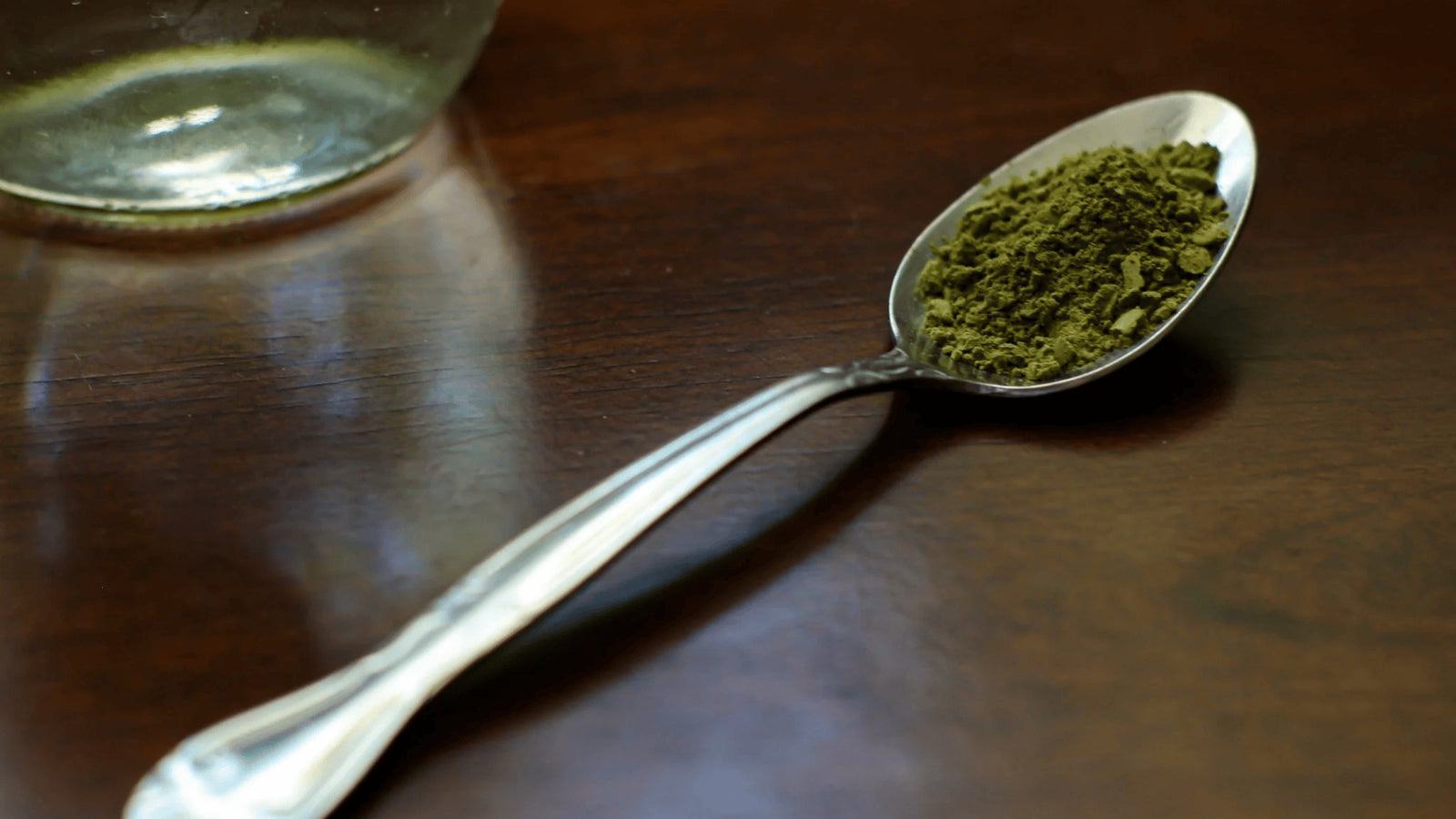
The phrase "kratom high" is the searcher's word, not the plant's word. People typing it into Google want to know what kratom actually feels like, whether it resembles getting drunk or stoned or wired on coffee, and whether it would be the kind of feeling they would want. So let's answer that plainly.
Kratom produces a felt-effects window, not a recreational high in the way alcohol or cannabis does. The window is shaped by dose more than anything else, with small amounts leaning alert and larger amounts leaning sedating. According to a peer-reviewed survey of more than 8,000 U.S. kratom consumers published in PMC NCBI, the most common self-reported reasons for use are pain management, mood support, energy, and easing withdrawal from other substances, not the pursuit of intoxication.
This guide walks through what the felt experience actually is, how the dose curve shapes it, and where the honest harm-reduction guardrails sit.

Table of Contents
- What People Actually Mean By a "Kratom High"
- The Dose-Response Spectrum, Honestly Mapped
- What Mitragynine and 7-OH Do at the Receptor Level
- Strain Color and How It Shapes the Felt Experience
- Kratom vs Alcohol: A Different Kind of Felt Experience
- Kratom vs Caffeine: Where the Lift Comes From
- Kratom vs Opioids: Why the Comparison Misleads People
- Kratom vs Cannabis: Two Different Plant Stories
- How Onset and Duration Shape the Window
- Signs You Took Too Much
- The Dependence Conversation at Heavy Daily Use
- Harm-Reduction Framing for Honest Use
- Frequently Asked Questions
- Final Thoughts
TL;DR
- What people search for as a "kratom high" is closer to a felt-effects window, ranging from low-dose stimulation to high-dose sedation.
- The shape of that window is dose-dependent. Small amounts feel like an alert calm, larger amounts feel heavier and more sedating.
- Mitragynine is the primary alkaloid, with adrenergic and partial mu-opioid receptor activity that produces the energy and warmth at the same time.
- Strain color (white, green, red) is best understood as a felt-experience lean, not a magic switch between effects.
- Kratom does not feel like alcohol, caffeine, opioids, or cannabis, and the comparisons mislead more often than they help.
- Kratom is not FDA-approved to treat any condition. If you are considering kratom as a substitute for a controlled substance, please consult a clinician or a harm-reduction service.
- Heavy daily use carries a documented dependence risk. Cycling, dose discipline, and rest days matter more than which strain you choose.
- The honest answer to "does kratom get you high" is that it produces real felt effects without behaving like a recreational drug at responsible doses.

What People Actually Mean By a "Kratom High"
At small doses, most people describe a kind of alert calm, like the second sip of strong coffee without the jitter. At moderate doses, the body softens, the shoulders drop, and there is a warmth that some people call comforting and others call relaxing. At high doses, kratom leans heavily sedating, and the experience starts to feel like a deep evening wind-down rather than anything resembling a party.
That gap, between what the searcher's word implies and what users actually report, is the gap this article is built around. The honest reading is that kratom delivers real felt effects, and those effects are interesting enough to discuss without recreational framing.

The Dose-Response Spectrum, Honestly Mapped
If there is one thing worth knowing first, it's that kratom's felt experience is not a fixed thing. It changes with dose. The same gram of green Maeng Da that gives one person a focused afternoon can, at three times the amount, give that same person a heavy couch session. This is the dose-response spectrum, and it is the most important pharmacology concept for kratom newcomers.
Here's the rough map most experienced users and harm-reduction sources agree on. These ranges apply to plain leaf powder, not to extracts or shots, which sit on a much higher potency curve.
| Dose Band | Typical Felt Effect | Who It Tends to Suit | Cautions |
|---|---|---|---|
| 1 to 2 g | Threshold lift, subtle alertness, faint warmth | First-timers, very sensitive users, microdose routines | Effects may be too mild to register at all |
| 2 to 4 g | Clean alert calm, focused mood, mild physical ease | Daytime users, work or study sessions, light social use | Best tolerated band for most adults |
| 4 to 6 g | Balanced lift plus body softening, warmth, talkative ease | Mid-day or evening shift, social and reflective use | Watch for nausea on an empty stomach |
| 6 to 8 g | Sedating lean, heavy limbs, drowsy comfort, slower thinking | End-of-day wind-down only | Driving is not appropriate. Nausea risk rises |
| 8 g and above | Strongly sedating, possible nausea, dizziness, sweating | Generally not recommended for routine use | Crosses into uncomfortable territory for most people |
The shape of this curve matters more than the labels. As the dose goes up, the felt experience moves from stimulating to balanced to sedating, and the side-effect load rises with it. There is no "more is better" zone above the moderate band. The sweet spot for almost everyone sits in the 2 to 5 gram window, and a sober read on how to dose kratom for beginners is the single most useful starting point we can point you to.
What Mitragynine and 7-OH Do at the Receptor Level
The reason kratom can be both alert and warm at the same time, which is unusual among psychoactive plants, comes down to its alkaloid mix. The two compounds doing most of the work are mitragynine and 7-hydroxymitragynine, often shortened to 7-OH. Mitragynine is the dominant alkaloid by mass, often 1 to 2 percent of dried leaf weight, while 7-OH is present in trace amounts but punches above its concentration.
The pharmacology here does not match the simple "kratom is an opioid" headline. According to a 2020 mechanistic review published in PMC NCBI, mitragynine acts as a partial agonist at mu-opioid receptors with significantly less efficacy than classical opioids like morphine, while also showing activity at alpha-2 adrenergic receptors. That adrenergic activity is what gives kratom its alertness lift, and it is why the felt experience is not flatly sedating the way a true opioid would be.
7-OH binds the mu-opioid receptor with greater potency than mitragynine, but it is present in such small amounts in leaf powder that it contributes a fraction of the overall effect. The exception is concentrated extracts and shots, where 7-OH levels can be artificially elevated, which is why concentrated products feel different and carry a higher dependence-risk profile than plain leaf.

Strain Color and How It Shapes the Felt Experience
Strain color is one of the most marketed and least understood parts of the kratom world. White, green, and red labels do correspond to real differences in how the leaf was harvested and dried, but those differences are subtler than the marketing suggests. The color is not a button that switches between energy and sedation. It is closer to a lean.
White vein is harvested earlier and dried in ways that preserve more mitragynine, which is why whites lean alert. Green vein is harvested at peak maturity, producing the most balanced felt experience. Red vein is harvested later and dried longer, often with sunlight or fermentation, which is associated with a softer, more relaxing lean.
What you will not find, despite confident product descriptions, is a strain that flips kratom into a different drug. Red Maeng Da at three grams still produces an alert calm. White Borneo at eight grams still leans sedating. The color lean shifts the felt experience by about 15 to 25 percent in either direction, not by 100 percent. If you want a single product that demonstrates the daytime-leaning end of this curve cleanly, Super Green Kratom Powder is a balanced green that most newcomers tolerate well in the 2 to 4 gram band.

Kratom vs Alcohol: A Different Kind of Felt Experience
Most American adults have a working memory of what one or two drinks feel like. So when they search for "kratom high," what they want to know is whether kratom feels anything like that. The short answer is no.
Alcohol is a CNS depressant that produces disinhibition, motor coordination loss, slurred speech, and measurable judgment impairment, even at modest doses. Kratom at the 2 to 5 gram band does not produce slurred speech, does not impair coordination in the obvious way alcohol does, and does not produce disinhibition. The felt experience is more like having had a strong cup of green tea plus a long warm bath at the same time, without the bath water.
The other difference is the next morning. Alcohol produces a hangover through dehydration, acetaldehyde toxicity, and disrupted sleep architecture. Kratom at responsible doses generally does not produce a hangover, although heavy or repeated dosing can produce a mild residual fog the next day. The two are different categories of substance and the lived experiences map onto each other very poorly.
Kratom vs Caffeine: Where the Lift Comes From
The closer comparison, and one most people land on after a few experiences, is between kratom's lift and caffeine's lift. Both produce alertness. Both produce focused energy. Both can be used in the morning. But the mechanisms are different enough that the felt experience is also different.
Caffeine works by blocking adenosine receptors, which prevents the buildup of sleep-pressure signaling. The result is alertness with a wired or jittery quality at higher doses. Kratom's alertness comes from the adrenergic side of its mechanism, which most users describe as a calmer alertness, closer to the focus you have after a 20-minute walk in cold air than the pressure of a third espresso.
A caffeine drinker who tries kratom will not feel that the kratom is replacing the caffeine in any meaningful way, and many users find that combining the two can be too much. The classic 3 to 4 gram kratom dose plus a single morning coffee is the upper edge of what most people tolerate comfortably.

Kratom vs Opioids: Why the Comparison Misleads People
This is the comparison that gets the most attention in headlines, and it is also the most misleading. Yes, kratom acts on the mu-opioid receptor. No, kratom does not feel like a classical opioid at recreational doses, and it does not behave like one in the body.
The pharmacology distinction is that mitragynine is a partial agonist with biased signaling, which means it activates a subset of the receptor's downstream pathways while leaving others largely alone. Classical opioids like morphine, oxycodone, or heroin are full agonists across both pathways, which is why they produce the full opioid effect profile including profound euphoria, deep respiratory depression at higher doses, and the kind of overdose risk that has made the opioid crisis what it is.
That said, kratom is not free of opioid-like risks. Heavy daily use can produce physical dependence with withdrawal symptoms that resemble a mild to moderate opioid withdrawal. According to the National Institute on Drug Abuse, the most concerning risk signal in U.S. kratom-related deaths involves polysubstance exposure, particularly combinations with other CNS depressants. If you are looking at kratom as an alternative to a controlled substance you currently use, please consult a clinician or a harm-reduction service before making that switch.
Kratom vs Cannabis: Two Different Plant Stories
Cannabis comparisons come up because both are botanical and both have been legalized in patchwork ways across U.S. states. The felt experiences are quite different.
Cannabis, primarily through THC's action on CB1 receptors, produces perceptual shifts, time distortion, increased appetite, and the characteristic mental drift that recreational users seek. Kratom does not produce perceptual shifts. There is no time distortion. There are no visual changes. The felt experience stays grounded in normal sensory baseline, with the dose-dependent energy or relaxation overlay we have been describing. Someone on kratom can drive home from work and read a contract. Someone two hours into a cannabis edible should not.
How Onset and Duration Shape the Window
The "kratom high" is also defined by its time profile. Onset for plain leaf powder is generally 20 to 40 minutes when taken on a relatively empty stomach, with a heavy meal pushing onset closer to 60 to 75 minutes. Peak effects sit around the 60 to 90 minute mark, and the bulk of the felt experience tapers between hour three and hour five.
Capsules push onset back by 15 to 20 minutes because the shell has to dissolve before the powder hits gastric fluids. Liquid extracts and shots compress the onset dramatically, sometimes to 10 to 20 minutes, and they also shift the peak intensity upward, which is part of why concentrated products carry a different risk profile. For a deeper breakdown of these timing dynamics, the GRH guide on how long kratom takes to kick in walks through the variables in more detail.

Signs You Took Too Much
The most important skill for anyone using kratom is reading the body's "too much" signals quickly, before the next dose makes it worse. They are obvious in retrospect but easy to miss in the moment because kratom's felt experience can soften self-assessment.
Use this checklist. If you find yourself ticking off three or more, that dose was past your comfortable window:
- Nausea that goes from background to foreground, especially within the first 45 minutes
- Sweating that feels disproportionate to the room temperature
- Wobbliness or coordination loss when you stand up too fast
- The "wobbles," a kratom-specific term for visual unsteadiness when you move your eyes side to side
- Heavy, sedating drowsiness that arrives faster than expected
- Headache that builds over an hour rather than fading
- Itching across the chest, neck, or face that feels notable
- A dry-mouth and dizzy combo that makes you want to lie down
- Mood drop or irritability that does not match the situation
If you have ticked three of these, the right move is to drink water, eat something light, and avoid taking more kratom for at least the next 12 hours. Reducing the next session by 1 to 2 grams almost always solves the problem. For a deeper safety reference, the GRH kratom side effects guide covers the full picture.

The Dependence Conversation at Heavy Daily Use
Heavy daily kratom use, especially of extracts or shots, carries a real and documented dependence risk. Pretending otherwise serves no one.
The pattern looks like this. A user starts with a few grams of leaf powder, finds it useful, and uses it three or four times a week. Tolerance builds, doses creep up to 6 to 8 grams, and the use schedule moves to daily, then to multiple-times-daily. At that point, missing a dose produces what feels like a mild flu, with restlessness, runny nose, sweating, irritability, and trouble sleeping. That is physical dependence. According to a clinical narrative review of kratom dependence in PMC NCBI, the withdrawal severity tracks closely with daily dose, daily frequency, and the duration of the daily-use stretch.
The honest harm-reduction stance is this: if you are using kratom, build in dose discipline from day one. Take rest days. Keep extracts and shots as occasional rather than daily tools. If you find that you cannot reduce your daily dose even when you want to, please consult a clinician. The pattern is treatable.

Harm-Reduction Framing for Honest Use
Kratom is not FDA-approved to treat any condition. The safety and efficacy claims you see on product pages, including some of our own, are not the same as clinical evidence.
If you are choosing to use kratom, the harm-reduction principles that produce the best outcomes are not complicated. Start low. Move slowly. Use plain leaf powder over extracts whenever possible. Avoid mixing kratom with alcohol or with other CNS depressants. Take genuine rest days. Pay attention to your sleep, mood, and gut for the first few weeks. Keep a clinician in the loop if you take any prescription medications.
The American Kratom Association publishes consumer education materials that align with most of these principles, and a clinician or harm-reduction service is the right call if your use has become a pattern you cannot reduce on your own.
Frequently Asked Questions
Does kratom get you high in the recreational sense?
Kratom produces real felt effects, but at sensible leaf doses those effects are closer to an alert calm or a soft body relaxation than to the disinhibited recreational high people associate with alcohol or classical opioids. At very high doses or with concentrated extracts, the felt experience leans heavier and the risk profile shifts upward, which is part of why most experienced users stay in the 2 to 5 gram range.
Is kratom euphoric?
Some users at moderate doses do report a mild euphoria, which most often shows up as a warm mood lift rather than the strong euphoria associated with stimulants or opioids. The intensity of that mood component is usually modest, and it diminishes quickly with regular use as tolerance builds.
Can you abuse kratom?
Yes, daily heavy use of kratom, particularly extracts and shots, can develop into a dependence pattern with documented withdrawal symptoms when use stops. The risk profile is meaningfully lower than for classical opioids but it is not zero, and the people most at risk are those using concentrated products multiple times a day for extended periods.
How much kratom does it take to feel something?
Most adults feel the threshold lift at 1 to 2 grams of leaf powder and the clear alert calm at 2 to 4 grams. Individual responses vary based on body weight, tolerance, food intake, and strain potency. Always start at the low end of the range when trying a new product, and wait at least 45 minutes before considering a top-up dose.
How long does the felt experience last?
For plain leaf powder taken on a relatively empty stomach, the felt experience usually lasts 3 to 5 hours from onset, with peak effects sitting around the 60 to 90 minute mark. Capsules extend the timeline slightly, and extracts compress and intensify it. Re-dosing inside the taper can extend the window but also raises the next-day fatigue load.
Does the strain color really change the felt experience?
Yes, but more subtly than the marketing suggests. White strains lean more alert, red strains lean more relaxing, and green strains sit in the middle. The lean shifts the felt experience by roughly 15 to 25 percent in either direction at the same dose, but no strain color flips kratom into a different drug. Dose has a much larger effect on the felt experience than strain color does.
Should I use kratom if I am in recovery from another substance?
This is a question to ask a clinician or a harm-reduction service rather than the internet. Some people in recovery from alcohol or other substances report that kratom has been useful, while others have found that kratom triggered or substituted for the dependence pattern they were trying to leave. The right answer depends on your history, your current support structure, and your honest read of your own risk profile.
Final Thoughts
The honest version of the "kratom high" story is less dramatic than the search term implies and more interesting than the marketing copy tells you. Kratom produces a real felt-effects window. That window is shaped by dose more than by strain, by the alkaloid mix more than by branding, and by use pattern more than by any single session. At 2 to 4 grams of plain leaf, most adults find a kind of alert calm that is unlike anything else in their pantry. At 8 grams, they find a heavy sedation that almost no one actually enjoys.
The harm-reduction picture is similarly honest. Kratom carries real dependence risk at heavy daily use, particularly with concentrated extracts, and it interacts with other CNS depressants in ways that have produced documented harms. The people who use kratom well treat it with respect, cycle it deliberately, keep doses modest, and do not let the felt-experience window quietly become a daily-use habit.

If you are new to kratom, the cleanest place to start is a balanced green vein product at the 2 to 3 gram band, with food, and with a clear plan to wait 45 minutes before deciding whether to add anything. Our Focus Blend Kratom Powder is the product most often used in that beginner-friendly daytime rotation, lab-tested and carrying the AKA GMP standard that the kratom industry has built around the absence of FDA oversight.
The one thing we would ask you to take from this article, regardless of which product you choose or whether you choose any at all, is this. Read your body honestly. Respect the dose curve. Build in rest days from the start. And if anything in the way you are using kratom starts to feel less like a tool and more like a tether, that is the signal to talk to a clinician or a harm-reduction service. The plant rewards that kind of honest self-assessment, and so does the rest of your life.


