



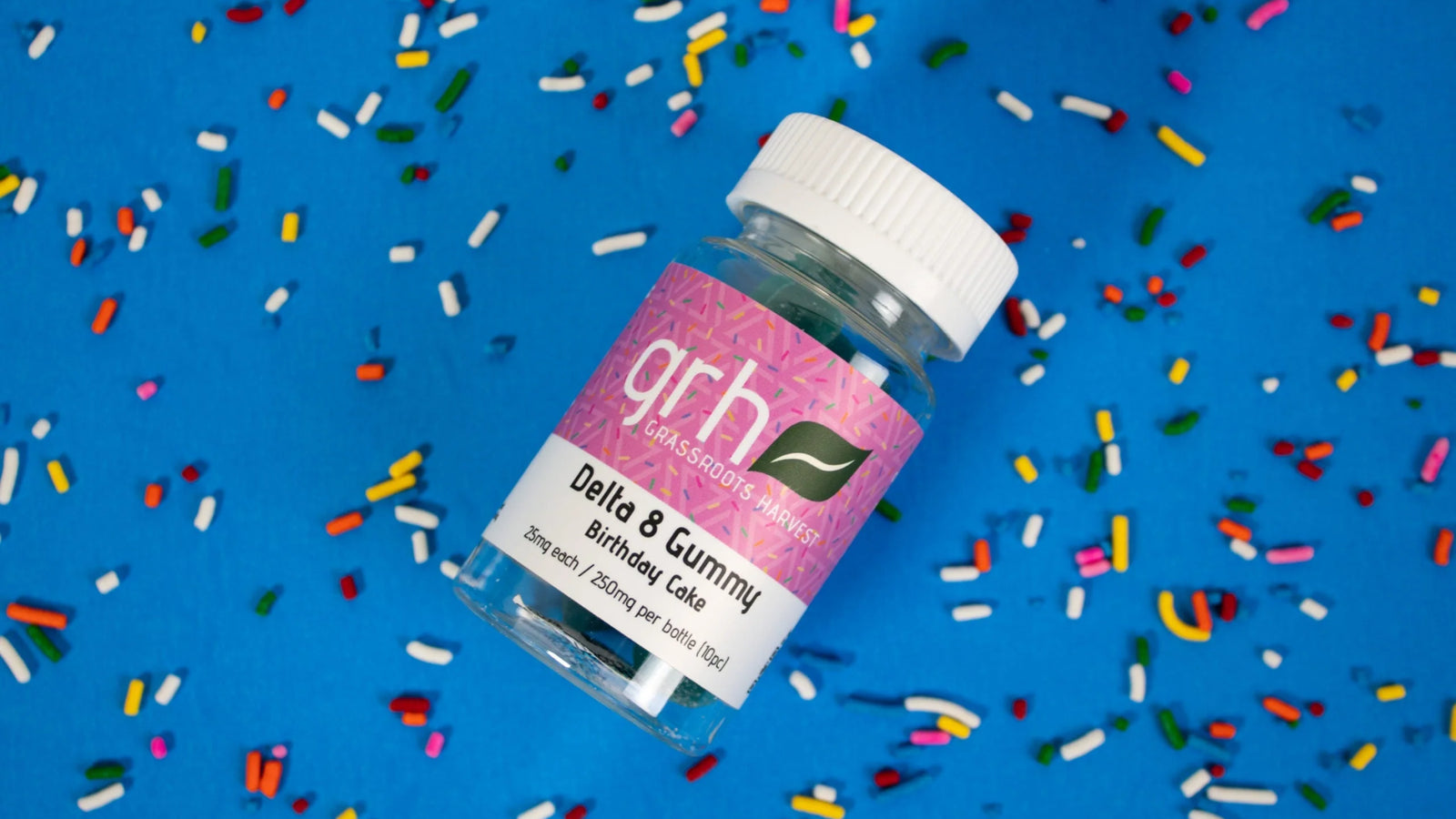
Delta-8 THC is the cannabinoid that nobody quite agrees on. It shows up in vape shops, gas stations, and wellness boutiques. Some states have banned it outright. Others let it sit on shelves with no age check at all. The 2018 Farm Bill made it federally legal as a hemp-derived cannabinoid, then state legislatures spent the next several years pulling in the opposite direction. For 2026, the picture is still uneven and still moving.
So what is Delta 8 THC in plain English? It's a minor cannabinoid found naturally in the hemp plant, related to (but milder than) the Delta-9 THC that gives recreational cannabis its punch. Almost all commercial Delta-8 is made by isomerization, a chemistry step that converts hemp-derived CBD into Delta-8. A 2023 review in Frontiers in Public Health estimated that more than 14 million U.S. adults had tried Delta-8 in the year before the survey, with sharper uptake in states where Delta-9 is still prohibited.
This guide unpacks what Delta-8 actually is, how it compares to Delta-9 and CBD, what it does (and does not do) in the body, where the legal lines sit in 2026, and how to think about safety if you're a curious adult considering a first try. We'll also draw a clear line between Delta-8 and the kratom plant, because those two come up together online and get conflated more than they should.
Table of Contents
- What Delta-8 THC Actually Is
- How Delta-8 Is Made (The Isomerization Question)
- Delta-8 vs Delta-9 vs CBD: A Side by Side
- What Delta-8 Feels Like
- Is Delta-8 THC Legal in 2026?
- The Product Formats You'll See on Shelves
- Safety, Drug Tests, and Driving
- Who Should Skip Delta-8 Entirely
- Quality, COAs, and the Isomerization Cleanup Problem
- Dosing: How to Start If You Decide To
- Delta-8 vs Kratom and Kava: Different Plants, Different Rules
- Frequently Asked Questions
- Final Thoughts
TL;DR
- Delta-8 THC is a minor cannabinoid in hemp (Cannabis sativa), structurally similar to Delta-9 THC but typically milder in felt effect.
- Almost all commercial Delta-8 is converted from hemp-derived CBD through a lab process called isomerization, not extracted in meaningful amounts from the plant.
- Delta-8 is psychoactive. It can cause a noticeable high, dry mouth, red eyes, slowed reaction time, and impaired driving ability.
- Federal status: legal as a hemp derivative under the 2018 Farm Bill. State status: restricted, regulated, or banned in roughly 20 states as of 2026. Check your state.
- Delta-8 will almost certainly cause a positive result on a standard urine drug test, just like Delta-9.
- It is not FDA-approved for any condition. The FDA has issued public-health warnings about adverse events tied to Delta-8 products.
- Quality is uneven. Look for products with a recent third-party Certificate of Analysis (COA) showing cannabinoid content and contaminant screening.
- Delta-8 is not kratom and not kava. Different plants, different receptor systems, different legal frameworks. Do not assume the rules transfer.

What Delta-8 THC Actually Is
Delta-8 tetrahydrocannabinol (Delta-8 THC, or D8) is one of more than 100 cannabinoids the hemp plant produces. The "delta-8" name refers to the location of a chemical double bond on the eighth carbon of the molecule. Delta-9 THC, the more famous cousin and the cannabinoid that defines recreational cannabis, has its double bond on the ninth carbon. That single-position shift changes how the molecule binds to your body's cannabinoid receptors and how the high feels.
Both Delta-8 and Delta-9 bind to the CB1 receptor, the receptor most responsible for the psychoactive "high" effect. Delta-8 binds with somewhat lower affinity, which is the leading hypothesis for why most people report a milder, often calmer, less anxious experience compared with Delta-9 at equivalent doses. A peer-reviewed pharmacology overview at PMC NCBI walks through the receptor chemistry in more detail.
Delta-8 occurs naturally in the cannabis plant but in tiny percentages, typically well under 1 percent of total cannabinoids. That's why commercial Delta-8 is not field-extracted. It's chemically converted, which we'll cover in the next section.
How Delta-8 Is Made (The Isomerization Question)
The Delta-8 on the market overwhelmingly comes from a process called isomerization. Producers start with hemp-derived CBD (which is cheap and legal under federal law), dissolve it in a solvent, add an acid catalyst, and rearrange the molecule into Delta-8. The reaction is well understood, but the cleanup is not always clean.
Two cleanup concerns recur in the literature and in state lab testing. First, the reaction can produce small amounts of Delta-9 THC and other minor cannabinoids and reaction byproducts. Second, residual acids, heavy metals, and solvent residues can carry through if the producer cuts corners on purification. Several state agriculture departments have flagged batches with unexpected contaminants over the past several years, which is part of why a Certificate of Analysis from a credible third-party lab is the single most important quality signal on a Delta-8 product.

Delta-8 vs Delta-9 vs CBD: A Side by Side
The three cannabinoids most often confused on the shelf are Delta-8 THC, Delta-9 THC, and CBD. They come from the same plant family and they share carbon skeletons, but they behave differently in the body and they sit in different legal categories.
| Attribute | Delta-8 THC | Delta-9 THC | CBD |
|---|---|---|---|
| Primary receptor | CB1 (lower affinity) | CB1 (high affinity) | CB1/CB2 (weak), other targets |
| Psychoactive? | Yes, milder than D9 | Yes, defines the recreational high | No standard intoxication |
| Federal status (2026) | Legal as hemp derivative | Federally controlled (above 0.3%) | Legal as hemp derivative |
| State patchwork | ~20 states restrict or ban | State-by-state medical/recreational | Broadly legal, some labeling rules |
| Drug test detection | Yes, triggers THC positives | Yes | Usually no, with exceptions |
| Typical felt effect | Mild high, often calmer, sometimes drowsy | Stronger high, variable on anxiety | Subtle calm, no intoxication |

One nuance worth calling out: CBD does not get most users high, but it's not pharmacologically inert either. The receptor differences in the table above are why a CBD product and a Delta-8 product can sit side by side on a shelf yet produce very different experiences.
What Delta-8 Feels Like
Self-reports across surveys and small clinical studies are remarkably consistent. Users describe Delta-8 as a softer, more functional high than Delta-9. Common subjective effects include mild euphoria, body relaxation, slight sedation at higher doses, a quieter head with less of the racing-thoughts anxiety some people get from Delta-9, and an appetite bump.
It is still psychoactive. People who think Delta-8 is a "non-intoxicating CBD alternative" are working from a marketing claim, not pharmacology. The high is real, and it scales with dose and product format. Vapes and concentrates hit faster and harder than edibles, but edibles tend to last longer.
Is Delta-8 THC Legal in 2026?
Delta-8 sits in one of the most cluttered legal corners in American hemp regulation. Three layers matter.
Federal law. The 2018 Farm Bill, signed by Congress, defines "hemp" as cannabis with no more than 0.3% Delta-9 THC by dry weight and removes hemp and its derivatives from the Controlled Substances Act. Delta-8 from hemp falls under that definition by the plain reading of the statute. The DEA has, in interim guidance, taken the position that synthetically derived THCs are still controlled, which is the basis for ongoing disputes. The Farm Bill itself can be read on the USDA site.
FDA oversight. The FDA has not approved Delta-8 for any medical use. It has published a consumer update on Delta-8 warning about marketing claims, manufacturing variability, and accidental ingestion by children. Adverse event reports submitted to the FDA and to poison control centers have grown alongside the product category.
State law. This is where it gets uneven. As of early 2026, roughly 20 states either ban Delta-8 outright, severely restrict it, or fold it under the same regulations as adult-use Delta-9. Examples (subject to change with each new legislative session) include Alaska, Arizona, Arkansas, Colorado, Delaware, Idaho, Iowa, Mississippi, Montana, New York, North Dakota, Rhode Island, Utah, Vermont, and Washington. Some states allow Delta-8 only through licensed cannabis dispensaries; others ban it outright at the retail level. For a closer Texas-focused read on how a state agency, courts, and the industry have wrestled with the question, see our brief on Delta-8 THC legality, and for a broader state-by-state view, see where Delta-8 is illegal in the U.S.
Bottom line: federally legal as a hemp derivative under the 2018 Farm Bill, restricted or banned in roughly a fifth of states, in flux everywhere else. Check your current state statute before you purchase. For a broader policy view of how cannabinoid laws are evolving state by state, the NORML state-by-state cannabis laws tracker is a useful starting point.

Delta-8 THC is federally legal as a hemp-derived cannabinoid under the 2018 Farm Bill but is restricted or banned in many U.S. states. Check your state's current statute before purchasing.
The Product Formats You'll See on Shelves
Delta-8 is sold in a handful of recurring formats. Each has its own onset profile, dose precision, and typical use case.
- Gummies and edibles. Discreet, easy to portion, slow to kick in (30 to 120 minutes), longer duration (4 to 8 hours). Easiest format for beginners because the dose per piece is printed on the label.
- Tinctures. Sublingual oil, usually 5 to 30 mg per dropper. Faster onset than gummies, slower than vapes. Tinctures let you titrate dose in small steps.
- Vape carts and disposables. Fast onset (within minutes), shorter duration (1 to 3 hours), high dose precision is harder. Vape hardware quality also varies widely; cheap carts have been the source of some of the worst contaminant findings in the category.
- Flower. Hemp flower sprayed with a Delta-8 distillate. Looks and smokes like cannabis. Dose is hard to estimate.
- Concentrates. Wax, shatter, dabs. High potency, not for beginners.

If you're new to Delta-8, gummies or low-strength tinctures are the simplest places to start. They give you the dose-per-serving information you need to calibrate.
Safety, Drug Tests, and Driving
Three safety topics matter more than the others.
Drug tests. Standard workplace urine drug screens look for THC-COOH, a metabolite that Delta-8 produces. A Delta-8 user will almost certainly fail a standard drug test the same way a Delta-9 user would. If your job, custody arrangement, court order, or athletic governing body tests for THC, Delta-8 is not a safe workaround.
Driving and machinery. Delta-8 impairs reaction time and motor coordination. Do not drive or operate machinery after use. State DUI statutes generally do not distinguish Delta-8 from Delta-9 when impairment is involved.
Medication interactions. Cannabinoids can interact with prescription medications, especially blood thinners and some antidepressants, through shared liver-enzyme pathways. Anyone on prescription medication, anyone with heart, mental health, or liver conditions, anyone pregnant, and anyone breastfeeding should talk to a clinician before trying Delta-8.
Delta-8 THC is a psychoactive cannabinoid. Effects, legality, and safety depend on dose, source, and jurisdiction. Delta-8 is not FDA-approved to treat, cure, or prevent any condition. Do not drive or operate machinery after Delta-8 use. Do not use during pregnancy. If you take prescription medications or have a heart, mental health, or liver condition, consult your clinician before using Delta-8.

Who Should Skip Delta-8 Entirely
Some readers should not use Delta-8 regardless of state legality. The list:
- Anyone under 21 (this is the floor across responsible retailers and most state hemp programs).
- Anyone pregnant or breastfeeding.
- Anyone with a history of psychosis, schizophrenia, or severe anxiety disorders.
- Anyone subject to drug testing for work, sport, court, or custody reasons.
- Anyone on a medication regimen that interacts with cannabinoids without first checking with a clinician.
- Anyone driving or operating machinery within the next 6 to 12 hours, depending on dose and format.
Quality, COAs, and the Isomerization Cleanup Problem
Because Delta-8 is made by a chemistry step rather than pulled clean from the plant, the quality of the final product depends heavily on the producer. A reputable Delta-8 product carries a current third-party Certificate of Analysis (COA) showing, at minimum, cannabinoid content (Delta-8, Delta-9, residual CBD), residual solvents, heavy metals, pesticides, and microbial contaminants.
If the COA is missing, stale, or refers to a different batch, that's the signal to walk away. Reputable producers also list the lab name and contact information so you can verify the report. The FDA consumer update on Delta-8 specifically calls out the difficulty consumers have telling well-manufactured products apart from poorly manufactured ones, which is one of the FDA's stated reasons for warning the public about the category.
Dosing: How to Start If You Decide To
If you've decided Delta-8 is something you'd like to try and you live in a state where it's legal, here's a defensible starter protocol. This is harm-reduction guidance, not medical advice.
- Confirm Delta-8 is legal in your state and county. If it isn't, stop here.
- Buy from a retailer that publishes a current third-party COA tied to the batch you're holding.
- Choose a low-dose edible or tincture. A 5 mg gummy or a 5 mg sublingual drop is a sensible starting dose for most adults new to Delta-8.
- Plan a 4 to 6 hour window where you don't need to drive, work, or make important decisions.
- Take the dose at home, with a glass of water and something light to eat.
- Wait 90 minutes before considering more. Edibles are slow.
- Note how you feel: onset time, intensity, duration, side effects (dry mouth, red eyes, drowsiness, appetite).
- If 5 mg felt like nothing after 2 hours, your next session can go to 10 mg. Move in small steps. There is no prize for taking more.

People who want a quieter, more functional experience often stay in the 5 to 15 mg range. Above that, Delta-8 starts to feel a lot more like Delta-9, with the same caveats about anxiety, dry mouth, and impaired coordination.
Delta-8 vs Kratom and Kava: Different Plants, Different Rules
People who are exploring legal psychoactive options online often see Delta-8, kratom, and kava in the same conversation. They share a "milder, accessible, hemp-shop alternative" framing in some marketing. That framing is misleading.
Delta-8 THC comes from hemp (Cannabis sativa) and works through the cannabinoid CB1/CB2 receptor system. Kratom comes from a Southeast Asian tree (Mitragyna speciosa) and works primarily through the mu-opioid receptor system, with additional adrenergic activity. Kava comes from a South Pacific root (Piper methysticum) and works mainly through GABA-A receptor modulation. Different plants, different chemistry, different felt experience, and different legal frameworks.
For readers who specifically want to understand how cannabinoids and kratom interact when used together (a common question we get), our CBD and kratom guide goes deeper. The short version: do not assume that what's true of Delta-8 is true of kratom or kava, and vice versa.

Frequently Asked Questions
Is Delta-8 the same as weed?
No. They come from the same plant family but they're different molecules with different legal categories. Recreational "weed" is high-Delta-9 cannabis, federally controlled, legal in some states for adult use. Delta-8 is a hemp-derived cannabinoid that exists in the legal gray zone of the 2018 Farm Bill. The felt effect is in the same family but usually milder.
Will Delta-8 fail a drug test?
Yes, almost certainly. Standard urine drug tests detect THC-COOH, which is produced by both Delta-8 and Delta-9 metabolism. If you're subject to workplace, athletic, or court testing, treat Delta-8 the same as Delta-9 and skip it.
Is Delta-8 legal in my state?
That depends on which state. Roughly 20 states ban or significantly restrict Delta-8 as of early 2026. The rest treat it as a federally legal hemp derivative. Check your state legislature's most recent action because this category moves more than most.
How long does Delta-8 last?
Format matters. Vapes hit fast and fade in 1 to 3 hours. Tinctures take 15 to 45 minutes to come on and last 3 to 6 hours. Edibles take 30 to 120 minutes and last 4 to 8 hours. Dose matters too. Higher doses last longer.
Is Delta-8 safer than Delta-9?
Different, not necessarily safer. Delta-8 is generally milder per milligram. That can mean fewer panic episodes for sensitive users. It does not mean Delta-8 is harmless, contaminant-free, or appropriate for people who shouldn't be using cannabinoids in the first place. The FDA has documented adverse events from Delta-8 products, often tied to high doses or poor manufacturing.
What's the difference between Delta-8 and HHC or Delta-10?
HHC and Delta-10 are other hemp-derived or hemp-adjacent cannabinoids in the same regulatory gray zone Delta-8 occupies. They each have slightly different receptor profiles and effects. The legal analysis is broadly similar but the felt experience and the testing data are thinner. Treat all of them as you would treat Delta-8: low dose first, COA required.
Can I travel with Delta-8?
Air travel within the U.S. with hemp-derived Delta-8 is in the same gray zone as the federal-versus-state conflict. TSA's stated focus is security threats, not hemp products, but state laws still apply at your destination. If you're flying into a state where Delta-8 is banned, do not travel with it.
Is Delta-8 addictive?
Cannabinoids can produce a use disorder pattern in a minority of users, especially with daily high-dose use. Delta-8 is not exempt. The risk is real but lower than with many other recreational substances. Use intermittently, watch for tolerance escalation, and step back if you notice yourself reaching for it daily.
Final Thoughts
Delta-8 THC is one of the most interesting and most uneven products on hemp shelves in 2026. It's federally legal as a hemp derivative, restricted or banned in roughly a fifth of states, sold by reputable producers with COAs and by gas-station operators with neither, and used by millions of adults who want a milder, more accessible cannabinoid experience than Delta-9.
If you're a curious adult in a state where Delta-8 is legal, the responsible path is the same one that applies to any psychoactive: confirm legality, buy from a producer that publishes lab work, start low, give yourself time, do not drive, and check in with a clinician if you take prescription medications or have a relevant condition. Treat the category the way you'd treat a glass of wine you've never had: small first taste, on a quiet evening, with no plans to drive anywhere.

And if you're not in a Delta-8 state, or you'd rather sit out the cannabinoid conversation entirely, there are other plant-based ways to find a calmer evening. GRH builds wellness products in the kratom and kava space, including the gentler red-and-green Relax Blend that some of our readers reach for when they want a quiet wind-down without a controlled-substance footprint. You can explore the Relax Blend Kratom Powder on our shop page, or browse the broader catalog at grhkratom.com.
Whatever you choose, choose it with a clear picture of what you're putting in your body, where the legal lines sit where you live, and how the product was made. That clarity is the whole point of a guide like this one.


