



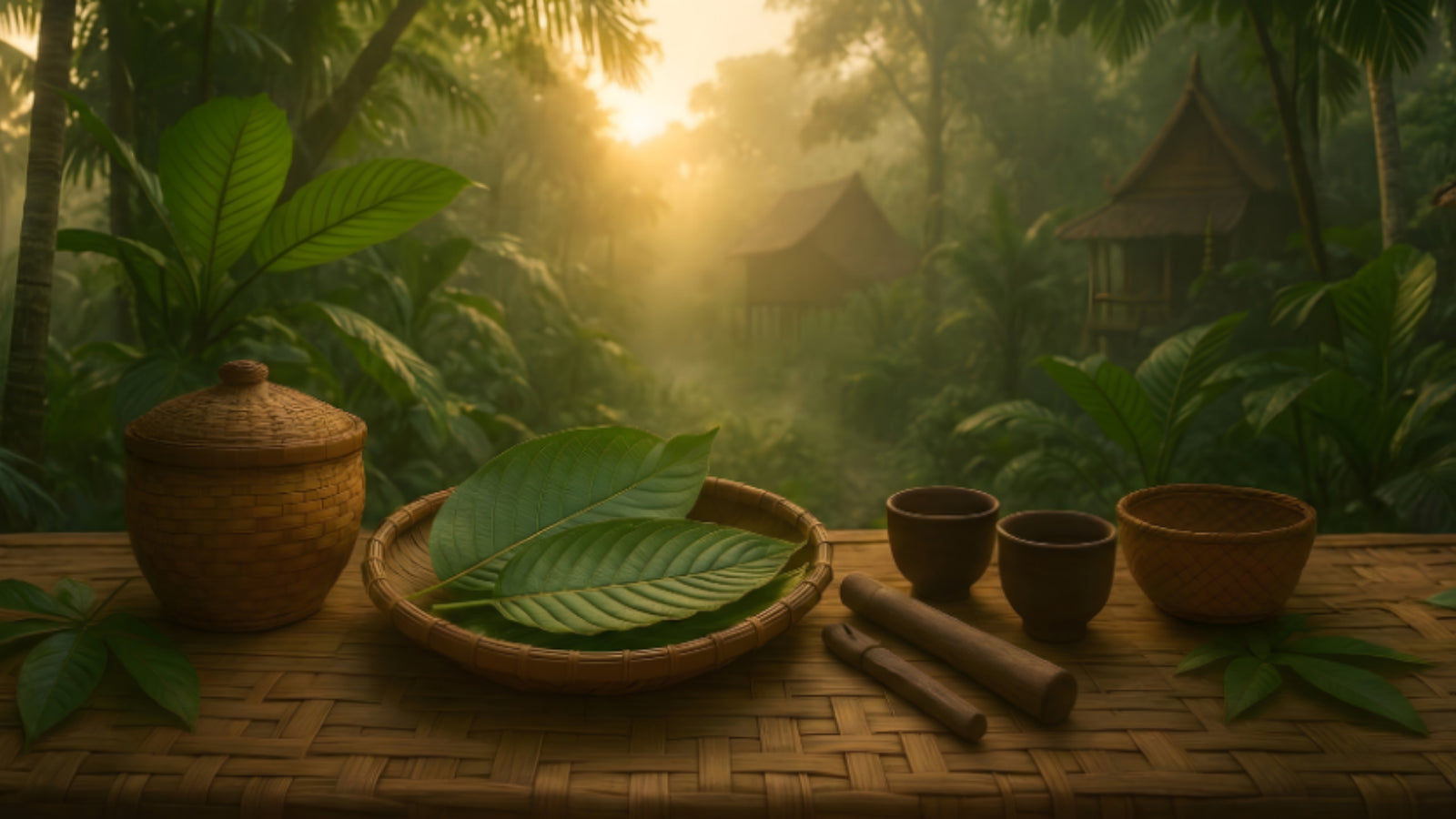
People didn’t discover kratom recently. It’s been around for a long time, used in ways that didn’t look anything like how it’s used today. Different setting, different reasons, but the same plant.
And if you look at where it started, it actually makes more sense why people still use it now.
The context changed. The plant didn’t.
Where It All Started
Kratom comes from Southeast Asia. Thailand, Indonesia, Malaysia. That’s where it’s always been. It wasn’t treated like a trend or a product. It was just part of daily life. Farmers used it. Laborers used it. People working long hours outside mostly. They would chew the leaves or brew them into something simple. Nothing complicated about it. It wasn’t about optimizing anything. It was about getting through the day.
It Wasn’t Just Physical
Over time, it started showing up in more than just work routines.
Some communities brought it into rituals. Not in a dramatic way, but enough that it became part of certain traditions.
Used during ceremonies, or moments where focus and calm actually mattered.
It wasn’t seen as something separate from life. It was part of it.
Why It Stuck Around
Most things don’t last unless they actually do something useful.
Kratom stuck because it had a role. Sometimes for energy, sometimes for slowing things down. That balance is what made it flexible.
People didn’t have to think too much about it. They just used it when it made sense.
The Way It Was Used Back Then
It wasn’t refined or processed the way it is now. Leaves were chewed. Sometimes dried and brewed into tea. That was it. No capsules, no extracts, no branding. Just the plant.
And even then, people already understood how it affected them.
That Mind-Body Idea People Talk About
This part gets over-explained today.
Back then, it wasn’t a concept. It was just how things felt.
People used kratom to stay active, but also to stay steady. That mix of energy and calm wasn’t something they labeled. It was just part of the experience.
Looking back, that’s where a lot of the modern explanations come from.
How It Shifted Over Time
Eventually, things changed. Kratom moved outside of those regions. Different countries, different uses, different expectations. Instead of daily routine, it became something people added into their routines. That’s a small shift, but it changes how people look at it.
Where It Fits Now
Today, people use it in a more structured way. Powder, capsules, extracts. Different forms, same base.
Some use it for energy. Others for slowing things down.
Some just use it to stay consistent during long days.
It’s not identical to how it was used before, but the core idea is still there.
What Actually Carried Over
The biggest thing that stayed the same is the balance. Not just one effect. Not just one use. That flexibility is what kept it relevant. Even now, people don’t use it for just one reason. It depends on what they need that day.
Why People Are Coming Back to It
There’s been a shift toward simpler things again.
Less synthetic, more natural. Not always, but enough that plants like kratom come back into the conversation.
Not because they’re new. Because they’ve been around the whole time.
People are just noticing again.
Where Quality Starts to Matter
Back then, people knew where their kratom came from.
Now, that’s not always the case.
So sourcing matters more. Processing matters more. Consistency matters more.
If you’re looking for reliable options → buy kratom online
Final Thoughts
Kratom didn’t start as a product. It started as something people used because it worked for their day-to-day life. That hasn’t really changed. The way it’s packaged has and once you understand where it came from, the way people use it now makes a lot more sense.


