



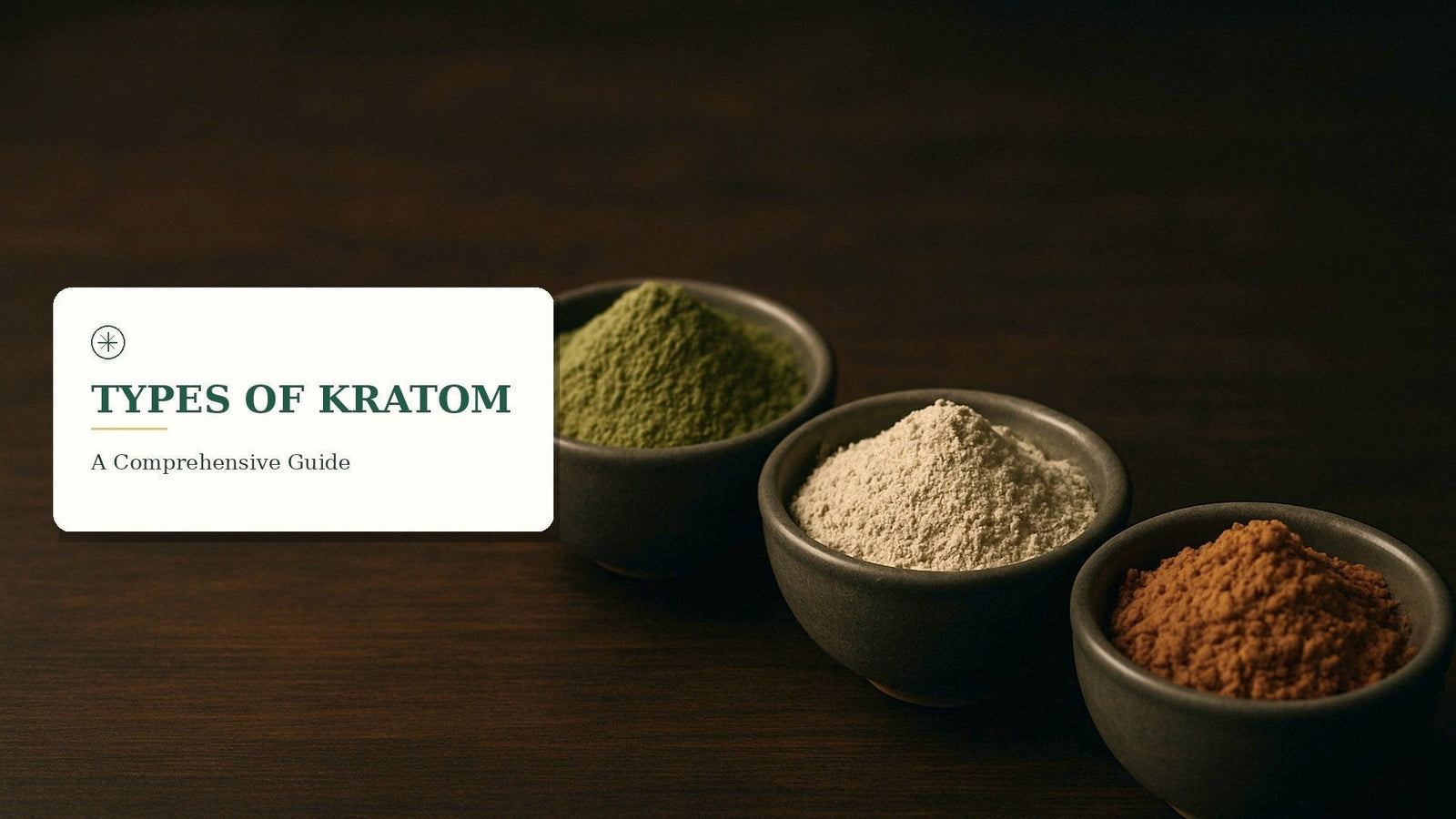
Walking into the kratom aisle for the first time feels like opening a wine list with no descriptions. White, green, red, yellow. Maeng Da, Bali, Borneo, Sumatra, Malay. Powders, capsules, extracts, shots. Morning blends, evening blends, social blends. The naming system is real, but it's not always intuitive, and a lot of buyers end up grabbing whatever the front-of-shelf sticker recommends.
This guide to the different types of kratom is the tour, not the deep dive. We'll walk through the four ways the kratom category gets sliced (vein color, region, format, use case), give you 18 distinct types of kratom with quick what-it-is, what-it-does, and who-it-fits notes, and link out to longer reads when you want to go further on any single one. The goal is that by the end of this page, you can read any GRH Kratom product label and know within five seconds whether it fits the day you're planning.

Quick orientation up front. The American Kratom Association estimates somewhere between fifteen and twenty million Americans have used kratom, and that number keeps climbing because the category does what most herbal supplements promise but rarely deliver: it offers different effects from different products, and the differences are predictable enough to plan around. AKA tracks ongoing usage data alongside its consumer protection work, and the consistent finding is that experienced users select for type rather than brand. Knowing the four axes below is what separates an experienced user from a confused one.
Table of Contents
- By Vein Color: white, green, red, yellow
- By Region: Maeng Da, Bali, Borneo, Sumatra, Malay
- By Format: powder, capsule, extract, shot
- By Use Case: morning, daytime, evening, social, recovery
- How to Pick Your Type in Three Questions
- Frequently Asked Questions
- Final Thoughts
TL;DR
- The different types of kratom get categorized four ways: vein color, regional strain name, physical format, and intended use case. All four can describe the same product.
- Vein color is the fastest predictor of effect lean: white tends energizing, red tends calming, green sits in the middle, yellow is a fermented in-between.
- Regional names (Maeng Da, Bali, Borneo, Sumatra, Malay) used to mean origin and now usually mean a flavor and effect profile a brand has standardized to.
- Format changes onset and convenience, not the underlying alkaloid lean. Powder is most flexible, capsules are most discreet, extracts are most concentrated, shots are most portable.
- Use-case blends (morning, daytime, evening, social, recovery) combine veins to dial in a feel rather than relying on one source leaf.
- The single best predictor of whether you'll like a product is the vein-color column on the label, not the brand name on the front.
- If you only remember one thing, remember this: white for energy, red for calm, green for middle ground, yellow for novelty.
- Cross-link strategy: pick your type of kratom from this guide, then read the strain-specific deep dive for dose, onset, and experience reports.
- This is the kratom strain chart most experienced users wish they'd seen on day one: vein, region, format, use case, all in one tour.

Kratom Strains by Vein Color: The Fastest Read on Effect
Kratom vein colors are the first thing experienced buyers look at on a label. The vein on the back of a kratom leaf shifts color as the leaf matures. Those color stages line up with predictable shifts in alkaloid concentration, especially the ratio of mitragynine to 7-hydroxymitragynine. Peer-reviewed pharmacology research on Mitragyna speciosa has documented that white veins lean higher in mitragynine while red veins drift toward higher 7-OH presence after curing, which maps to the energy-versus-calm split most users notice on the first try. Vein color is the column you should look at first on any product label.

1. White Vein Kratom
White kratom comes from the youngest leaves at harvest, and they carry the highest mitragynine load. Most users describe the experience of white kratom as clean, mental, and forward leaning, which is why white vein has become the default morning category. If you've ever wished a cup of coffee gave you the alertness without the racing heart, this is the closest analog in the kratom world. For the full breakdown of what white covers, our white kratom deep dive walks through one of the better-known white sub-strains.
2. Green Vein Kratom
Green kratom is picked at the middle stage of leaf maturity, and it earns its reputation as the all-rounder. The experience tends to mix the alertness of a white with a softer mood lift, which is why green kratom is the type most often recommended to new users and the type most blends rely on as their backbone. Our green kratom guide covers the green family in depth.
3. Red Vein Kratom
Red kratom is harvested from the most mature leaves, picked last and often dried longer to deepen the alkaloid profile. The reputation of red kratom for calm and body ease is well-earned, and most kratom users report reds feel slower in onset and longer in tail than whites or greens. Reds are the evening default for the same reason whites are the morning one. Our companion piece on how alkaloid profiles shape vein color effects goes deeper on what to look for, red included.
4. Yellow Vein Kratom
Yellow kratom is the wildcard among kratom types. There's no fourth-color leaf growing in nature; yellow kratom is made by drying or fermenting white or green leaves to create a hybrid profile that sits between the energizing and the relaxing camps. Different farms produce different yellows, so consistency from brand to brand matters more here than with the three primary colors. Most users describe yellow kratom as a softer green with a slightly sweeter aroma. It's a worthy stop on a tour but rarely anyone's daily driver.
Kratom Strains by Region: Where the Names Came From
Most kratom names you see on labels were originally place names. Bali kratom came from Bali. Borneo came from the island of Borneo. Sumatra came from the Indonesian island. Over time, as farming consolidated to a few main growing regions in Sulawesi and West Kalimantan, the names became less about geography and more about a recognized flavor and effect profile. A "Maeng Da" today is a curing and selection style as much as a place. The FDA's kratom information page notes that the plant grows natively across Southeast Asia, with Indonesia supplying the bulk of what reaches the United States.

5. Maeng Da Kratom
Maeng Da kratom is the most-asked-for regional name in the U.S. market. It's not a place; it's roughly translated as "pimp grade," and historically meant a stronger leaf selected by an experienced grower. Today, Maeng Da exists in white, green, and red varieties (you'll see all three on most brand sites), and each follows the vein-color rules above. White Maeng Da is the gold standard for clean focus, Red Maeng Da for evening calm, Green Maeng Da for daytime balance. The Maeng Da name carries premium weight in the U.S. market specifically because of that selection-grade reputation.
6. Bali Kratom
Bali kratom rarely comes from Bali anymore. It's a curing and effect profile most farms now produce in Sulawesi or West Kalimantan, and the name signals a slower, body-leaning experience compared to Maeng Da. Bali tends to come in red and green forms most often, and Red Bali in particular is one of the most beginner-friendly evening kratom types because the dose-response curve is gentle.
7. Borneo Kratom
Borneo names a real place (the third largest island in the world, split between Indonesia, Malaysia, and Brunei), and a meaningful share of the kratom on the U.S. market really does grow there. Borneo strains are known for a clean, smooth profile that rarely has the bitter aftertaste some users associate with other strains. Red Borneo is a popular evening pick; White Borneo runs slightly more mellow than White Maeng Da if you want focus without the edge.
8. Sumatra Kratom
Sumatra is the second largest Indonesian island and another genuine origin region. Sumatra kratom carries a reputation for long-tail effects, meaning the experience holds steady for a longer stretch than the typical strain. White Sumatra is a moderate energy pick; Red Sumatra is a long-evening type that some users prefer over Red Bali for that reason.
9. Malay Kratom
Malay (sometimes called Malaysian) is sourced from across Malaysia, though commercial export from Malaysia itself is restricted, so most "Malay" kratom on the U.S. market today is grown elsewhere and named for the regional profile. Green Malay in particular has a cult following for what users describe as a long, smooth daytime experience.

Types of Kratom by Format: Same Plant, Different Delivery
Format is where convenience and onset enter the picture for the different types of kratom. The underlying alkaloid lean stays tied to the vein color and strain regardless of how you take it, but the speed of effect, the discretion factor, the cost per serving, and the "how easy is this to carry" answer all shift depending on the format. The four primary formats below cover roughly ninety-five percent of what U.S. consumers buy in 2026.
10. Kratom Powder
Kratom powder is the original format and still the bestseller. It's loose ground leaf, usually sold in 45g, 100g, 500g, or 1000g bags. Powder is the most flexible because you can dose to the gram, and it's the cheapest per serving. The trade-offs are an earthy taste most people learn to tolerate rather than enjoy, and a small amount of preparation (toss-and-wash, mixed into juice, or brewed as tea). For users who plan to make kratom a daily routine, powder usually wins on cost and control.
11. Kratom Capsules
Kratom capsules are pre-dosed gelatin or vegetable shells filled with the same powder. The selling points are zero taste, exact serving size, and pocket portability. The trade-offs are a slightly slower onset (the capsule has to dissolve), a higher cost per gram, and the need to take more capsules than seems intuitive (a 50ct bottle of standard 500mg capsules is roughly two to three full doses for a moderate user). Capsules win for people who travel often or share a kitchen with someone who'd raise an eyebrow at loose powder.
12. Kratom Extract
Kratom extract concentrates the alkaloids from a much larger amount of leaf into a small final product. They come as liquid drops, tablets, gummies, or powder, and the strength is usually expressed as a multiplier (5x, 10x, 25x) or as a standardized milligram count of mitragynine per serving. Extracts give a faster, stronger experience from a smaller amount, but they should be approached with respect, especially by anyone new to kratom. The category is best treated as occasional rather than daily.
13. Kratom Shots
Shots are pre-mixed liquid extract servings, usually around two ounces, designed to drink in one go. They sit in the energy-shot aisle of many smoke shops and gas stations, which is also why they're the most heavily counterfeited format. Quality shots from a reputable brand are a clean, fast option for people who want kratom without the powder ritual. The price per dose is the highest of any format, so most regular users keep them as a travel or convenience option rather than the daily go-to.


Best Types of Kratom by Use Case: When You Want What You Want
The fourth way to sort kratom is by the time of day or the situation it fits, and this is where blends and the best types of kratom for each daypart become useful. A blend mixes two or three vein-color sources at a known ratio so the final powder behaves a certain way without you having to do the math. Blends carry names like Focus, Boost, Joy, and Relax across most U.S. brands, and they're the easiest entry point for someone who doesn't want to learn six strain names just to find a morning option. The five use-case slots below cover the most common reasons people reach for kratom.
14. Morning Kratom
Morning is white-vein territory. White Maeng Da and white-leaning blends like our Focus Blend Kratom Powder are the standard picks because the experience pairs well with breakfast and the workday. Most experienced users keep their morning routine boring on purpose: same vein, same dose, same time, so the only variable is the day itself.
15. Daytime Kratom
Midday calls for green vein or balanced blends. Greens give the lift without the wired edge, and they don't trade off too much against the calmness people want before an afternoon meeting or a long task block. Green Maeng Da Powder is the default daytime pick for most users we hear from.
16. Evening Kratom
Evening is red-vein territory. Red Maeng Da, Red Bali, and red-leaning blends help most people decompress after work without putting them straight to sleep. The right evening dose feels like the second glass of an end-of-day drink: the body softens, the mind quiets, and the to-do list stops shouting.
17. Social Kratom
Social moments call for green or balanced blends because the goal is mood without sedation. Green vein and white-green blends are the consistent picks for game nights, dinner parties, or any setting where you want to be easy company without losing your edge. The shot format also lives heavily in this slot for people who want kratom on a night out without carrying powder.
18. Recovery Kratom
Recovery covers post-workout, post-illness, and post-stressful-week situations. Reds and red-leaning blends help with the body-ache side of recovery, while greens help with the energy-rebuilding side. Most experienced users keep a red product on hand specifically for these moments rather than trying to push through with their usual morning pick.


How to Pick From the Different Types of Kratom in Three Questions
If you're standing in front of a wall of different types of kratom and your phone battery just died, this is the protocol that gets you a working choice in about thirty seconds. Walk down the questions in order and stop when you can answer.
- What part of the day is this for? Morning means white vein. Midday means green. Evening means red. Recovery moments lean red, social moments lean green. If you can answer this one question, you've narrowed the wall by seventy-five percent.
- How fast do you need it to work and how long do you want it to last? Fast and short means extract or shot. Steady and long means powder or capsules. Most daily users settle on powder or capsules and keep an extract or shot on hand for travel.
- Do you want a single-strain experience or a tuned-in blend? Single strains (White Maeng Da, Red Bali, Green Borneo) give you a cleaner read on what each vein actually does, which is great for learning. Blends (Focus, Joy, Relax) skip the math and deliver a known feel, which is great for daily use. Most experienced users buy both.
One safety note before the FAQ. Mitragyna speciosa is the botanical name for kratom, and the Food and Drug Administration has not approved any kratom product for medical use. The National Institute on Drug Abuse maintains a current research summary that's worth reading once before any new user picks a first product, especially the section on dose-response and the importance of starting low. Quality matters too, so buying from brands that publish third-party lab results (heavy metals, alkaloid content, microbial testing) is the single most important choice you can make at this stage.
Frequently Asked Questions
What's the strongest type of kratom?
Among types of kratom, "strongest" depends on what you mean. By raw alkaloid concentration, an extract or extract shot is stronger gram-for-gram than any leaf product. Among leaf products, Maeng Da strains are reputationally strongest, with Red Maeng Da typically the most pronounced for body effects and White Maeng Da for mental forward lean. Strain-by-strain potency varies more by harvest and curing than by name alone, which is why lab-tested brands matter.
What's the best type of kratom for energy?
White vein, full stop. White Maeng Da is the consensus pick across most experienced-user surveys, with white-leaning blends like Focus and Boost as the runner-up category. If you've found whites too edgy at the dose you're using, try a green-vein product like Green Maeng Da before assuming kratom isn't right for energy.
What's the best type of kratom for sleep or relaxation?
Red kratom. Red Bali and Red Maeng Da are the two most-asked-for picks. The body-ease effect tends to be strongest about ninety minutes in, so reds work better as a wind-down companion an hour before bed than as a sleep medication taken at lights-out.
Is yellow kratom a real fourth color?
Functionally yes, botanically no. Yellow kratom is white or green leaf that's been processed, dried longer, or fermented to create an intermediate alkaloid profile. It's a legitimate product category but a manufactured one rather than a fourth natural color.
What's the difference between Maeng Da and Bali?
Maeng Da is a selection-and-curing style typically associated with stronger, more forward-leaning effects across all three veins. Bali is a profile typically associated with body-leaning, slower-onset effects, most common in red form. Same plant, different production traditions.
Are powders, capsules, and shots interchangeable?
For the underlying alkaloid lean, yes. For onset speed, dose precision, and cost per serving, no. Powder is cheapest and most flexible. Capsules are most discreet. Shots are fastest and most portable. Pick the format that matches your day.
How do I avoid bad kratom?
Buy from brands that publish recent third-party lab results. Skip gas-station shots that don't list a manufacturer. Look for AKA Good Manufacturing Practices certification on the website. The FDA's general guidance on dietary supplements is worth reading once for the framework even though kratom occupies a regulatory gray zone.
Can I mix vein colors at home?
Yes, and this is exactly how most blends are made. Two grams of white plus two grams of red gives you a custom four-gram daytime blend most users describe as balanced. Start with single strains until you know how each vein feels for you personally, then experiment.
Final Thoughts
The different types of kratom look chaotic from the outside (so many names, so many veins, so many formats) but the U.S. category sorts cleanly once you know the four lenses. Vein color predicts effect lean. Region carries flavor and tradition. Format changes onset and convenience. Use case combines them into a daypart fit. Read every label through those four columns and the wall of products turns into a small set of meaningful choices.
If you want a single starting kit that covers the most common slots in one go, our White Maeng Da Kratom Powder handles morning and focus needs, and pairing it with a red vein evening pick (we'd recommend Red Maeng Da or Red Bali) gives you both ends of the day with two products. That's the basic two-bag setup most experienced users keep on hand year round, and it's a fair starting point if you're new to the category and don't want to overcommit.

Picking your type isn't a once-and-done decision. The kratom you reach for at thirty might be different from what worked at twenty-five, and a stressful season might call for a different blend than a calm one. The four lenses in this guide are how experienced users keep adapting without starting from scratch every time. Read the vein color first. Read the strain name second. Match the format to your day. Pick the use case from the same five slots everyone else uses. The category isn't actually that complicated once you stop trying to memorize brand names and start reading the columns.
One last word on quality, because it matters more than any other variable in this guide. The cheapest kratom you can find is almost certainly not the kratom you want. Lab-tested product from a brand that publishes its certificates of analysis and stands behind its sourcing is the single highest-leverage choice you can make as a buyer. Pick your type with the four lenses above, then pick your brand on transparency. Both decisions matter.


