



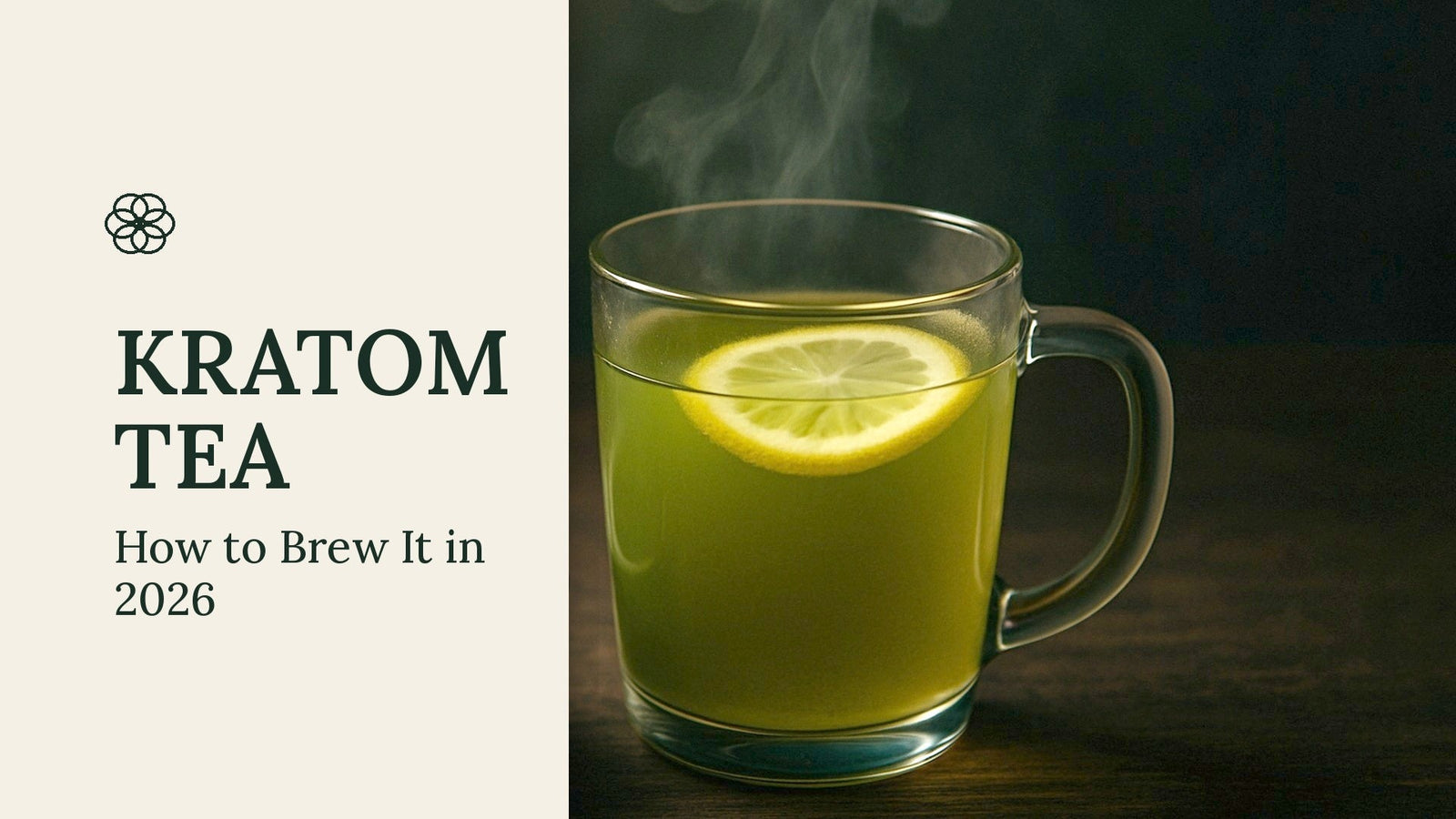
Kratom tea is the oldest way to take the leaf. Long before powders, capsules, or extract shots, farmers in Southeast Asia were simmering fresh and dried kratom leaves in pots of water and sipping the brew throughout long shifts in the field. The toss-and-wash method has become more common in the United States, but tea remains the gentlest, most controllable, and arguably most pleasant way to enjoy the plant.
The challenge is that brewing kratom tea well takes more than dumping powder into hot water. Get the temperature wrong and you waste alkaloids. Skip the acid step and the brew tastes like dirt for no good reason. Use the wrong strain and you end up with a sleepy cup when you wanted an alert one.
According to the American Kratom Association, an estimated 15 million Americans use kratom regularly, and tea is one of the three most common preparations alongside toss-and-wash and capsules. This guide walks through every method we use ourselves at GRH Kratom, with the science behind why each one works.

Table of Contents
- Why Brew Kratom as Tea Instead of Tossing the Powder
- What You Need to Make Kratom Tea
- Choosing the Right Strain for Tea
- Dosing: Powder, Crushed Leaf, and Water Ratios
- The Classic Simmer Method (Step-by-Step)
- The Cold-Brew Overnight Method
- The Lemon Trick: How Acid Pulls More Alkaloids
- How to Mask the Bitterness
- Storage, Reheating, and Make-Ahead Tips
- Common Mistakes to Skip
- Frequently Asked Questions
- Final Thoughts
TL;DR
- Kratom tea is the most traditional preparation and is gentler on the stomach than toss-and-wash.
- Use 2 to 5 grams of powder per cup for new users, and never boil the leaf. Keep water under 200°F.
- Add a teaspoon of lemon juice per cup before simmering to pull more alkaloids out of the powder.
- Simmer for 15 to 20 minutes for the strongest cup, or steep cold overnight for the smoothest one.
- Green strains and white strains brew into bright, alert teas; red strains brew into calmer, fuller-bodied ones.
- Strain through a fine mesh filter or French press to remove sediment, then sweeten with honey or maple syrup.
- Brewed tea keeps in the fridge for up to five days; freeze portions in silicone trays for longer storage.
- If you want a concentrated form instead of tea, see our kratom extract recipe for a stovetop reduction method.
Why Brew Kratom as Tea Instead of Tossing the Powder
Toss-and-wash is fast and uses every gram you measure, but it has three drawbacks that tea solves. First, swallowing dry powder is rough on a lot of people. The taste lingers, the texture is gritty, and some users feel nauseated by the leafy slurry sitting in the stomach. Tea filters all of that out. Second, the alkaloids in kratom are not equally water-soluble. Mitragynine, the most abundant alkaloid, is moderately soluble in warm acidic water. 7-hydroxymitragynine and the minor alkaloids vary in solubility. Brewing in slightly acidic water draws more of the active compounds into the liquid, while the fibrous plant material gets strained out. Third, the warmth of tea slows absorption slightly compared to dry powder hitting the stomach, which can smooth out the onset and reduce the wave-like feeling some people get from a heavy toss-and-wash.

There is one trade-off worth naming. Strained tea leaves behind some of the powder, so a 5-gram brew will not feel quite as strong as a 5-gram toss-and-wash. Most people compensate by using slightly more powder, around 10 to 20 percent more, or by drinking the sediment that settles at the bottom of the cup. Both approaches are common.
If you want the science on how mitragynine moves from leaf into water, peer-reviewed work on kratom alkaloid extraction shows that acidic, lower-temperature water extracts a higher proportion of mitragynine than boiling neutral water, which can degrade the compound.
What You Need to Make Kratom Tea
The setup is short. You probably already own most of it.
Equipment: a small saucepan or kettle, a digital kitchen scale that measures in grams, a fine mesh strainer or a French press, a stirring spoon, a heat-safe mug or a tea pitcher, and an optional thermometer if you want exact temperature control.
Ingredients: kratom powder or crushed leaf, water (filtered tastes best), an acid source (fresh lemon juice, lime juice, or a pinch of citric acid), and your choice of sweetener (honey, maple syrup, agave, or a sugar of your choice). A pinch of salt is optional and rounds out the bitter notes.

The kitchen scale matters. Volume measurements like teaspoons and tablespoons are unreliable for kratom because powder density varies between strains and grinds. A heaping teaspoon of one strain can weigh 2.5 grams while the same spoon of a finer-ground strain weighs 3.2 grams. Weight is the only way to dose consistently.
Choosing the Right Strain for Tea
Different strains brew into noticeably different teas. The general rule from our customer feedback at GRH Kratom: green and white strains brew into brighter, sharper cups that are good in the morning or before tasks that need focus. Red strains brew into deeper, calmer cups that pair well with evenings and quieter use. Yellow strains, which are produced by a longer drying process, brew into a balanced middle profile.
If you are new to kratom tea, our Super Green Kratom Powder is an easy starting point. It produces a clean, slightly herbal cup with the alert, level effect most new users describe as their favorite. For an evening tea, Red Maeng Da Kratom Powder brews into a fuller-bodied tea that pairs well with cinnamon, ginger, or a touch of honey.
For a more comprehensive breakdown of how different colors compare, see our kratom strain chart.
Dosing: Powder, Crushed Leaf, and Water Ratios
Kratom tea dosing follows the same general guidelines as other preparations, with a small upward adjustment because some material is left in the filter. New users should always start at the low end and wait at least 45 minutes before considering a second cup.

| Experience Level | Powder per Cup | Cups per Brew | Water |
|---|---|---|---|
| New user | 2 to 3 grams | 1 | 1 to 1.5 cups |
| Light user | 3 to 5 grams | 1 | 1.5 cups |
| Regular user | 5 to 8 grams | 1 to 2 | 2 to 3 cups |
| Experienced user | 8 to 12 grams | 2 | 3 to 4 cups |
Crushed leaf is more bulky than powder. The conversion is roughly 1.3 grams of crushed leaf for every 1 gram of powder, though this varies by leaf size and density. Most kratom tea drinkers who use crushed leaf brew it like a coarse loose-leaf herbal tea, which produces a cleaner flavor with less sediment.
For a deeper dive on serving sizes, our kratom dosage guide covers the math more carefully, including how tolerance and body weight shift the target.
The Classic Simmer Method (Step-by-Step)
This is the recipe most kratom users settle on after trying a few options. It produces a strong, balanced cup in about 25 minutes and works equally well with powder or crushed leaf.
- Measure your kratom powder by weight on a digital scale. Place it in your saucepan.
- Add 1.5 to 2 cups of cold filtered water per dose.
- Stir in 1 teaspoon of fresh lemon juice or a small pinch of citric acid. The water should taste faintly sour.
- Place the pan on the stove over medium heat and bring the mixture to a gentle simmer, not a rolling boil. Aim for water temperature between 175°F and 195°F.
- Hold the simmer for 15 to 20 minutes, stirring every 3 to 4 minutes so the powder does not settle and scorch.
- Remove from heat and let the pan rest for 5 minutes. Sediment will start to settle.
- Strain through a fine mesh sieve into your mug or pitcher. For a smoother cup, pass the liquid through a coffee filter or use a French press to plunge the powder.
- Sweeten with honey, maple syrup, or agave to taste. Add a squeeze of fresh lemon if you like a brighter finish.
- Sip slowly. Most users feel the first effects within 20 to 40 minutes.
The simmer method extracts roughly 60 to 75 percent of the available alkaloids based on published solubility data. The rest stays bound to the plant fiber that goes into the strainer.
The Cold-Brew Overnight Method
Cold brewing is the gentlest extraction. You lose some potency in exchange for a smoother, less bitter cup that keeps better in the fridge.
- Combine your measured powder, lemon juice, and cold filtered water in a mason jar or tea pitcher.
- Stir or shake until the powder is suspended.
- Refrigerate for 8 to 12 hours, shaking the jar two or three times during that period.
- Strain through a fine mesh sieve or French press in the morning.
- Sweeten and drink cold over ice, or warm gently on the stove without boiling.

Cold-brew kratom tea works well for batch preparation. You can make 4 to 6 servings at once on a Sunday night and pull a portion out each day. The flavor mellows over the first 24 hours and stays drinkable for up to five days in the fridge.
The Lemon Trick: How Acid Pulls More Alkaloids
The reason for the lemon juice in both methods above is not flavor. It is chemistry. Mitragynine and the other major kratom alkaloids are weak bases. In neutral or slightly basic water, they tend to stay locked inside the plant material. In mildly acidic water (around pH 4 to 5), they ionize and dissolve into the liquid much more readily.
A teaspoon of fresh lemon juice per 1.5 cups of water lowers the pH into that ideal range without making the tea taste sour. Citric acid, the same compound that gives lemons their tang, also helps stabilize the alkaloids during the simmer, which means more of them survive the heat. According to research summarized by the National Institute on Drug Abuse, kratom's effects are primarily driven by mitragynine and 7-hydroxymitragynine binding to mu-opioid receptors, and both compounds are sensitive to extraction conditions.
You can also use lime juice, apple cider vinegar (use less, about half a teaspoon), or a pinch of food-grade citric acid powder. Avoid harsh acids like white vinegar that overpower the herbal flavor.
How to Mask the Bitterness
Kratom is bitter. There is no version of kratom tea that tastes like Earl Grey. But the bitterness can be managed and even turned into something pleasant with a few add-ins.
Honey is the most common sweetener and also has a soothing effect on the throat. Two teaspoons per cup usually does it. Maple syrup adds a deeper, caramel note that pairs especially well with red strains. Agave is neutral and dissolves cleanly into hot or cold tea.
Ginger, cinnamon, and cardamom mask the green-leafy flavor and add warmth. A quarter teaspoon of ground ginger or a single cinnamon stick simmered with the kratom transforms the cup. A splash of almond milk or oat milk in the finished tea softens the bitter edges and gives the brew a chai-like quality.

Some users blend the strained tea with a small amount of fruit juice (orange, mango, or pineapple) to create a tropical kratom drink. Citrus juices have the bonus of providing extra acidity, which helps with absorption.
Storage, Reheating, and Make-Ahead Tips
Brewed kratom tea is shelf-stable in the fridge for up to five days when stored in a sealed glass container. Plastic can absorb the bitter notes and is harder to clean. Glass jars or bottles are the easy default.
For longer storage, freeze portions in silicone ice cube trays. Each cube holds roughly 30 milliliters of tea. Two or three cubes equal a serving when you thaw them. Frozen kratom tea keeps its potency for at least 30 days and probably longer, though the flavor degrades after about six weeks.
To reheat, warm the tea gently in a saucepan or microwave. Avoid bringing it back to a boil. High heat can degrade the alkaloids you worked to extract.
If you want a more concentrated form, see our guide to making a kratom extract from powder, which uses a similar acidulation technique but reduces the liquid down to a thick resin or tincture for storage and easier dosing.
Common Mistakes to Skip
A handful of small errors account for most disappointing cups of kratom tea.
Boiling the water at a full rolling boil is the most common mistake. Boiling destroys mitragynine and other alkaloids. Keep the heat at a gentle simmer with small bubbles around the edges, not a roiling churn.

Skipping the acid is the second mistake. Without lemon or citric acid, you might extract half of what you could have. A teaspoon costs nothing and roughly doubles the yield.
Brewing for less than 10 minutes leaves a lot of alkaloid behind. The 15 to 20 minute window is where most extraction happens.
Using powder that is too fine without a French press or coffee filter is a third mistake. Ultra-fine powder will pass through a regular mesh strainer and leave you drinking a gritty, sediment-heavy cup. A coffee filter on top of the strainer or a French press solves this in one pass.
Storing kratom tea at room temperature for more than a few hours is a quiet mistake. Like any herbal tea with no preservatives, it grows bacteria over time. Get it into the fridge within two hours of brewing.
Finally, doubling the dose because the first cup did not feel strong enough within 10 minutes is a recipe for a heavy, unpleasant experience an hour later. Kratom tea takes 20 to 45 minutes to peak. Be patient.

Frequently Asked Questions
How long does kratom tea take to kick in?
Most users feel the first effects within 20 to 40 minutes of finishing a cup, with the peak landing between 60 and 90 minutes. Cold-brew tea on an empty stomach tends to hit a touch faster than a hot cup with food.
Can I use kratom tea bags?
Yes. Pre-portioned kratom tea bags work well and remove the strain step. Steep one bag in 1 to 1.5 cups of just-below-boiling water (around 190°F) for 10 to 15 minutes. The trade-off is less precision on dose and a slightly weaker cup compared to simmering loose powder.
Is kratom tea stronger than toss-and-wash?
Not usually. Toss-and-wash uses every gram of powder you measure, while tea leaves some material in the filter. The trade-off is comfort. Tea is gentler on the stomach and lets you sip slowly, which most users find easier on the system. To compensate for the filter loss, many drinkers add 10 to 20 percent more powder when brewing.
How much kratom should I use for my first cup?
Start with 2 to 3 grams of powder per cup. Wait at least 45 minutes before considering more. New users underestimate how strong even a low dose can feel, especially on an empty stomach. Detailed dosing tables are in the dosage guide linked earlier in this article.
Can I cold-brew kratom in a coffee maker?
Yes, with adjustments. Most automatic drip coffee makers heat water too high for kratom. A pour-over setup using water cooled to about 190°F works. Cold-brew coffee makers (the ones designed for overnight steeping) are ideal because they pair the right temperature with the long contact time.
What strain makes the best tea?
Personal preference rules here. Green strains like Super Green and Green Maeng Da produce balanced, alert cups. Red strains like Red Maeng Da produce richer, calmer cups. Most experienced kratom tea drinkers rotate strains depending on time of day.
Is kratom tea safe?
Kratom is sold as a botanical product in most US states. The FDA's dietary supplement guidance applies, and the AKA's GMP standards govern reputable brands. The Mayo Clinic kratom overview covers the basic safety profile in plain language. Like any herbal product, it should be used responsibly, kept away from children, and never combined with alcohol or sedating medications without medical advice.
Can I save the spent kratom leaf and use it again?
A second brew of the same powder will be much weaker (about 25 to 35 percent of the first brew's strength) but is not useless. Some users do a second 15-minute simmer with fresh water and lemon juice to squeeze out the last alkaloids, then discard the spent material.
Final Thoughts
Kratom tea is a small ritual that rewards a little patience. The 25 minutes you spend simmering, straining, and sweetening turn raw powder into something you can sip and enjoy rather than choke down. Once you find your strain, your dose, and your sweetener, the recipe becomes second nature.
If you are starting from scratch, our Super Green Kratom Powder is a gentle, level-headed entry point that brews into a clean cup. For mellow evening drinking, Red Maeng Da is the classic move. The Focus Blend Kratom Powder is a great middle path for daytime use that holds up well to ginger and citrus add-ins.

A few last practical notes. Keep a small notebook (or your phone) and write down your dose, strain, brewing time, and how the cup landed. After a few weeks, patterns appear. You will know that 4 grams of green strain at 18 minutes is your sweet spot, or that red strains need an extra teaspoon of honey to round out, or that cold-brew on Sunday night sets up the whole week. The cup that fits your body is rarely the cup somebody else recommends.
And the right preparation matters more than the dose. A patient simmer of 4 grams beats an impatient toss-and-wash of 6 grams almost every time. Take the 25 minutes. Use the lemon. Strain it twice. The tea you make will be better than the one you buy, and the ritual itself is half the reason people return to the leaf year after year.


