



Listen to this page
Read by an AI voice. The full article is read aloud, top to bottom, including the recipes and the brewing steps. The ten images are on the page.
If you have only had kratom as a toss-and-wash gulp of bitter powder washed down with juice, kratom tea is going to feel like a different substance. Heat extraction changes the alkaloid profile, the dose feels smoother, and the experience genuinely improves for most users. The catch is that "tea" in the kratom world means several different brewing methods that each produce different results, and most internet recipes either skip the chemistry or lean too hard into ritual without explaining what actually matters.
This guide walks through what kratom tea actually is, how the brewing methods compare (stovetop simmer, French press, cold brew, tea bags), three reliable recipes you can make tonight, what affects potency, common mistakes that ruin a batch, and how to balance taste against effect. Everything here is grounded in user experience, harm-reduction practice, and what the heat-stable chemistry of mitragynine actually allows.
By the end you will know how to brew a clean cup, what to do when the taste is too rough, and how to fit kratom tea into a daily routine without wasting product or alkaloid content.
Table of Contents
- What Kratom Tea Actually Is
- How Brewing Affects Potency
- The Standard Stovetop Method
- The French Press Method
- The Cold Brew Method
- Three Reliable Recipes
- Taste, Tolerance, and Storage
- Common Mistakes That Ruin a Batch
- Frequently Asked Questions
- Final Thoughts
TL;DR
Kratom tea is a hot or warm extraction of kratom powder or leaf in water, usually acidified with lemon or lime juice to pull more alkaloids into solution. The standard stovetop method (simmer 15 to 20 minutes with citrus, never boil hard) produces a smoother experience than toss-and-wash with the same gram weight. Cold brew preserves slightly different alkaloid ratios for a brighter, more stimulating feel. Tea bags work but underperform unless you use the strongest strain you have. Total prep time runs 20 minutes, total alkaloid recovery hits roughly 70 to 85 percent of dry weight, and the felt effects come on smoother and last about the same as toss-and-wash.
What Kratom Tea Actually Is
Kratom tea is, at its simplest, kratom powder steeped in water until the alkaloids dissolve into the liquid. The traditional Southeast Asian preparation uses fresh leaves boiled briefly, but most Western users start with dried, milled powder because that is what is sold commercially. Either way, the chemistry is the same: water (usually warm or hot) pulls the active compounds out of the plant material into solution, you strain the liquid, and you drink the result.

The active compounds you care about are mitragynine and 7-hydroxymitragynine, plus a supporting cast of minor alkaloids. For more on what those compounds actually do, our companion guide on what is mitragynine covers the receptor-level pharmacology. The short version: these alkaloids are reasonably heat-stable up to about 200°C, which means a simmered tea preserves most of the active content, but a hard rolling boil starts to degrade them.
The reason kratom tea has stayed popular even after toss-and-wash became the default has to do with experience, not just chemistry. Users who switch to tea report that the come-up feels smoother, the GI distress that sometimes hits with raw powder rarely shows up, and the taste, while not exactly pleasant, is more drinkable than mouthful-of-bitter-powder. That is worth something for a daily use case.
How Brewing Affects Potency
The single most important variable in kratom tea is how the alkaloids end up in the cup. Most of the alkaloid content sits inside cell walls of the dried leaf, and water alone is not great at extracting it. Three things change that.

Heat. Warm water dissolves alkaloids better than cold. Most alkaloids have decent solubility in 70 to 95°C water (just below boiling). Hot water also softens cell walls so more compound migrates into the liquid. The trade-off is that extended high heat starts breaking down the more delicate alkaloids, especially 7-hydroxymitragynine. The sweet spot is a slow simmer, never a hard boil.
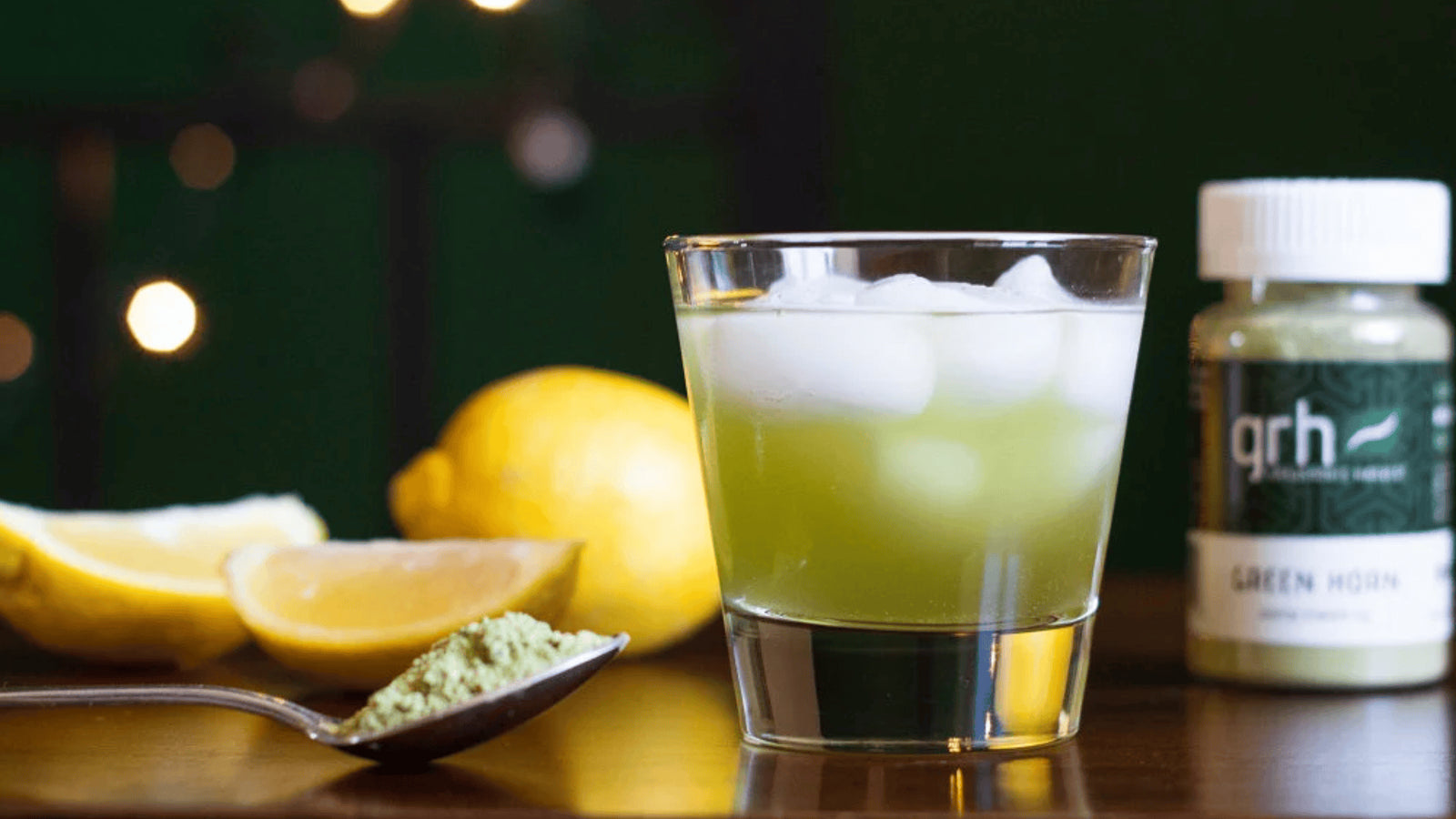
Acid. Adding lemon juice, lime juice, or a small amount of apple cider vinegar drops the pH of the brew water from around 7 to roughly 4 to 5. Mitragynine and related alkaloids are weakly basic, which means they go into solution more readily in slightly acidic water. Most experienced kratom tea drinkers use one to two tablespoons of citrus juice per cup as standard practice. The effect is real and the math is consistent across user reports.
Time. A 15 to 20 minute simmer extracts noticeably more than a 5 minute steep. Past 25 minutes, the returns flatten and the alkaloid degradation curve starts to bite. Cold brew users go the other direction: 8 to 12 hours of cold extraction with citrus produces a different alkaloid ratio (less degradation, slightly different felt profile) but takes overnight prep.
A typical hot tea preparation pulls roughly 70 to 85 percent of the alkaloid content out of the powder. The remaining 15 to 30 percent stays in the spent grounds, which is one reason some users do a second extraction with the same powder for a follow-up cup with reduced potency.
The Standard Stovetop Method
This is the workhorse method, the one that 80 percent of regular kratom tea drinkers use, and the one to start with if you have not made tea before.

What you need:
- Kratom powder (start with 3 to 5 grams; experienced users go 5 to 8 grams)
- 2 cups of water
- 1 to 2 tablespoons of fresh lemon or lime juice
- A small saucepan
- A fine mesh strainer or cheesecloth
- A mug
Steps:
- Combine 2 cups of water with the citrus juice in your saucepan. Stir.
- Add the kratom powder. Stir until it is dispersed (it will not fully dissolve; that is fine).
- Bring to just below a boil, then reduce heat to a slow simmer. Small bubbles around the edge, not a rolling boil.
- Simmer uncovered for 15 to 20 minutes, stirring every few minutes to keep the powder suspended.
- Remove from heat and let stand 2 to 3 minutes so the larger particles settle.
- Pour through a fine mesh strainer into your mug. Press lightly on the spent powder to recover the last of the liquid.
- Drink while warm, or refrigerate for up to 48 hours.

The result is a brown to amber liquid with an earthy, slightly bitter flavor. Most users add honey, ginger, or fruit juice to round out the taste. The citrus is for chemistry, not flavor; you can chase it with sweetener once the brewing is done.
For dosing across formats and methods, our kratom dosage guide walks through how powder grams translate to felt effects and how to scale conservatively when you are new.
The French Press Method
A French press (cafetière) is one of the cleanest tools for kratom tea because it does the straining for you and the design naturally accommodates a longer steep without burning anything.
What you need:
- Kratom powder (3 to 8 grams)
- 16 to 20 oz of just-off-the-boil water (~85°C)
- 1 tablespoon lemon juice
- A French press
Steps:
- Add the kratom powder and lemon juice to the empty French press carafe.
- Heat your water to just below boiling and let it sit for 30 seconds (overhot water cooks the powder rather than steeping it).
- Pour the hot water over the powder.
- Stir gently with a long spoon for 30 seconds. Make sure the powder is fully wet and not clumped at the bottom.
- Place the lid on with the plunger pulled all the way up. Steep 12 to 15 minutes.
- Press down slowly. Pour into your mug.
The French press preserves more of the lighter, brighter flavor notes than stovetop simmering, and the longer warm steep extracts cleanly without active heat applied throughout. Most users describe French press kratom tea as slightly more stimulating and slightly less sedating than the same powder simmered.
The cleanup is the simplest part. Empty the spent grounds into compost or trash, rinse the press, done.
The Cold Brew Method
Cold brew is the slowest method but produces the smoothest cup and arguably the most consistent dosing. It is also the easiest to scale up because nothing in the process is time-sensitive.

What you need:
- Kratom powder (5 to 10 grams)
- 24 oz of room-temperature water
- 2 tablespoons lemon juice
- A 32 oz mason jar with lid
- A fine mesh strainer
Steps:
- Combine the kratom powder, water, and lemon juice in the mason jar.
- Seal the jar and shake vigorously for 30 seconds.
- Refrigerate for 8 to 12 hours (overnight is ideal).
- Shake again before serving.
- Strain through a fine mesh strainer into your serving glass. Add ice if desired.
Cold brew kratom tea preserves more of the full alkaloid profile because no compounds break down to heat. Users describe the experience as slightly more uplifting, less sedating, and more "morning-friendly" than hot tea from the same strain.
The downside is timing. You cannot make cold brew on demand. Most users who like cold brew make a 24 to 48 hour batch on Sunday night and dose from it across the week.
Three Reliable Recipes
Here are three kratom tea variations that work well for users at different points on the experience spectrum. Each scales linearly if you want a larger batch.

Recipe 1: Honey-Ginger Stovetop Tea (beginner-friendly)
- 4 grams kratom powder
- 2 cups water
- 1 tablespoon lemon juice
- 1 inch fresh ginger, sliced
- 1 to 2 teaspoons honey (added after brewing)
Combine water, lemon juice, ginger slices, and kratom powder in a saucepan. Simmer 18 minutes. Strain into a mug. Stir in honey while still warm. The ginger softens the bitter edge, and the honey adds body. Most beginners find this drinkable with no chaser needed.
Recipe 2: Iced Citrus Cold Brew (warmer weather)
- 8 grams kratom powder
- 24 oz cold water
- 2 tablespoons lemon juice
- 1 tablespoon orange juice
- Ice and a sprig of mint to serve
Combine all liquid ingredients and powder in a mason jar. Refrigerate 10 hours. Strain over ice in a tall glass. Garnish with mint. The orange juice mellows the citrus tartness while still keeping the pH where the alkaloids want it.
Recipe 3: Spiced Chai-Style Tea (best for evening)
- 5 grams red vein kratom powder
- 2 cups water
- 1 tablespoon lemon juice
- 1/2 teaspoon ground cinnamon
- 1/4 teaspoon ground cardamom
- 1 black peppercorn (cracked)
- 1 tablespoon coconut milk or oat milk
Add water, lemon juice, kratom powder, cinnamon, cardamom, and cracked peppercorn to a saucepan. Simmer 18 minutes. Strain into a mug. Stir in coconut milk. The spice profile pairs naturally with the earthy base of red vein kratom and produces an evening drink that feels more like chai than medicine.
For pairing with food and broader recipe context, our kratom and coffee guide walks through how kratom interacts with morning routines, and our CBD vs kratom comparison covers when each makes more sense.
Taste, Tolerance, and Storage
Taste is the most universal complaint about kratom tea and the easiest to manage with a few habits.

Taste basics. The natural flavor is earthy, woodsy, slightly bitter, with a chalky finish. Citrus and honey are the simplest masks. For users who really cannot get past the taste, mixing the strained tea 50/50 with apple juice, mango juice, or a sweetened iced tea works without affecting the chemistry. Avoid mixing with milk or cream as the primary base; dairy can dampen alkaloid bioavailability.
Tolerance considerations. Kratom tea does not have different tolerance dynamics than powder. Same alkaloids, same receptors, same adaptation curves. Users who switch to tea sometimes report better-feeling effects from a smaller dose, which is real, but tolerance still builds with daily use. Our kratom tolerance guide walks through strain rotation and rest day protocols that work.
Storage. Hot brewed kratom tea keeps in the refrigerator for up to 48 hours before alkaloid degradation gets noticeable. Cold brew lasts a bit longer (3 to 4 days) because no thermal stress happened. For batch prep, many users brew a Sunday-night batch into a large mason jar and dose from it over 2 to 3 days. Freezing kratom tea works for longer storage but may shift flavor; thaw in the fridge rather than counter.
Spent grounds. The strained kratom powder still contains 15 to 30 percent of the original alkaloid content. Some users do a second extraction (re-simmer the spent grounds with fresh water and citrus for 15 minutes) for a milder follow-up cup. Others just discard the grounds. Both are fine.
Common Mistakes That Ruin a Batch
A few specific errors come up over and over in kratom tea forums.

Boiling too hard. A rolling boil for 20 minutes degrades alkaloids meaningfully. Aim for a slow simmer. Small bubbles, not a churning surface.
Skipping the citrus. Without acid, alkaloid extraction drops by an estimated 20 to 30 percent. Always include lemon, lime, or vinegar.
Brewing too long or too short. Under 10 minutes leaves alkaloids in the powder. Over 25 minutes degrades them. Stay in the 15 to 20 minute window for hot brews.
Using the wrong strain for the method. Cold brew preserves uplifting/stimulating notes well, which is why white and green vein strains work best with it. Red vein strains do better with stovetop simmering and spice pairings. Mismatching method and strain leaves usable alkaloids on the table.

Tea bags from poor-quality vendors. Kratom tea bags are convenient but only as good as the powder inside them. A tea bag from an unknown source with no kavalactone-equivalent labeling is a coin flip. A tea bag from a reputable vendor that publishes alkaloid percentages per batch can match a homemade brew.
Drinking on an empty vs full stomach without thinking about it. Empty stomach hits faster and harder; full stomach delays onset by 30 to 45 minutes and softens peak intensity. Choose deliberately.
For users curious about how prepared kratom forms compare to extracts and shots, our kratom extracts and shots guide covers when concentrates make more sense than tea.
Frequently Asked Questions
How much kratom powder should I use for a cup of tea?
Beginners: 3 to 5 grams in 2 cups of water. Experienced users: 5 to 8 grams. Heavy users: 8 to 10 grams. Above 10 grams in a single cup, the bitterness becomes hard to manage and you might be better served by splitting into two doses.
How long does kratom tea take to kick in?
Onset is typically 30 to 45 minutes on an empty stomach, 45 to 75 minutes on a full one. This is similar to powder. Peak effects come around 60 to 90 minutes and last 3 to 5 hours. Tea hits slightly slower than toss-and-wash but feels smoother on the come-up.
Does heat destroy kratom alkaloids?
Sustained hot water above 95°C for over 25 minutes meaningfully degrades alkaloids, especially 7-hydroxymitragynine. A standard 15 to 20 minute simmer at 80 to 90°C preserves the bulk of the active content. Avoid hard rolling boils, and you will be fine.
Can I drink old kratom tea?
Hot brewed tea is best within 48 hours refrigerated. After that, alkaloid degradation accelerates and the experience gets weaker and more bitter. Cold brew lasts 3 to 4 days. If a batch tastes off, smells fermented, or has visible cloudiness beyond the normal sediment, discard it.
Is kratom tea stronger than powder?
The total alkaloid content delivered to the system is roughly equivalent, since you are extracting from the same starting material. The felt experience is often described as smoother and slightly less harsh, which makes the same effective dose easier to tolerate. For a deeper comparison, see our is kratom tea stronger than kratom powder guide.
Do kratom tea bags work?
Yes, with caveats. Tea bags are convenient and the brewing is simpler, but the alkaloid content is what is in the bag. Reputable brands publish per-batch testing. Sketchy bags are inconsistent. If you go the tea-bag route, stick with vendors that publish lab data.
What is the best kratom strain for tea?
Red vein strains pair beautifully with stovetop simmering and spice profiles for evening use. Green vein strains are versatile and work well across all three methods. White vein strains shine in cold brew where the more uplifting alkaloid profile is preserved. Maeng Da and Bali variants are crowd favorites for tea specifically.
Can I add caffeine to kratom tea?
You can. Many users brew kratom tea with green tea or black tea included, which adds caffeine for a more stimulating overall feel. Avoid this combination if you have anxiety or cardiovascular issues, as the cardiovascular load stacks. Read our kratom and coffee guide for more on combination dynamics.

Final Thoughts
Kratom tea is one of those preparations where the difference between a forgettable cup and a really good one is small adjustments rather than secret techniques. Citrus in the brew water, slow simmer instead of hard boil, 15 to 20 minute steep, and a strain that matches your method. Get those four right and the rest is just preference for taste, time of day, and how you want to feel.
The biggest takeaway: pick one method to start (stovetop is easiest), make a few cups exactly to recipe, then start adjusting from there. Most users find their personal sweet spot within five or six brews. After that, kratom tea becomes a quick weeknight ritual rather than a project.
For users wanting to start from quality powder built for tea preparation, GRH Kratom carries lab-tested strains with kavalactone-equivalent labeling on every batch. Browse our Kratom Powder collection for tea-friendly strains, our Red Vein collection for evening tea blends, and our full kratom selection if you are exploring different vein colors and origins.
Brew slow, use citrus, respect the dose. That is the whole secret.


